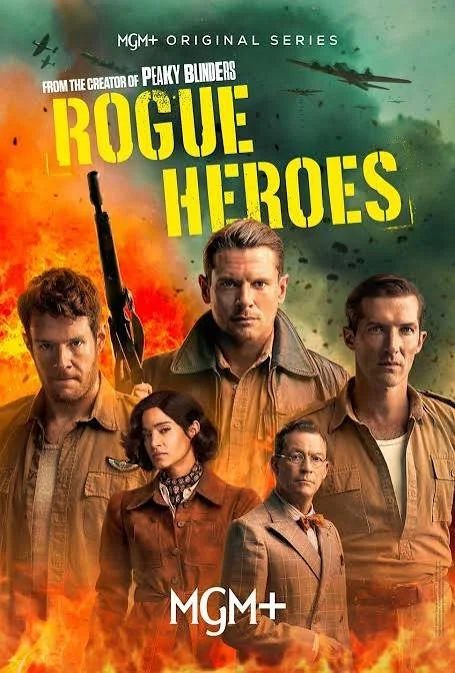
SAS: Rogue Heroes: Season 1 Took the Scenic Route, Season 2 Hit the Gas
SAS: Rogue Heroes: Season 1 Took the Scenic Route, Season 2 Hit the Gas
We came into SAS: Rogue Heroes because a preview hooked us.
There was history. There was action. There was humor. There were a bunch of completely insane-looking British soldiers doing things that probably shouldn't work.
There was just one problem.
The trailer we saw was actually for Season 2.
So when we started Season 1, we were expecting a roller coaster.
Instead, we got a gentle ride with some really long rolling hills.
And we're not saying that as an insult. But Season 1 is slow.
Season 1: How Many Miles Is a Kilometer?
The show opens with a stopped British Army convoy in the desert. An officer approaches the commander and requests that the fuel truck be brought forward so the convoy can refuel.
Then we learn why the convoy is sitting there in the first place.
Someone screwed up the conversion between miles and kilometers.
And this isn't exactly a case of somebody putting the wrong number on a spreadsheet. This mistake has serious consequences because the convoy is supposed to help relieve a besieged town.
The officer launches into a tirade about how important the convoy is and why they need to get moving.
It's a pretty good introduction to the world we're entering.
Unfortunately, the show then takes its sweet-ass time getting where it's going.
The History Is What Kept Us Watching
Season 1 gets a 6/10 from us.
It is very slow.
And strangely enough, that's also part of what made some of it work.
There were scenes where the show was so deliberate and so focused on the desert that we almost felt like we were actually driving across it with these guys.
That's not necessarily exciting television, but it does give the show a sense of place.
And the history kept pulling us along.
We didn't know much about the actual origins of the SAS before watching this. We actually found ourselves Googling things while we watched.
We also had one thing completely wrong.
We originally thought the SAS were basically the British version of the Red Devils we'd seen inBand of Brothers.
They're not.
The British Red Devils are more comparable to U.S. Army airborne forces, while the SAS is much closer to something like modern U.S. special operations forces.
The show even gives its SAS guys those red caps, which probably doesn't help anybody trying to figure that out.
But the comparison to Band of Brothers is still pretty easy to make.
Rogue Heroes feels like it wants to be the British version of that kind of WWII story—just with considerably more swagger, profanity and questionable decision-making.
David Stirling and Paddy Mayne
David Stirling and Paddy Mayne were easily our favorite characters.
And that's a big part of why we stuck with the show during the slower stretches.
The chemistry between the characters works, and the show does a good job of making these guys feel like they're operating outside the normal military system.
They're basically trying to convince the British military that the best way to fight a war is to let a handful of lunatics drive around the desert and attack the enemy where they aren't expecting it.
And somehow, they convince people to let them do it.
The humor worked for us, although in Season 1 it occasionally fell flat.
There were moments where we could see exactly what joke the show was trying to make without necessarily laughing at it.
Still, the combination of history, action and humor was enough to keep us going.
Then Season 2 Shows Up
Season 2 gets a 7/10, and it's almost immediately apparent that we're in for a different ride.
Even from a theatrical standpoint, everything feels bigger.
And right there in the opening credits, the show basically tells you:
This is not a history lesson.
We appreciated that.
Because by Season 2, the show seems much more comfortable being a television series first and a historical retelling second.
The action picks up.
The characters get more interesting.
The humor lands better.
And suddenly the trailer we saw starts making a hell of a lot more sense.
The SAS Drive-By
One of the scenes that really stuck with us involves Stirling receiving some much-needed equipment and then taking the SAS out for a raid on a German airfield.
They roll in with five jeeps, head straight toward a hangar full of German and Italian pilots and engineers, and basically decide they're going to light the whole place up.
One of the men objects.
The response is essentially that if they don't do something, those men are going to get back to work.
So they drive past the hangar, open fire, and then hit the aircraft on the strip before disappearing back into the darkness of the desert.
One of the men starts counting their kills.
Then someone says:
"Zero. I don't count unarmed men in my tally."
That moment hits Stirling.
And it hit us too.
Because we're watching a show about men who are being celebrated as elite soldiers and unconventional heroes, while simultaneously watching them do things that make the morality of what they're doing considerably more complicated.
And we've seen something similar in Band of Brothers.
There are moments in both shows where the enemy is caught completely off guard or is essentially defenseless.
It's uncomfortable.
But it's also part of what makes these stories interesting.
The Weird Part About the Raids
This particular raid was requested by Churchill, and the show makes a pretty big deal out of the damage they inflict.
Then we learn that a convoy of 17 ships was headed toward its destination and only two eventually made it.
And we're sitting there thinking:
Wait... if the SAS just wiped out that much equipment in one night, how the hell did the Axis still manage to hit the supply convoy that hard?
The answer is obviously that there were other airfields, other aircraft and a much bigger war happening outside the little bubble we're following.
But that's also one of the show's weaknesses.
A lot of potentially huge events happen off-screen.
We'll see the SAS destroy something, then later hear about the consequences.
Or we'll hear that something happened without actually seeing it.
Sometimes that works.
Other times it feels like the show is saying, "Trust us, this was really important."
And we're sitting there thinking, "Yeah, but we wanted to see it."
Is It Historically Accurate?
This is where things get interesting.
The show clearly cares about its historical foundation, but Season 2 openly reminds you that you're watching a dramatization.
And we think that's the right approach.
We don't need every conversation to be historically documented word-for-word.
We're watching a television show about the formation of the SAS, not a three-hour documentary narrated by somebody with a pointer.
For us, the historical foundation actually made the more ridiculous moments easier to enjoy.
We knew at least some of what we were watching really happened.
That makes the crazier stuff hit differently.
Sometimes It Felt Like They Were Fighting the Show
One of our biggest criticisms is that there were moments when it almost felt like the characters were fighting to keep the show going just as much as they were fighting the Germans.
Season 1 especially has stretches where the pacing makes you wonder when something is finally going to happen.
Season 2 fixes a lot of that.
But even then, we occasionally found ourselves wanting the show to stop telling us what happened and actually show us.
If you're a Band of Brothers fan, you'll probably have no problem getting through the slower sections.
For everyone else, there were definitely moments when the show got slow enough that checking the phone to see if we had any new Tinder matches seemed like a reasonable use of our time.
Then Comes D-Day
Season 2 ends with the SAS training for D-Day.
And honestly, that's a pretty damn good place to leave us.
After watching these guys spend two seasons building the SAS into something the military can't really ignore, suddenly they're preparing for one of the biggest operations of the entire war.
We know where history is going.
We just haven't seen their part of it yet.
And with Season 3 reportedly on the way, we're definitely interested in seeing what they do with it.
Final Verdict
Season 1: 6/10
Season 2: 7/10
Overall: Worth watching.
SAS: Rogue Heroes isn't perfect.
Season 1 is slow.
The humor doesn't always land.
Some potentially incredible action is glossed over rather than shown.
And there are stretches where the show feels like it's trying to keep itself moving.
But the history, the characters, the action and the sheer insanity of how the SAS came together make it worth sticking with.
Season 2 is noticeably better, and we're glad we pushed through Season 1 to get there.
If you're a Band of Brothers fan, this should absolutely be on your list.
Just don't expect Band of Brothers.
Think of it as the British, much more chaotic cousin who shows up to the family reunion with a Jeep, a machine gun and absolutely no interest in following the rules.
And apparently, there's a Season 3 coming.
We'll be watching.