
Illinois Senate Bill 315
Illinois just passed what many are calling a landmark AI accountability bill.
On the surface, that sounds like a good thing. Transparency. Oversight. Safety. Accountability.
But every time I hear the word “safety” attached to a new compliance regime, I find myself asking the same question:
Who gets paid to keep everyone safe?
It’s a question that isn’t unique to artificial intelligence.
We’ve heard it before in banking.
We’ve heard it before in healthcare.
We’ve heard it before in cannabis.
The technology changes.
The buzzwords change.
The consultants change.
The software changes.
The regulations change.
But the incentives often look surprisingly familiar.
In my latest F’nAround analysis, I take a look at Illinois’ new AI bill, the growing compliance economy surrounding artificial intelligence, and why every discussion about safety should also include a discussion about power, access, incentives, and accountability.
Because history has a funny way of repeating itself.
Just with better marketing.
Illinois House Bill HB5784
There is a very specific feeling you get when reading modern omnibus legislation in Illinois. It is the same feeling academics often describe when analyzing late-stage institutional systems under pressure: the document stops reading like governance and starts reading like structural maintenance.
That is the immediate sensation surrounding Illinois HB5784.
On paper, the bill presents itself as another large-scale “cleanup” and modernization effort tied to cannabis regulation, administrative procedure, licensing, enforcement, and operational governance. Supporters will undoubtedly frame it as a technical necessity for an evolving industry. That is how omnibus legislation is almost always sold publicly. The language of modernization is politically safe. The language of efficiency sounds responsible. The language of “clarification” sounds harmless.
But structural analysis does not examine political marketing language. Structural analysis examines directional force.
And the directional force of HB5784 is difficult to ignore.
The deeper one reads into the bill, the less it resembles a public transparency measure and the more it resembles a regulatory fortification package designed to stabilize institutions that have spent years accumulating procedural pressure from watchdogs, litigation, public records requests, investigative journalism, and increasing public skepticism surrounding cannabis governance in Illinois.
That distinction matters immensely.
Because the central question surrounding cannabis regulation in Illinois is no longer whether the market exists successfully. Financially, it clearly does. The state has already committed fully to the legitimacy and expansion of the industry. The real question now is whether the institutions regulating that market are accountable to public visibility at the same rate that they demand compliance from everyone beneath them.
HB5784 does not appear to answer that question with transparency.
It appears to answer it with insulation.
This becomes obvious in the portions dealing with confidentiality, investigations, administrative protections, ethics frameworks, and internal regulatory handling. Individually, these sections can be defended. Every regulator on earth requires some degree of confidentiality authority. Active investigations cannot simply be livestreamed into the public square. Medical privacy matters. Security procedures matter. Personnel information matters. Trade secrets exist. No serious researcher disputes any of that.
But the danger emerges when confidentiality architecture becomes expansive enough that the boundary between “protecting investigations” and “protecting institutions from scrutiny” begins to dissolve.
And that is precisely where HB5784 becomes politically revealing.
Illinois already operates within one of the most notoriously opaque public records environments in the country. The Illinois FOIA system formally exists, but in practice, experienced requesters quickly learn that the real structure of the system is procedural exhaustion. Delays become strategy. Extensions become architecture. “No responsive documents” becomes administrative camouflage. Agencies frequently rely upon investigatory exemptions, preliminary draft exemptions, deliberative-process exemptions, burdensome-request arguments, or statutory cross-references that redirect disclosure obligations into procedural dead ends.
The effect is not necessarily outright denial.
The effect is friction.
That friction is critically important within the context of cannabis because cannabis regulation is uniquely vulnerable to regulatory capture.
Unlike many traditional industries, cannabis emerged through an unusual convergence of political lobbying, rapid licensing concentration, social equity frameworks, criminal justice rhetoric, speculative investment capital, layered LLC structures, management agreements, municipal favoritism, and highly compressed market entry opportunities.
Whenever massive economic value is concentrated into a tightly controlled licensing environment, the risk of opacity naturally increases. Not because every actor is corrupt, but because the incentives for concealment become structurally powerful.
And over the past several years, critics of Illinois cannabis governance have repeatedly raised concerns surrounding:
hidden ownership structures,
management agreements operating behind nominal social equity ownership,
opaque financing pathways,
vendor-payment irregularities,
licensing concentration,
political access,
preferential treatment,
youth-oriented marketing aesthetics,
and inconsistent enforcement standards.
Whether every accusation is true is almost secondary to the larger institutional reality:
the public has increasingly lost trust in the visibility of the system itself.
That is the context in which HB5784 arrives.
And rather than responding to distrust with radical transparency, the bill appears to deepen administrative shielding mechanisms.
This is where the legislation becomes fascinating from a systems-theory perspective.
Because institutions under sustained procedural pressure almost never respond by voluntarily exposing themselves to greater public vulnerability. Historically, they do the opposite. They centralize discretion. They formalize ambiguity. They widen protected procedural zones. They expand interpretive authority. They consolidate internal handling processes. They redefine disclosure boundaries. They increase administrative complexity until accountability itself becomes technically navigable only by specialists.
In other words, systems under pressure harden.
HB5784 shows nearly every symptom of institutional hardening.
The irony is that the bill unintentionally reinforces the exact analytical framework currently being explored through the Gravitas Satanae / Structural Gravity research model emerging from F’nAround’s systems analysis work.
That framework argues that unresolved procedural obligations accumulate structural force over time within institutions. Under enough pressure, governments and regulatory systems begin reorganizing themselves not necessarily around truth or falsity, but around preservation of institutional stability.
And that is exactly how this bill reads.
The state of Illinois is no longer governing cannabis as a disruptive emerging market. It is governing cannabis as a politically important stabilized revenue system whose continuity must now be protected administratively.
That shift changes everything.
Once an industry becomes structurally important to state revenue streams, employment numbers, political alliances, municipal planning, lobbying networks, and financial ecosystems, regulatory posture changes from “oversight” to “containment management.”
This is the stage where watchdog pressure becomes dangerous to institutional legitimacy.
And that is precisely why the confidentiality language matters so much.
Because broad confidentiality powers inside a controversial regulatory ecosystem do not merely protect investigations. They also protect narratives.
The public cannot independently verify what it cannot access.
This becomes especially uncomfortable when examining the youth-marketing debate surrounding cannabis. Illinois officials have repeatedly spoken publicly about protecting children, responsible advertising, and preventing normalization toward minors. Yet if the true center of regulatory concern was aggressive youth-protection enforcement, one would logically expect legislation focused on:
mandatory public advertising violation databases,
enhanced disclosure reporting,
independent audit publication,
public disciplinary tracking,
social media marketing transparency,
or expanded third-party oversight mechanisms.
Instead, much of the legislative energy appears directed toward administrative procedure and regulatory management.
That creates a perception problem the state cannot easily escape.
The perception becomes:
the industry is being stabilized faster than it is being exposed.
And perception matters tremendously in institutional legitimacy.
The ownership issue may be even more politically volatile.
Cannabis markets nationwide have struggled with hidden operational control structures. Illinois is not unique in this regard. Across multiple states, accusations frequently emerge involving silent investors, layered LLCs, management-company dominance, nominal ownership arrangements, and economic control structures that differ dramatically from public-facing licensing narratives.
Under those conditions, transparency becomes the single most important legitimacy mechanism available to regulators.
Which is exactly why expanding confidentiality architecture at this stage raises eyebrows.
A transparency-first response would increase sunlight.
HB5784 appears to increase controlled visibility.
That distinction is enormous.
And this is where the bill intersects directly with the broader FOIA-driven work being conducted through F’nAround and the associated doctoral research environment examining procedural gravity within institutional systems.
Critics will inevitably try to personalize that work or dismiss it as adversarial media commentary. That misses the deeper methodological issue entirely.
The real significance of the work is not any single allegation.
The significance is the identification of recurring institutional response patterns.
Delayed disclosure.
Escalating procedural barriers.
Compartmentalization.
Administrative rerouting.
Strategic ambiguity.
Layered confidentiality.
Fragmented production.
Interpretive elasticity.
These patterns are observable independent of ideology.
And HB5784 appears to codify many of those structural tendencies into formal legislative architecture.
That is what makes the bill analytically significant beyond cannabis itself.
Because cannabis is merely the visible laboratory.
The larger issue is how modern governments behave when transparency mechanisms begin generating institutional stress.
Historically, systems do not collapse because critics are loud. Systems destabilize when public trust erodes faster than institutional legitimacy can adapt. The response from institutions is almost always procedural expansion: more rules, more administrative layers, more protected zones, more internal handling mechanisms, and more complexity separating public visibility from operational reality.
HB5784 fits squarely within that historical pattern.
And perhaps the most revealing aspect of the entire bill is not any single sentence. It is the omnibus structure itself.
Omnibus bills function politically as concealment through scale.
Controversial provisions become buried beneath technical updates, tax language, administrative corrections, patient provisions, licensing mechanics, and procedural adjustments. Supporters can always point toward benign sections whenever criticism emerges. Critics are then forced to untangle hundreds of pages simply to isolate structural implications hidden between routine legislative language.
This creates plausible deniability by design.
But structurally, omnibus legislation often functions as governance camouflage.
And that is precisely why HB5784 deserves significantly more scrutiny than it is likely to receive publicly.
Not because it “proves corruption.”
That would be an unserious claim.
But because it demonstrates a recognizable institutional instinct:
when scrutiny intensifies, visibility contracts.
And from a systems-analysis perspective, that may be the single most important signal in the entire document.
104TH GENERAL ASSEMBLY
State of Illinois
2025 and 2026
HB5784
Introduced 5/20/2026, by Rep. Will Guzzardi - Justin Slaughter
- Bob Morgan - Kevin John Olickal - Lisa Davis, et al.
https://www.ilga.gov/documents/legislation/104/HB/PDF/10400HB5784lv.pdf
Sad to say they did the same corrupt maneuvers to protect crimes in Senate Bill SB 3222 that passed.
https://legiscan.com/IL/text/SB3222/2025
SYNOPSIS AS INTRODUCED:
See Index
Creates the CBD Consumer Products Act, prohibiting the sale or
distribution of hemp-derived cannabinoid products for human or animal
consumption unless sold by a registered CBD product registrant. Amends the
Department of Professional Regulation Law to add confidentiality
references to the Office of the Executive Inspector General and the State
Officials and Employees Ethics Act. Amends the Criminal Identification Act
to update the definition of "minor cannabis offense." Updates the name of
the Local Cannabis Retailers' Occupation Tax Trust Fund and removes a tax
exemption for CBD food products. Provides for public tax-revenue
reporting. Prohibits home rule counties and municipalities from taxing
cannabis. Amends the Compassionate Use of Medical Cannabis Program Act to
update definitions, add references to additional patient categories, allow
certain intergovernmental agreements, and permit purchases at any licensed
dispensing organization. Makes related changes to registration,
identification cards, confidentiality, and taxes; repeals the Social
Equity Justice Involved Medical Lottery. Amends the Cannabis Regulation
and Tax Act regarding definitions, business development, social equity
loans and fee waivers, possession limits, minors, licensing, operations,
investigations, security, and testing, and adds provisions concerning
medical cannabis licenses, relocation, storage endorsements, warning
labels, and pickup or drive-through. Amends the Industrial Hemp Act,
Cannabis Control Act, and the Tobacco Accessories and Smoking Herbs
Control Act. Makes technical and other changes. Effective immediately.
Sb 2427
The spirit of Illinois Senate Bill 2427 is easy to understand. Phones are distractions. Phones fuel bullying. Phones wreck attention spans. Teachers are tired of competing with TikTok, group chats, Snapchat, and whatever digital circus is happening under the desk while algebra is fighting for its life.
So on paper, the goal makes sense.
But policy does not live on paper. It lives in hallways, lockdowns, bathrooms, buses, cafeterias, stairwells, and classrooms where the first person to know something is wrong is often not an administrator with a radio. It is a student with a phone.
That is where this bill starts to get dangerous.
SB2427 requires districts and charter schools to adopt policies restricting wireless communication devices during instructional time, with exceptions for medical use, IEP/504 plans, English learners, educational authorization, and emergencies. The bill also requires secure storage guidance and bars enforcement through fines, fees, school resource officers, or local law enforcement. The current ILGA status language also shows later amendments moving the implementation target to the 2027-2028 school year and adding handbook/publication requirements, storage immunity, ISBE model-policy language, and limits on suspensions/expulsions.
That sounds balanced until you add the national trend data.
Over the past decade, school-related gun incidents in the United States have risen significantly under broad national tracking. K-12 firearm incidents increased from approximately 41 in 2015 to 233 in 2025, representing a nearly fivefold increase, with a peak of 352 incidents in 2023 before declining slightly in subsequent years. Even under narrower definitions focused only on shootings with injuries or deaths, recent years have consistently recorded double-digit annual incidents, including 18 in 2025 following higher totals in 2022–2024. Separately, federal data shows that firearm possession in schools reached a decade high in the 2021–2022 school year, with Illinois among the states reporting some of the highest rates per capita. These trends indicate that while definitions vary, the overall environment of weapons presence and gun-related incidents in schools has intensified rather than diminished.
The broad K-12 School Shooting Database counts incidents where a gun is fired, brandished with intent to harm, or a bullet hits school property, including after-hours events, suicides, fights, accidents, domestic violence, and other school-ground gunfire. That broad definition matters because school danger no longer fits the old “active shooter during class” box. It spills into parking lots, games, bathrooms, after-school events, and conflict that enters campus from outside.
Education Week’s narrower tracker focuses on casualty-based school shootings, while the Secret Service has repeatedly found that many attackers show warning signs beforehand and that threat assessment depends on people recognizing and reporting signals early. Everytown also notes that school-ground gunfire tracking exists partly because there was a lack of complete data, and that gunfire on school grounds takes many forms.
So the first problem is simple:
Illinois is regulating phones like the main risk is distraction, while the emergency environment says phones may also be the fastest alert system students have.
There is no reliable national dataset showing what percentage of school emergencies are first reported by students using cell phones versus teachers or staff. That data gap matters. If lawmakers cannot quantify how often student phones initiate emergency reporting, then a statewide restriction should not assume that removing immediate access creates no safety cost.
That is the trapdoor in the bill.
The emergency exception looks good, but in real life an emergency exception only works if the student can access the device before the emergency becomes obvious to adults. If the phone is locked away, stored across the room, sealed in a pouch, or under staff-controlled access, the exception may exist legally while failing practically.
The second problem is implementation.
“Secure and accessible storage” sounds clean until 28 students need their phones at once during a lockdown, evacuation, medical event, fight, threat, fire, or active violence rumor. Accessible to whom? The student? The teacher? The office? What happens if the teacher is incapacitated, absent, outside the room, or managing chaos? A storage policy can become a bottleneck.
The third problem is liability.
The amended bill reportedly gives schools and personnel immunity for device damage when stored in good faith. House amendment 004 section (105 ILCS 5/27A-5.3 new)(g) “A school board and any school personnel are immune from any liability resulting from damage to a wireless communication device if the device is stored in good faith and in accordance with the school board's wireless communication device policy. This subsection does not apply if the damage to the wireless communication device is caused by the willful or wanton conduct of school personnel” That protects districts from broken phones. But where is the equivalent protection for delayed emergency communication? If a student cannot call 911, text a parent, share a location, record critical evidence, or report a weapon because the device was inaccessible under a state-compliant policy, the bill creates a new kind of risk without clearly measuring it.
The fourth problem is Illinois-specific.
Illinois already has urban violence concerns, school safety concerns, and uneven district resources. A wealthy district can buy pouches, storage systems, staff training, emergency tech, panic buttons, and communications infrastructure. A poorer district may get a mandate and a headache. Same law, different reality.
So the bill may reduce distraction, but it may also create: delayed emergency reporting, reduced student ability to document threats, confusion during lockdowns, unequal implementation across districts, new burdens on teachers, and a false sense of safety because the policy solved the visible phone problem while ignoring the invisible emergency-access problem.
The legislation explicitly protects schools from liability related to device damage, but does not clearly address liability in scenarios where restricted access to communication devices could delay emergency reporting or response. In high-risk situations, this creates a legal gray area regarding responsibility for communication breakdowns, particularly when students are unable to access devices during critical moments.
SB2427 correctly identifies student device distraction as a real educational problem, but it underestimates the modern school-safety environment. In a decade where school firearm incidents and weapons-related risks have increased under broad national tracking, Illinois should not restrict student access to emergency communication tools without first measuring how often students are the first reporters of threats, violence, weapons, medical emergencies, or lockdown-triggering events. The bill’s emergency exception is legally useful, but practically weak if the device is inaccessible at the moment the emergency begins.
Engrossed: https://ilga.gov/documents/legislation/104/SB/PDF/10400SB2427eng.pdf
Links to Original Bill Analysis
Tune into this episode F’nAround with Ted Parks
https://youtu.be/8RKxYI9guDA to hear how the work we do with analyzing bills stopped a bill and helped people.
Analyzed Bills
by our very own Joe shared on his LinkedIn at: JosephPhelan.com or his socials at @JoeTBA
Each Illinois bill link analyzed below unless stated otherwise:
HB2881, HB2882, HB2883, HB2885, HB2887, HB2890, and HB3515.
HB1165, HB2827, HB2390, HB3376, HB2455, HB1783, and HB3111
HR 901, HR 708, HR 706, and HR 495 Fed
HB1844, HB2749, HB116, and HB1796
SB0024 - Utah
SB3- Texas
SB2212, SB1853, SB0254, SB2402, SB1806, and SB0040
HB463 - Missouri
SB1622, HB3107, HB1019, & HB2556
You ever notice your liquor rep went from “I’ll be there at 9am sharp with six cases and a handshake” to “we only deliver Tuesdays between 11:03 and 11:09 am now, figure it out”?
Yeah. That ain’t just laziness, that’s desperation.
Big Liquor is on the ropes. Routes are getting cut. Drop-offs are down. Layoffs are creeping through distributors like a silent hangover. Hell, one bartender told me their rep ghosted them like an ex with a guilty conscience. This ain’t random.
It’s weed.
Cannabis and Hemp are eating their lunch, stealing their dates, and rocking their varsity jackets.
Meanwhile, beer and liquor sales are taking body shots from reality and not getting back up.
And now? Booze is begging for help, in the form of legislation.
SB1622 & HB2556:
Self-distribution caps for small brewers raised from 6,200 to 77,500 gallons (that’s a 12x jump)
Aggregate caps now 232,500 gallons, which, let’s be honest, doesn’t scream “local craft” anymore
Special event licenses can now sell on- and off-site
Loyalty programs and mug clubs are now legal as long as you don’t undercut cost
Translation: “Please let us sell more and act like Costco so people remember we exist.”
HB3107:
Removes production caps for wine producers
Adds a third retail site per license
Translation: “Let us scale like a startup and call it 'artisanal.’”
HB1019:
Drops legal drinking age to 18 with a parent present, even in bars
Translation: “Hemp’s got the 18–21 demo. Let’s make vodka family-friendly.”
Daily cannabis use overtook daily alcohol use in America.
That sound you hear? It’s a thousand liquor execs quietly choking on their own product margins.
So Illinois is loosening up the rules like it’s Spring Break in Daytona, but this isn’t about progress. It’s about panic.
And not panic for the people, it’s panic for the legacy industry.
Liquor’s losing market share, street cred, and Gen Z loyalty all at once. Anyone see this BORG trend?
So the strategy now?
Desperately try to match cannabis’s flexibility, branding, and cultural cool.
And while they tweak laws for them just know this:
Your late delivery isn’t your bar manager’s fault.
It’s because your local distributor is running on a skeleton crew and praying infused drinks don’t go viral again this weekend.
If this trend keeps going, don’t be surprised if your whiskey rep shows up in joggers and a hoodie talking about terpenes and offering to throw in a Delta-8 sample "on the house."
Wow I guess they’re F'nAround now to keep up. catch up with us at fnaround.com
HB 1019 https://lnkd.in/gnwrMeYb
SB1622 https://lnkd.in/g5ENn6Mh
HB2556 https://lnkd.in/gqaeKWWj
HB3107 https://lnkd.in/guyWRQiV
HB1143
I was shown a house bill yesterday about homeschooling, and after picking it apart, I realized just how many hidden traps and problems are buried in these, especially after that hemp disaster. Now, on my runs, I’ll start analyzing them all…
Illinois had the perfect opportunity to learn from the failures of cannabis legalization. Instead, they copied the worst parts, slapped a psilocybin label on it, and called it progress.
This new bill is a regulatory disaster waiting to happen. They’ve split oversight between multiple agencies, guaranteeing bureaucratic confusion, delays, and corruption, just like with cannabis licensing. No clear leadership, no accountability, just a mess of departments pointing fingers when things go wrong.
They claim to be creating access, but all they’re really doing is setting up another state-controlled monopoly. Home cultivation? Still illegal. Personal possession? Only if you pay the right people first. This isn’t about public health or patient rights, it’s about money. They want to control every step of the process, tax it to hell, and make sure only a handful of insiders get rich while the rest are stuck paying inflated prices for something they could grow themselves.
And of course, they slipped in another DUI trap. There’s no reliable test for psilocybin impairment, just like with cannabis, but that won’t stop law enforcement from using it as an excuse to make arrests. We’ve seen how this plays out, people getting hit with DUI charges based on outdated, junk science tests that don’t actually measure impairment. Another tool for selective enforcement, hidden under the guise of public safety.
Then there’s the licensing. The same broken system that turned cannabis into a playground for well-connected corporations is about to do the same with psychedelics. No real clarity on who qualifies. No safeguards to prevent the usual suspects from buying up all the licenses. No guarantees that the communities most harmed by the War on Drugs will see any benefit. Just another rigged game where the rich get richer and everyone else gets locked out. Therapeutic?
Local governments won’t even have the power to regulate psilocybin businesses in their own communities. They’re cutting off municipalities from setting their own zoning rules or imposing additional taxes, which means some towns will get flooded while others ban it completely. A setup like this is bound to create the same uneven access, market manipulation, and lawsuits we saw with cannabis.
Illinois lawmakers had a chance to get this right. They could have built something fair, transparent, and accessible. Instead, they’re running the same playbook that failed before. No real reform. No real progress. Just another state-controlled racket dressed up as legalization.
104TH GENERAL ASSEMBLY
State of Illinois
2025 and 2026
HB1143 by La Shawn K Ford
Read it for yourself:
https://lnkd.in/g8DC_4Ue
Let’s keep F'nAround at FnAround.com
HB2827
Since I mentioned the analysis of this, I wanted to show my notes for those that might request this:
This legislation mandates that homeschool administrators submit a Homeschool Declaration Form to the State Board of Education, officially registering homeschooled children. Failure to submit this form would classify the student as truant, subjecting them to penalties.
Additionally, if a homeschooled child wants part-time enrollment in public school or participation in public school activities, the homeschool administrator must provide proof of required immunizations and health examinations or a Certificate of Religious Exemption.
The bill outlines specific requirements for homeschool administrators and programs, as well as reporting obligations.
Potential Issues and Loopholes:
Government Overreach & Increased State Control. This bill creates an official registry of homeschooled children, which could be the first step toward more restrictions, oversight, or even government intervention in homeschooling. Weaponized Truancy Penalties, if a parent fails to file paperwork, their child is labeled truant, setting them up for legal consequences. This criminalizes paperwork delays and creates a tool for the state to pressure homeschoolers into compliance. Privacy & Data Collection Concerns, parents will be required to submit personal information to the State Board of Education. How will this data be stored? Who will have access? Could it be used against homeschoolers in the future?
Selective Enforcement & Unclear Definitions, the bill fails to clearly define who qualifies as a “Homeschool Administrator.” This ambiguity could be used to selectively target families, making enforcement inconsistent and prone to abuse.
Backdoor Health Mandates, if a homeschooler wants to participate in public school activities, they must provide proof of immunizations and health exams or claim a religious exemption. This could create a pressure system to push homeschoolers into state health policies as a condition for access to public resources.
Similar Loopholes & Enforcement Issues, this bill could lead to uneven enforcement, loopholes, and vague definitions that confuse parents and burden homeschooling families.
The Bigger Question:
Does this bill protect students or create another bureaucratic barrier that disproportionately impacts independent families, religious communities, and those seeking alternatives to state-controlled education?
104TH GENERAL ASSEMBLY
State of Illinois
2025 and 2026
HB2827 by Terra Costa Howard, Michelle Mussman, and Kelly Cassidy.
Read it for yourself:
https://lnkd.in/grST3F4e
Let’s keep it F'nAround at FnAround.com
HB0001
Yesterday, after posting about the psilocybin bill, I tweeted Representative La Shawn K Ford about it. He responded, asking for my thoughts, and a few hours later, we were sitting down discussing all the loopholes and concerns I had with the bill and how to improve it.
During that meeting, we also discussed HB0001 from the 104th General Assembly, which aims to regulate hemp sales like cannabis and alcohol, restricting it to those 21 and older. I support that concept, but like any bill, there are loopholes that needed to be addressed. Rep. Ford was genuinely interested in addressing my concerns.
Because of that discussion, there’s no need to tear apart and analyze HB0001 just yet. It’s already under review and being discussed. But I wanted to update that it is being analyzed and that these concerns are being heard. If you’d like to know my thoughts feel free to ask.
With that said, I want to thank Rep. Ford for showing what real political leadership looks like, someone who not only cares about his community and constituents but also takes the time to consider the larger impact of his work on Illinois businesses and policy.
Thank you for your time, and I look forward to continuing the conversation on these two important bills.
104TH GENERAL ASSEMBLY
State of Illinois
2025 and 2026
HB0001 by Reresentative Ford
Read it here: https://lnkd.in/gy3XXP9E
As always I’m F'nAround…
HB0064
I decided I was going to have a light breakfast this morning nothing too heavy, just a little appetizer of a bill. Something small, cute, and harmless.
HB0064 looks like a harmless bill on the surface. It adds age restrictions, mandates labeling, and aligns with federal guidelines, nothing too outrageous at first glance. But underneath that, it quietly shifts power away from legislative oversight and into the hands of the Illinois Department of Agriculture. Instead of going through the usual process, where the industry can weigh in, lobby, and push for bipartisan approval, this bill hands the Department full control over hemp regulations with no further votes needed. It doesn’t mean the legislature loses all power, but it does mean that the future of hemp in Illinois will be decided behind closed doors, with no guarantee of industry input.
There are massive ambiguities in how this bill will be enforced. It applies stricter age verification requirements to brick-and-mortar stores than it does to online sales, which could create an uneven playing field where out-of-state sellers bypass the same restrictions Illinois businesses are forced to follow. The bill also leaves key terms undefined, like “intended for human consumption,” meaning regulators have the flexibility to determine what products can even be sold later on. That kind of uncertainty isn’t just bad policy, it’s a ticking time bomb for businesses that won’t know what rules they’ll be playing under six months or a year from now.
The biggest red flag is that hemp-derived products may end up being tested under stricter regulations than dispensary cannabis, depending on how the Department of Agriculture sets its rules. The bill doesn’t explicitly mandate that, but by handing regulatory authority over to the Department without defining testing thresholds, it creates the possibility of harsher standards for hemp than what dispensary cannabis faces under IDFPR. If that happens, it raises a serious question, are they trying to make hemp safer than dispensary cannabis, or are they admitting dispensary cannabis isn’t as tightly regulated as they claim? Either way, it doesn’t add up.
This bill isn’t about consumer safety. It’s about control. It makes hemp harder to sell, harder to access, and more expensive to operate in Illinois, all while ensuring that future changes don’t have to go through the same bipartisan approval process that would allow industry stakeholders to fight back. It doesn’t kill the industry overnight, but if HB0064 passes, give it time. A year or two from now, this will be the bill that made the slow death of hemp in Illinois look like an accident.
104TH GENERAL ASSEMBLY
State of Illinois
2025 and 2026
HB0064 by Sonya Marie Harper
Read it here: https://lnkd.in/gDVvN5jp
If you want an analysis of any bill in any state just ask because:
As always I’m just F'nAround for us all.
“Come find out” - Michael
HB2748
Illinois’ HB2748 raises the age for all hemp, CBD, and cannabis sales to 21. That’s fair, I support keeping “intoxicating” products out of kids’ hands. But let’s talk about the real issues buried in this bill: online loopholes, vague compliance rules, and yet another power grab over who controls the industry.
First, online sales are still wide open. Then there’s the training requirement for retailers because nothing says "support for small business" like forcing independent shops to pay for extra compliance costs just to keep selling something that was already legal. This bill makes it harder for small retailers to sell hemp products in person, but it does nothing to address online age verification. This bill ignores digital age checks, meaning anyone with a prepaid card can still order. If safety is the concern, why does the bill ignore the easiest way to bypass ID checks? Either someone forgot to close that gap, or they left it open on purpose.
Now here’s where it gets dangerous: who actually decides what’s compliant? This bill removes hemp’s protections under the Industrial Hemp Act and moves compliance decisions under the same framework as cannabis. That means the state’s cannabis regulators, who already have a track record of messy rollouts and delays will now get to decide what hemp products can stay on the market. What’s the testing standard? What qualifies as legal? Who gets to stay in business? That all depends on who’s interpreting the rules at any given time. With no clear testing standards in place, regulators could later impose expensive lab requirements that drive up costs for businesses and consumers, making once-affordable hemp products harder to access.
And the real kicker the same people who fought against hemp, lobbied to limit its market, & have the most to lose from its success are now the ones in charge of regulating it. The very industry that hemp disrupted now gets to determine the lifecycle of hemp products, decide who gets to sell them, and dictate what’s “compliant.” That’s like asking the Eagles’ coach to call the offensive plays for the Kansas City Chiefs… actually, wait… that might have worked out better than what happened.
So who benefits here? Because it’s not the farmers, the small businesses, or the consumers who rely on CBD for pain relief, anxiety, or sleep. It’s certainly not the independent retailers who now have to deal with increased compliance costs while big players get an easier path. It’s the same people who’ve spent years trying to shut hemp down, and now they get to control it instead.
And funny how every new hemp bill looks exactly like the last one, same loopholes, same vague language, same power shift to the same people. Almost like this was the plan all along.
104TH GENERAL ASSEMBLY
State of Illinois
2025 and 2026
HB2748 by Rep. Rita Mayfield, MBA, MSOB/OD
Read it for yourself here: https://lnkd.in/gGaphssB
Thanks for F'nAround with me again...
HB1168
While my friends watched the Super Bowl, I decided to read and do research so here is a second analysis for this post-game Monday. Illinois’ HB1168 is trying to redefine what counts as a day care center, and at first glance, it seems harmless… just a few word tweaks, right? But when you actually read the bill, you start seeing the gaps big enough to drive a fleet of unregulated children’s programs through. Get it move a bunch of kids?First, they removed the word “periodic” from the exemption for special activity programs. Why does that matter? Because before, only programs that happened occasionally could dodge the rules. Now? Any program that’s “organized” gets a free pass, no set frequency, no clear definition, just vibes. So, what exactly counts as “organized”? A clipboard? A website? A guy in a park with a signup sheet? Maybe with an unmarked van and candy?Then they added arboretums, nature centers, and botanic gardens to the list of places that don’t have to follow day care regulations. Love a good nature walk, but if a program is watching kids for extended periods, should they really get to skip all the licensing, safety, and background check requirements? Haven’t we learned about checking anyone near the kids yet?Now let’s talk about who benefits because it’s not the parents who assume their kids are in a regulated program with trained staff. It’s not the licensed day cares that pay thousands to stay compliant while these newly exempt programs get to operate unchecked. No, the real winners here are the organizations who now get to run full-time, fee-charging child programs without playing by the same rules.Funny how when it comes to hemp and cannabis, Illinois lawmakers love strict rules, expensive testing, and compliance fees but when it’s kids? Suddenly, vague language and loose oversight are just fine unless it’s a cash grab from homeschooling parents for the school districts…Are you starting to see a pattern here? Who the government actually cares about protecting and who they just want money from?104TH GENERAL ASSEMBLY State of Illinois, 2025-2026 HB1168 by Rep. Terra Costa HowardRead it yourself: https://lnkd.in/gHYDy7W2Thanks for F'nAround with me again…
HB463
I took a closer look at Missouri’s latest hemp beverage bill, HB 463, it is all over my feed, and the loopholes it creates while restructuring the entire hemp-derived THC drink market. On the surface, it looks like regulation, but the details reveal a shift that hands control of the industry to the liquor sector, blocks national players, and shuts out independent CBD and hemp stores.
The bill effectively locks out interstate commerce by banning wholesalers from selling hemp beverages made outside of Missouri. That’s a direct protectionist move, insulating in-state businesses while preventing national brands from competing. But the bigger shift? All hemp beverage sales must go through liquor distributors, placing the entire industry under their control. If you want to sell a hemp beverage in Missouri, you must have a liquor license requirement that excludes independent hemp retailers, CBD shops, and wellness stores from the market entirely.
Then there’s the issue of artificial cannabinoids. HB 463 references artificially derived THC, allowing manufacturers to use it, but Missouri has not yet passed a bill fully regulating these compounds. Separate bills in the legislature, such as SB 54 (Intoxicating Cannabinoid Control Act) and HB 696 (Missouri Hemp Consumer Protection Act), are still being debated and are meant to establish clear regulations for artificially derived cannabinoids. Those laws are not finalized, the procedures for approval aren’t set, and the oversight isn’t in place, yet this bill moves forward as if those details are already resolved.
This is the cart before the horse, setting up a regulatory framework without first defining the rules businesses must follow. How does a manufacturer comply with an approval process that hasn’t been finalized? What disclosures are required, and who determines compliance? Without clear legal standards in place, this bill opens the door for regulatory confusion, legal disputes, and selective enforcement.
And that’s before even addressing contradictions in the bill itself. Sloppy drafting like this creates legal gray areas that can be exploited when convenient and enforced when necessary.
If Missouri wants to regulate artificial cannabinoids, they should first pass legislation that defines the approval process, safety standards, and oversight. Until then, HB 463 doesn’t just regulate it sets the stage for loopholes, compliance issues, and legal battles waiting to happen.
FIRST REGULAR SESSION HOUSE BILL NO. 463
103RD GENERAL ASSEMBLY BY REPRESENTATIVE Barry Hovis
Full text here: https://lnkd.in/g3nQexSD
Thanks for F'nAround with me again...
HB1198
I've started diving into the rules and regulations of other states, getting familiar with their laws to expand my reviews. If there’s something you’d like me to review, feel free to ask. Over the years, I’ve also studied a few other countries’ legal landscapes, so if you’re curious, let me know.
To be clear, I’m not attacking these bills. I’m pointing out the loopholes, how they can be exploited, and how I’d use them to my advantage. You know, the usual politricks, where they sell you a gift, but it’s really a ticking time bomb.
I finished reviewing Illinois House Bill 1198, and all I could think about was I Care a Lot. If you haven’t seen it, it’s a masterclass in how to legally rob people blind through the guardianship system. On paper, it looks like protection. In practice? It’s a goldmine for exploitation. HB1198 sets up a scenario that if I were inclined to play the game would present some very interesting opportunities.
The bill tries to address situations where a guardianship petition is filed by someone with no legally recognized relationship to the individual. Instead of letting just anyone take control, it mandates that the State Guardian or county public guardian step in. Sounds reasonable, until you look at the details.
The bill doesn’t define what a “legally recognized relationship” is, leaving room for creative interpretations. It also assumes public guardians can take on the caseload without issue except resources are finite, and an overwhelmed system is exactly what you’d want if you were looking to slip something past the cracks. Then there’s the loophole that, in counties without a public guardian, the bill doesn’t specify who takes over. If you were the type to work the angles, you’d know exactly where to file.
And speaking of filing, there’s nothing stopping people from picking the most convenient court forum shopping at its finest. If one county’s more lenient than another, well, that’s just smart strategy. Even better, the bill doesn’t really address oversight. I Care a Lot worked because no one was checking behind the curtain, and HB1198 doesn’t exactly slam that door shut.
Before anyone gets worked up now, I’m not saying the bill was written with bad intentions. I’m just saying that if I were someone looking for a way around it, I wouldn’t have to look very hard.
As always, happy to discuss just remember, I don’t have any emotional attachment to this. It’s all facts, figures, data, and receipts. I’m always angry, so you really can’t make me mad. But go ahead and try.
104TH GENERAL ASSEMBLY
State of Illinois | 2025-2026
HB1198 by Rep. Terra Costa Howard
Read it here: https://lnkd.in/gGh5mg_f
Thanks for F'nAround with me again.
HB2437
Yesterday, we broke down HB1198 and how Illinois lawmakers are making it easier to trap people in guardianships. Today, we’re looking at HB2437 because apparently, they decided that wasn’t enough. This bill takes the already shaky foundation of temporary guardianships and makes them even easier to extend, stretching what was supposed to be a 120-day limit by another 90 days. The best part? The only requirement is a judge finding “good cause,” which they didn’t even bother to define. No oversight, no additional review, just a free pass to keep someone under control for up to seven months while their life, finances, and autonomy hang in the balance. Seven months is a long time, long enough for someone to sell off your assets, drain your accounts, and stick you in a home where no one will ask questions. Just ask Rosamund Pike’s character in I Care a Lot. She’d be thrilled.
But wait, it gets better. This bill doesn’t just make it easier to hold onto a guardianship, it does so without adding a single extra layer of oversight. No mandated review process, no extra accountability, nothing. Just trust the system, because historically, that’s worked out great, right? Illinois courts already struggle with keeping guardianship abuse in check, and now they’re being handed more time to operate unchecked. If HB1198 was the setup, HB2437 is the assist, making sure once someone gets pulled into a guardianship, it’s even harder to get out. Temporary isn’t so temporary when it’s pushing seven months, and when that kind of power is left unchecked, we all know how the story ends.
If this bill passes, it’s going to be a great year for those who exploit the guardianship system and a terrible one for anyone who ends up on the wrong side of their paperwork. Whether intentional or not, the result is the same, more unchecked power, more room for abuse, and fewer rights for the people these laws claim to protect. Either way, the result is the same, more unchecked power, more room for abuse, and fewer rights for the people these laws claim to protect. The people writing these bills count on us not paying attention. Let’s prove them wrong.
Illinois House Bill 2437 (104th General Assembly) amends the Probate Act of 1975, allowing courts to extend temporary guardianships beyond the 120-day limit for an additional 90 days based on a finding of "good cause," with no additional oversight or review mechanisms.
104TH GENERAL ASSEMBLY
State of Illinois
2025 and 2026
HB2437 by Rep Terra Costa Howard
Read it here: https://lnkd.in/grz6-kwG
Thanks for F'nAround this morning with the LinkedIn Poet
HB2437 and HB2827
It has been said that I don’t like anyone, but if I do like you, I pay attention. And if I really don’t, I pay extra attention. But what happens when I see a pattern that doesn’t sit right with me? What then?Yesterday, we analyzed HB1198 and how it makes it easier to pull people into guardianships. Today, HB2437 took that and said, "Nah, let’s keep them there even longer." This bill stretches what was supposed to be a temporary guardianship from 120 days to seven months, with no added oversight and a vague “good cause” standard that could mean whatever a judge, lawyer, or random guy in a suit with a well-placed campaign donation wants it to mean. No checks, no review, just more power to the people already running the show. If HB1198 was the setup, HB2437 is the lock on the door.And then there’s HB2827, which takes a different angle, targeting homeschooling by introducing mandatory registration and state oversight. A bill about guardianships. A bill about keeping people in them longer. A bill about consolidating control over education outside the public school system. Three different bills, same legislative session, all introduced by the same person.Ooh, I think I’m starting to see why people like legislation and lobbying. So many patterns! Didn’t think they’d be this obvious this quickly. But this is just three bills. What if I start digging into the ones already passed? What about the other ones she’s worked on? Is this a pattern? Is this something to make your Spidey sense tingle? It makes mine tingle. What do you think?Representative Terra Costa Howard ran unopposed in her last election. No challenger, no competition, no risk of losing her seat. And yet, the money still came in. Did you look into who the donors are? All of this… with no opponent.Why does an unopposed candidate need that kind of money? What exactly are the people funding her expecting in return? Because when I see three bills that all tighten state control over individual autonomy, and then I see who’s signing the checks behind them, I don’t just look the other way.Whether intentional or not, the result is the same, more unchecked power, more room for abuse, and fewer rights for the people these laws claim to protect.The people writing these bills count on us not paying attention. Let’s prove them wrong.HB2437, HB1198, and HB2827 all by Rep. Terra Costa HowardHB2437: https://lnkd.in/grz6-kwGHB1198: https://lnkd.in/g44tpw3xHB2827: https://lnkd.in/g_-4E4kvCampaign donors: https://lnkd.in/gDp5ZB4qElection info (unopposed): https://lnkd.in/gz-3upBFDonations during an unopposed election: https://lnkd.in/gWJD6X9MThanks for F'nAround this morning with the LinkedIn Poet.
SB2212, SB1853, SB0254, SB2402, SB1806, and SB0040
After the last few days I realized a pattern, Illinois politics usually runs on autopilot, run unopposed, pull in big donor cash, pass bills that conveniently benefit the right people, and pretend it’s all for the greater good. So when I saw Senator Willie Preston ran unopposed, I expected the usual: fat fundraising numbers, a pay-to-play trail, and nothing for the people.
But then I checked his fundraising over 200 sources and 300k. That’s more than others who were running the legislative equivalent of an infomercial for their donors in my opinion. Even while pulling in less while pushing bills with sponsor labels. Meanwhile, Preston had a clear shot to do the same but… didn’t?
SB2212: The "Good Luck With That" Bill forces state contractors to dig through centuries-old records for ties to slavery. Intent? Eh. Execution? A logistical and legal nightmare. Most companies can barely track invoices from five years ago, and now they’re supposed to play amateur historians or get sued?
SB1853: The "Teach 'Em, Then Charge 'Em" Loan Bill tweaks APR calculations and forces lenders to offer credit education to borrowers. Sounds great until banks pass the cost onto customers.
SB0254: Wait, You’re Actually Helping Taxpayers? This bill stops vendors from overcharging the state, forcing them to give Illinois the best price they offer anyone else. I expected a backdoor loophole, but nope this actually helps taxpayers. Preston, are you lost? This is not the Illinois way.
SB2402: Expanding Child Care or Expanding the Budget Hole? Expands child care assistance (CCAP) so more families qualify while slashing co-pays. On the surface? Great. But dig deeper, where’s the funding coming from? Great in theory but in practice it needs work on funding.
SB1806: The "No More Creeps Online" bill cracks down on human trafficking and digital platforms that enable it? Normally, these bills are all fluff, but this one actually enforces penalties. I’m not mad at it.
SB0040: Almost There, Needs Some Muscle expands insurance coverage for speech therapy for people who stutter. Great idea, but without enforcement, insurers will wiggle out of it. A little tweaking, and this could actually help people instead of just looking good on paper.
Willie, I thought I had you figured out. Unopposed race, over $300K in funding. I expected the usual cash-grab and a rubber stamp for the powerful. But instead, you’re out here not making things worse? Actually making things harder for bad actors? Pushing policy that doesn’t obviously sell out taxpayers?
This is in no way an endorsement, but I tip my hat to you for not taking the easy route. I 100% don’t agree with everything here, but for once, the people don’t need to fear the unopposed candidate. And in Illinois politics? That’s a plot twist I didn’t see coming.
104TH GENERAL ASSEMBLY
State of Illinois
2025 and 2026
Read them here: https://lnkd.in/gd9Qkb6b
Thanks for F'nAround with me this morning.
SB3
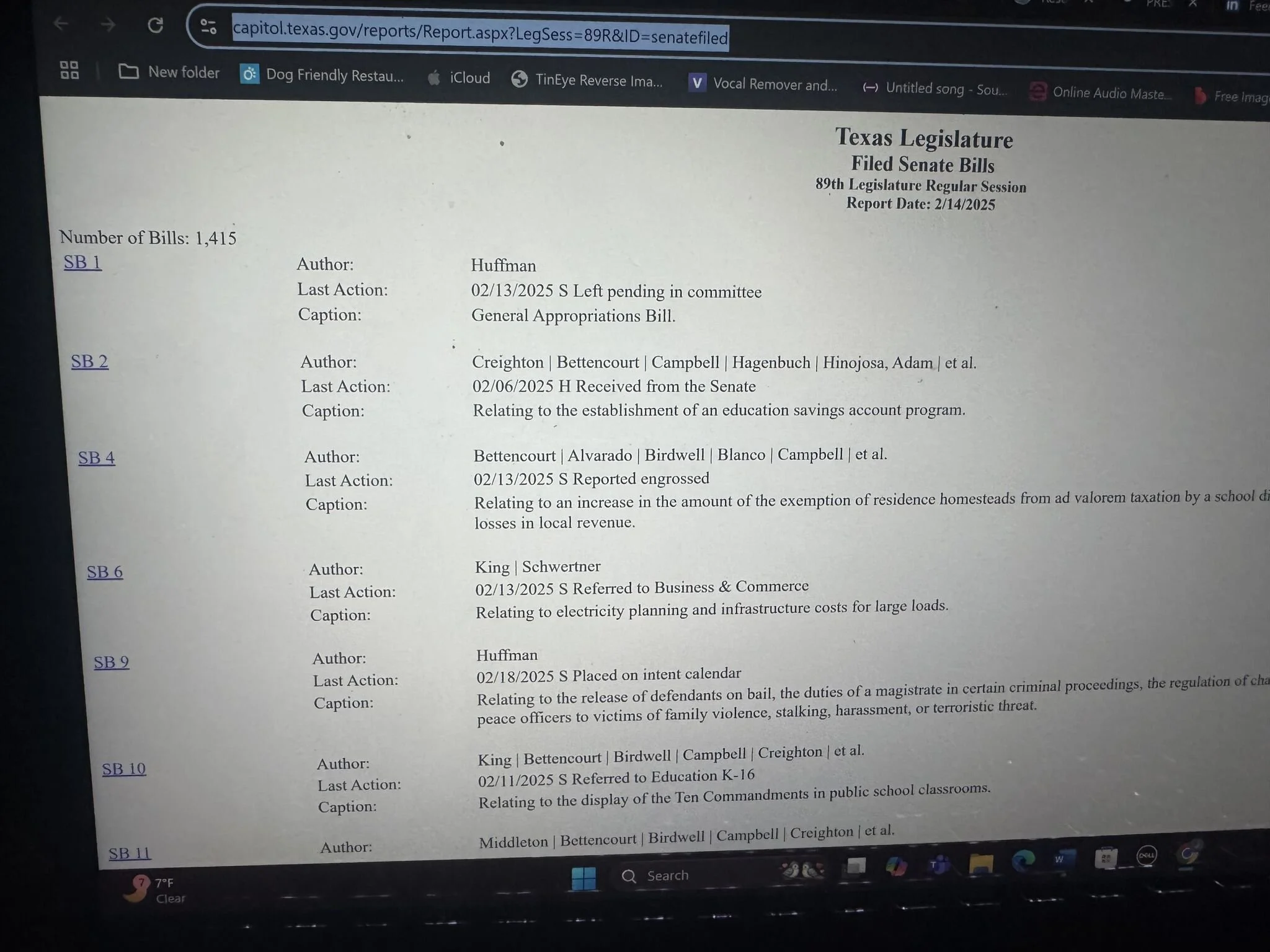
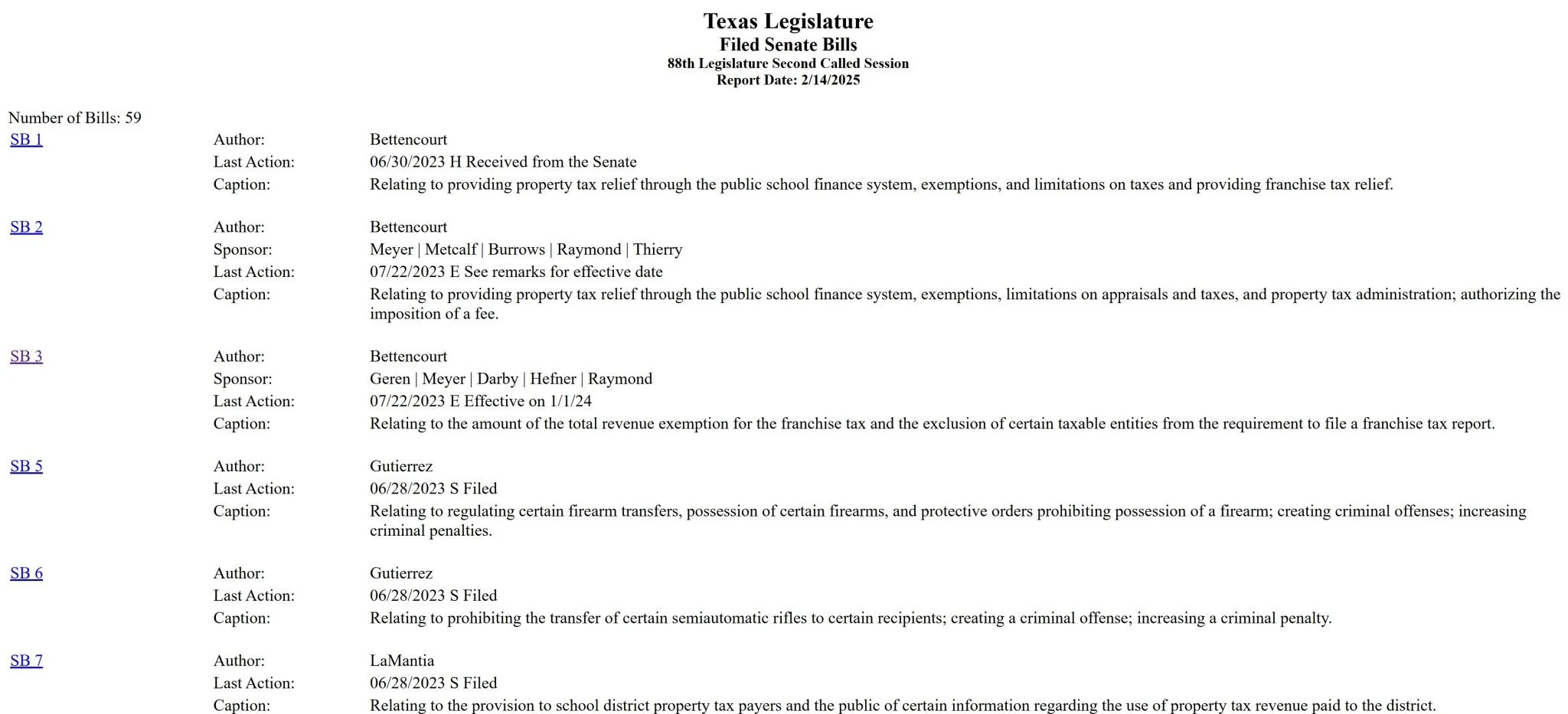
On a screenshot, SB 3 exists but is mislabeled, but a photo, it’s gone. Something isn’t adding up.
Texas, I got to hand it to you, this is a preemptive strike. I find this interesting, Senate Bill 3, Texas’ big hemp and THC ban, isn't on the Legislature’s website. Maybe someone doesn’t want the public digging too deep before it moves forward? Considering how many states are cracking down on hemp before cannabis markets fully open, and how Illinois is already backpedaling after its own mess, you have to wonder, who’s really pulling the strings here?
Meet SB 3, The “If You Can’t Regulate It, Ban It” Bill. This one aims to wipe out all THC products, including delta-8 and THCA. Because, apparently, when regulation is too hard, banning everything is the next best option.
Illinois already tried this playbook, handing hemp over to cannabis regulations to squeeze out small operators. But they pushed too hard, and now? They’re scrambling because the industry threw a fit. Turns out, picking winners and losers backfires. Who knew?
Texas is taking it a step further, instead of just making hemp harder to sell, Texas is going for the full ban.
What’s the logic? Public safety, of course. Because God forbid someone buys a legal, lab-tested product when they could just hit up an unregulated source instead. Remember the good old days of Ziplock baggies and mystery edibles? Brilliant strategy, guys.
Big cannabis and alcohol are eating this up. Ever notice how these bans never seem to touch their business models? If you’re a dispensary or liquor distributor, you’re just sitting back watching hemp retailers get steamrolled while demand shifts in your direction. It’s almost like… they planned it?
The hemp industry has been playing whack-a-mole with state laws for years. Tweak a molecule, rename it, boom, new loophole. Now, instead of tackling real crime, law enforcement gets to waste time busting smoke shops.
The ones that followed the law, built businesses, paid taxes, and hired employees? They get left holding the bag while bigger companies quietly swoop in with “licensed” THC products under state-approved dispensaries.
Texas, take notes, Illinois tried this. If Texas goes through with this, expect history to repeat itself, just with more cowboy hats and bad decisions.
The pattern keeps repeating… and hemp is under attack because the people in power don’t want competition. They want control. Those funding these politicians want to make sure only their version of THC is legal. And Texas is next in line to help them get their way.
If you want the other side of the fence & want to read a legalization bill instead, Rep. Jessica González's HB 1208 lays out a full framework for adult-use cannabis in Texas, here’s the full text: https://lnkd.in/eX7qGPKi
Senate Bill 3 (Texas 2025-2026)
Proposed by: Senator Charles Perry
Backed by: Lt. Gov. Dan Patrick
Read it… Still missing. Wonder why?
Thanks for F'nAround with me this morning.
SB1966, HB2926, and HB3074
The Illinois Cannabis Play, A Three-Act Comedy of Politricks. I was enjoying a wonderful coffee over lunch today when I got a very nice message asking if I had or would review the new transportation bills. Now, normally, I like to pace myself with these deep dives, especially since I’m out of town this week and wanted to keep things light before heading to Florida.But I thought, “Sure, why not? I know the transportation licenses well.” After all, I was helping a group apply for the first round back in the day before someone in a backroom basically told me, “If you like your clients, don’t let them waste their money, those licenses will be useless.”So, I thought, let’s take a look at these bills and see if anything has changed.Then I started digging.And reading.And reading.And realized…This isn’t three individual posts over the next three days.This is one glorious masterpiece of legislation working together in perfect harmony, like a beautifully orchestrated play, a tragicomedy of politricks brought to you by the great state of Illinois.And starring in today’s theatrical performance we have:Act I: SB1966 – Written and directed by Senator Cristina Castro, featuring dispensaries getting even more control over delivery.Act II: HB2926 – A parallel script by Representative Bob Morgan, because why write a new bill when copy-paste exists?Act III: HB3074 – A special “social equity” twist from Representative Sonya Harper, where social equity applicants are given licenses they can immediately sell to MSOs.The plot? State lawmakers claim they are expanding cannabis delivery and helping social equity applicants, but in reality, they are handing corporate dispensaries even more control while pretending to fix the mess they made with transporters last time.So, grab your popcorn, take a seat, and enjoy the greatest political legislative production Illinois has put on this year. I promise you, it’s a must-read.Thanks for F'nAround with me!
The Illinois Cannabis Monopoly playbook: how the state is rigging the industry again
Illinois lawmakers are once again pushing cannabis legislation that benefits corporate operators over independent businesses. They roll out new cannabis laws under the guise of social equity, market expansion, and consumer access but when you follow the money and power, the truth becomes clear.
With the introduction of Senate Bill 1966 (SB1966), House Bill 2926 (HB2926), and House Bill 3074 (HB3074), Illinois is not expanding opportunity. They are consolidating control.
This follows the pattern of previous cannabis licensing programs, where independent operators especially minority-owned businesses faced significant disadvantages.
Let’s break it all down.
Act I: SB1966 & HB2926 The “More Access, No Competition” Scam
These bills are being framed as a win for consumers allowing dispensaries to offer drive-through and home delivery services.
What They Claim:
Expanding consumer access to cannabis.
Making purchasing easier through drive-throughs and delivery.
Strengthening security, verification, and compliance.
What They Actually Do:
No new delivery licenses. These bills do not introduce any new licenses for delivery-only businesses or transporters. This means only dispensaries most of which are owned by multi-state operators (MSOs) can run delivery services, blocking independent operators from entering the market.
No independent competition. The only entities allowed to offer delivery are those that already have dispensary licenses.
Dispensaries now control delivery. Independent transporters who fought for their licenses are completely ignored.
Cherry-picked service areas. There is no requirement to serve all communities, meaning dispensaries can selectively serve wealthier, high-volume areas while leaving social equity zones behind.
SB1966: The Drive-Through & Delivery Expansion Bill
Sponsor: Senator Cristina Castro What it Does:
Allows dispensaries to operate drive-through windows for cannabis sales.
Permits dispensaries to deliver cannabis directly to customers’ homes.
Eliminates the distinction between medical and non-medical cannabis purchases.
HB2926: The Mirror Image with a Medical Focus
Sponsor: Representative Bob Morgan What it Does:
Contains identical provisions to SB1966 but with additional focus on medical cannabis accessibility.
The Real Impact:
Big cannabis gets bigger. Only dispensaries can run delivery operations, meaning MSOs win while independent operators lose.
More money = more control. The biggest players with the most resources will dominate the market immediately.
No role for independent transporters. The very businesses the state once licensed for transportation are now shut out.
Politicians who helped craft previous “social equity” legislation are now ensuring corporate cannabis gets everything.
Act II: What About the Original Transporters?
If Illinois really wanted fairness, why are the original cannabis transporter license holders being ignored?
The Facts:
Transporters were supposed to be a gateway for minority-owned businesses into the cannabis industry.
The state delayed issuing their licenses while letting MSOs transport their own products.
By the time transporters got their licenses, corporate cannabis already controlled the supply chain.
Where is the Priority for the Transporters Who Were Already Shut Out?
Illinois owes independent transporters a head start on any new delivery license.
Instead, they are being cut out again.
The Receipts: Lawsuits & Discrimination
Fall 2024: A group of minority- and women-owned transport companies sued the Illinois Department of Agriculture (IDOA) for discrimination and destroying their businesses. The lawsuit claims that delays in licensing gave MSOs an unfair head start, putting independent transporters at a severe disadvantage.
Now, the same thing is happening again with delivery. Instead of prioritizing transporters, SB1966 and HB2926 hand delivery straight to dispensaries.
The Copy-Paste Legislation: SB1966 and HB2926 Were Written Together
If these bills look like they were written by the same people, it’s because they likely were. A direct comparison of SB1966 and HB2926 reveals identical language, phrasing, and provisions, both amending the same sections of Illinois cannabis law to allow drive-throughs, delivery, and broader dispensary control. This is not a coincidence. It suggests a coordinated effort to pass these changes without scrutiny, disguised as separate legislative efforts. Meanwhile, HB3074 the so-called social equity bill is written differently, with no clear connection to the other two. This means while corporate cannabis expansion was carefully drafted to ensure success, social equity was treated as an afterthought. If Illinois lawmakers truly cared about fairness, they would have taken the same level of coordination to protect independent operators and social equity businesses as they did to expand dispensary power.
Act III: HB3074 The Fake Social Equity Bill
The state knows they cannot pass a cannabis expansion bill without a “social equity” component, so HB3074 was introduced to make it seem like they care.
What They Claim:
A new social equity delivery license to help impacted communities.
A fair scoring system for awarding licenses.
A $500 application fee to lower the barrier to entry.
What They Actually Do:
No required holding period. Social equity winners can immediately sell their licenses. Who buys them? The MSOs.
No startup funding or grants. New operators will be forced to sell their licenses to survive.
No prevention of MSO interference. There is nothing stopping corporate cannabis from controlling these licenses through ownership structures.
No guarantees on delivery regions. Delivery services are not required to serve social equity areas.
Act IV: The Master Plan Corporate Control Over Every Sector
If these bills pass as written, this is what Illinois cannabis will look like in five years:
Cultivation? Locked down by MSOs.
Dispensaries? Controlled by corporate operators.
Processing? Owned by the same big players.
Delivery? Structured so that only corporate cannabis can succeed.
Independent operators? Shut out.
Social equity? Just a marketing slogan.
Politicians who created “equity” laws? Now helping MSOs take everything.
This is not about expanding access. It is about ensuring big cannabis controls everything.
Act V: The Solution… Real Equity, Real Competition
If Illinois lawmakers actually cared about social equity, they would:
Give the Screwed Transporters First Access Independent transporters should get priority for delivery licenses, with a head start before dispensaries if they already accepted bibes and have to give them some.
Ban Corporate Takeovers of Social Equity Licenses No MSO, employee, or family ties to social equity licenses. Mandatory five-year holding period before a license can be sold.
Fund Real Social Equity Businesses State-backed grants and loans so small businesses do not have to sell their licenses.
Cap MSO Involvement in Delivery Prevent MSOs from controlling more than 10 percent of delivery licenses if they accepted bribes and have to give them some.
Require Delivery to Serve All Communities Prevent cherry-picking profitable urban areas while leaving social equity zones underserved.
Final Verdict: This is a Trojan Horse for Corporate Cannabis
Illinois keeps repeating the same pattern.
The original transporters were set up to fail.
Now, social equity delivery licensees are being set up to fail.
Meanwhile, MSOs get exactly what they want, complete market control.
If Illinois wants to fix this mess, these bills must be rewritten to prevent another corporate takeover.
Otherwise, social equity in Illinois cannabis will be nothing more than a lie.
104TH GENERAL ASSEMBLY
State of Illinois
2025 and 2026 SB1966
Introduced 2/6/2025, by Sen. Cristina Castro
https://www.ilga.gov/legislation/104/SB/10400SB1966.htm
104TH GENERAL ASSEMBLY
State of Illinois
2025 and 2026 HB2926
Introduced 2/6/2025, by Rep. Bob Morgan
https://www.ilga.gov/legislation/104/HB/10400HB2926.htm
104TH GENERAL ASSEMBLY
State of Illinois
2025 and 2026 HB3074
Introduced 2/6/2025, by Rep. Sonya M. Harper
https://www.ilga.gov/legislation/104/HB/10400HB3074.htm
Thanks for F'nAround with me!
HB2384
I was asked to look into Illinois HB2384, a bill sponsored by Rep. Bob Rita, that’s being pitched as a win for transporters. At first glance, it looks like a lifeline, promising small cannabis transporters access to new licenses and expanded roles.
But when I actually read it, the writing on the wall was impossible to ignore.
This bill isn’t a gift, it’s a setup. A calculated move designed to consolidate transportation control, benefiting the big corporate players while squeezing out the small ones.
But don’t take my word for it. Start F'nAround with me and let’s break it down.
HB2384: The Trojan Horse for Cannabis Transport and Industry Consolidation
Why does legislation look like a Trojan horse from this side of the table, but a gift, bought and paid for, from the other? Illinois lawmakers are pushing House Bill 2384 as a supposed win for cannabis transporters, but a deeper analysis shows this is a textbook move toward industry consolidation, one that benefits large multi-state operators (MSOs) while trapping small businesses in a corporate-controlled pipeline. If passed, this bill could reshape the cannabis market to mirror the monopolized alcohol industry, where distribution is controlled by a handful of major players.This isn’t about helping transporters, it’s about setting up a structure that allows major cultivators and dispensary networks to tighten their grip on the supply chain, pushing independent businesses out unless they submit to the system.The Playbook: What HB2384 Actually DoesHB2384 proposes the creation of Consolidated Transport Centers (CTCs), centralized hubs that would control the movement of cannabis between cultivators, infusers, dispensaries, and transporters. The key provisions include:Mandatory Tracking: All cannabis products must be routed through a CTC and monitored by the Department of Agriculture. This sounds like compliance, but it actually forces smaller businesses into a controlled system owned by the largest players.Transporters Can Defer License Fees for Three Years: Sounds like a gift, right? More like bait. Once transporters are locked into the system, fees and regulations can be adjusted to ensure only well-funded businesses survive.Craft Growers and Infusers Lose Supply Chain Control: They must use licensed transporters to move their products through a CTC, adding extra costs and logistical barriers. Independent growers can no longer transport directly to dispensaries, forcing them into a model that benefits larger distributors.Only Licensed Transporters Can Operate Within This System: Businesses must contract with a CTC to transport anything, effectively creating a choke point where only a select few control movement.This is the same model used in alcohol distribution, where large corporations control every level of the supply chain, squeezing out independent operators through bureaucracy and fees.The Bigger Play: Retail Distribution Will Be NextThe bill doesn’t just stop at transport. CTCs create a framework that can later be expanded to require dispensaries to purchase exclusively through them removing any independence from small retailers. If that happens, cannabis dispensaries will function like liquor stores, where all product distribution is controlled by a few major players, killing competition.Illinois vs. California: Decentralized vs. Corporate-Controlled ModelsLet’s compare this with California’s cannabis market, which does not require such centralized distribution.California allows decentralized distribution, meaning that cultivators, distributors, and retailers can negotiate and operate independently. While imperfect, this keeps some level of market flexibility.HB2384 moves Illinois toward an alcohol-style model, where all distribution is funneled through corporate-controlled hubs. Once in place, independent businesses will be squeezed with increased costs, regulations, and artificial bottlenecks.If craft growers lose their ability to self-distribute, they will have no bargaining power, meaning MSOs and their chosen distribution partners can dictate prices and terms.Illinois already has one of the most restricted cannabis markets in the country. HB2384 only further locks in corporate dominance.Follow the Money: Who Benefits?The bill’s sponsor, Rep. Bob Rita, is no stranger to regulatory capture. He ran unopposed in his last election yet still managed to raise over $500,000 in campaign donations. Who funded him?Alcohol and tobacco industry donors who already benefit from similar distribution monopolies.Corporate-backed interests tied to Illinois regulatory gaming.Likely cannabis industry donors, although further research is needed to trace exact contributions.Why would these industries care about transporters? Because controlling distribution is the key to controlling the entire cannabis market.The Political Sleight of Hand: Why This Bill Is a TrapThis is how industry monopolies are built:Create a framework for transport consolidation package it as a win for small businesses.Make it seem like an immediate benefit offer deferred fees to lure in transporters.Shift market control to a few major players over time adjust licensing, fees, and requirements later.Position Illinois cannabis like alcohol distribution where independent businesses are just “franchisees” within a corporate system.If HB2384 passes, independent transporters, craft growers, and small dispensaries will be at the mercy of corporate giants like Cresco, GTI, and Verano. And if you think they won’t use this power to drive their competitors into the ground, you haven’t been paying attention.The Schill Play: How This Will Squeeze Out “Social Equity” License HoldersThis bill also provides an easy way for corporations to exploit social equity license holders by placing them in a system they can’t control.Many social equity licensees were funded by larger cannabis companies, which means they owe their success to MSOs.With CTCs controlling transport and product flow, MSOs can pressure these small operators into unfavorable deals.If a small dispensary or craft grower refuses to play ball, the corporate-backed CTCs can increase fees, delay shipments, or create regulatory hurdles, making it impossible to stay afloat.HB2384 guarantees that small, independent businesses will either comply or be forced out.What This Means for the Future of Illinois CannabisIf HB2384 is passed:Independent transporters will operate within a system rigged against them.Craft growers and smaller dispensaries will lose control over their supply chain.Major cultivators like Cresco Labs, Green Thumb Industries (GTI), and Verano will have a clear path to total market control.Illinois cannabis will be structured like alcohol distribution where independent ownership means nothing if you don’t play by corporate rules.This is being marketed as a gift to transporters, but in reality, it’s a setup.What You Can Do about the104TH GENERAL ASSEMBLYState of Illinois2025 and 2026 HB2384:Read the bill for yourself → HB2384 Full TextAsk who benefits.Follow the money. https://www.followthemoney.org/entity-details?eid=2665989&default=candidateContact lawmakers before this passes. They expect people not to notice how the game is played. They expect you to be too distracted to fight back.But some of us are still watching and F'nAround.
SB1766
Ah, Illinois politics, where a simple hemp infused drink turns into a regulatory cocktail. Enter SB1766, a handcrafted special from our state’s mixologists. On the surface, it’s got all the right ingredients: safety, structure, control. But take a closer sip, and the aftertaste suggests big alcohol is playing bartender, deciding who gets served and who’s left dry.
The Smooth Notes: A Well Balanced Start
SB1766 sets THC limits at 10mg per 7.5 ounce serving and 60mg per container, no accidental rocket ships. Sales are 21+ only, keeping high schoolers off hemp soda. A Hemp Beverage Commission under the Illinois Liquor Control Commission (ILCC) will oversee the industry. The bill is light on details about who will actually run the Hemp Beverage Commission, leaving ILCC with broad discretion to shape it, meaning the same industry players who benefit from the rules might also be the ones writing them. Nothing screams “craft hemp seltzer” like the same folks regulating vodka and beer.
The Bitter Undertones: Who’s Really Calling the Shots?
SB1766 doesn’t just regulate distribution, it lets ILCC decide who distributes. If ILCC doesn’t approve your hemp brand, you’re out. This isn’t about regulation, it’s about control. The bill creates Hemp Beverage Distributor Registrations, meaning only ILCC approved businesses can distribute. Big alcohol is positioned to get first dibs while independent brands wait in line.
The bill doesn’t say hemp beverages must be sold in liquor stores, but it places them under ILCC. If history tells us anything, once something falls under the liquor board, access shrinks, not expands. I wonder if the cannabis industry is popping bottles over this, or if they just realized that watching hemp take a hit today might mean their turn is coming tomorrow.
Following the Money: Who’s Behind the Bar?
The head mixologist behind SB1766? Sen. Bill Cunningham. Check his campaign bar tab and guess who’s pouring shots? Major alcohol players.
Step 1: Regulate hemp drinks under ILCC.
Step 2: Hand distribution control to ILCC.
Step 3: Ensure only “approved” businesses distribute.
Step 4: Regulate hemp beverages like alcohol.
Step 5: Quietly restrict sales to liquor licensed venues.
This isn’t just regulation, it’s a policy shift that quietly shifts power into the hands of big distributors.
SB1766 doesn’t explicitly force hemp drinks into liquor stores yet. But with ILCC in charge, history suggests that restriction is just a stir away.
So, before we toast to this bill, let’s make sure we’re not drinking something we didn’t order. In politricks, always check the label and the campaign contributions.
104TH GENERAL ASSEMBLY
State of Illinois (2025 2026)
SB1766 by Sen. Bill Cunningham
Read the bill here: https://lnkd.in/gWUYmWEC
Thanks for F'nAround with me again…