United’s “Relax Row” and the Illusion of Space: When Comfort Becomes Conditional
United’s “Relax Row” and the Illusion of Space: When Comfort Becomes Conditional
There is a moment every frequent flyer recognizes, usually somewhere between boarding and the slow dimming of cabin lights on a red-eye, when the seat map stops being a diagram and becomes a strategy. You scan for gaps, calculate odds, and quietly hope the empty row near the back stays empty long enough to transform discomfort into something resembling rest. It is an unspoken ritual, one built not on policy, but on probability.
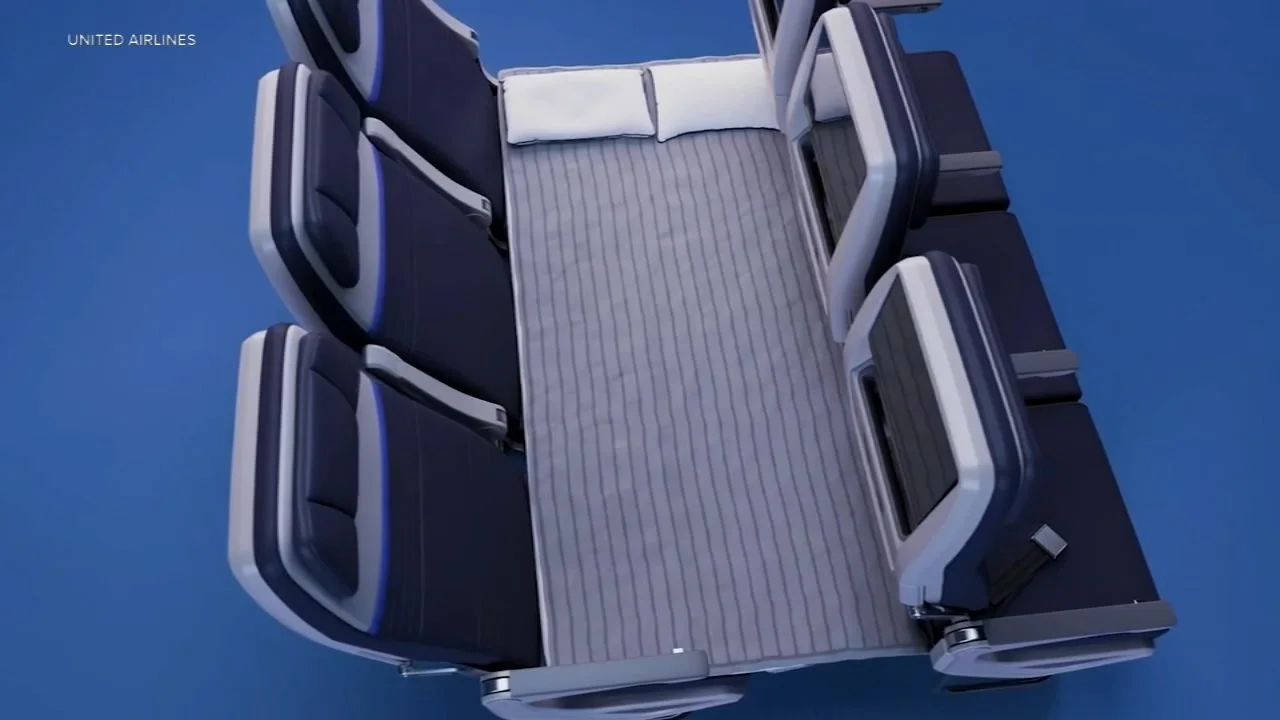
United Airlines has now taken that ritual and turned it into a product. Marketed as “Relax Row,” the concept allows passengers to purchase an entire row of economy seats and convert it into a lie-flat sleeping space using a mattress pad, blanket, and pillow. It is, at face value, an elegant piece of commercial design. It captures a known passenger behavior, formalizes it, and assigns it a price. What was once luck becomes inventory. What was once opportunistic becomes transactional.
And yet, beneath the surface, something more complex is happening.
Airlines do not sell seats in the way most people think they do. They sell models of expected behavior, layered with probabilities, constrained by operational realities, and governed by terms that preserve flexibility above all else. Overbooking is the clearest expression of this. A flight is not filled based on physical capacity alone, but on anticipated absence. The system works not because it is precise, but because it is statistically stable.
Until it isn’t. In 2017, Dr. David Dao became the focal point of what happens when that stability collapses in public view. The incident was not merely a failure of customer service or communication; it was a moment where the underlying logic of the system surfaced abruptly. A seat, which passengers tend to perceive as a fixed entitlement once purchased, revealed itself instead as a negotiable position within a larger operational framework. The resulting friction was not accidental. It was structural.
Relax Row enters this same structure, but with a subtle and important shift. It does not sell a single seat, but rather a configuration of space. Three seats are bundled into a singular experience, one that promises rest, privacy, and a temporary escape from the density of economy travel. Psychologically, this is powerful. It reframes the passenger’s relationship with the aircraft from one of endurance to one of control. The passenger is no longer merely occupying space; they are shaping it.
That sense of control, however, exists within a system that is explicitly designed to remain fluid.
The tension emerges the moment constraints tighten. Consider a scenario in which a flight approaches or exceeds its intended capacity due to overbooking, operational adjustments, or the need to accommodate crew repositioning. In such moments, space is no longer experiential. It is functional. The three seats that constituted a Relax Row are no longer a bed; they are three discrete units of capacity, each capable of resolving a separate logistical need.
The question is not whether the airline has the ability to reallocate that space. The structure of airline contracts makes that clear. The question is how the passenger interprets the transaction when that reallocation occurs.
From the passenger’s perspective, the purchase of a Relax Row is an acquisition of certainty. It is an attempt to impose predictability on an inherently unpredictable environment. From the airline’s perspective, it is a conditional offering, one that exists only insofar as it does not interfere with operational requirements. These two interpretations coexist peacefully under normal conditions, but diverge rapidly under stress.
This divergence is where what I describe as structural gravity begins to manifest. Obligations, promises, and expectations accumulate weight over time, particularly when they are layered onto systems that rely on flexibility to function. Each new product, each added feature, introduces additional points of tension. Individually, they appear manageable. Collectively, they create a system that is increasingly sensitive to disruption.
The timing of Relax Row is therefore as significant as the concept itself. Airlines are operating in an environment that is trending toward higher efficiency, fewer redundant routes, and tighter capacity management. Major hubs, including O’Hare International Airport, are seeing adjustments that prioritize optimization over volume. In such a system, the margin for unused space diminishes. What was once excess becomes essential. https://apnews.com/article/ohare-flights-cut-faa-united-american-e3d168da04ea2e5e07d1679ea41e1af1
This is where the psychological layer deepens. The product promises an elevated experience within economy, but it does so by relying on the continued existence of surplus capacity. As that surplus erodes, the likelihood increases that the product’s underlying assumption, that space will remain available for conversion, will be tested. The passenger, having paid to eliminate uncertainty, is reintroduced to it at precisely the moment it matters most.
A refund, in this context, becomes an inadequate substitute. It resolves the financial transaction but does nothing to restore the intended experience. Sleep lost on a long-haul flight is not recoverable in the same way as a delayed purchase or a canceled service. The gap between what is compensated and what is actually lost becomes another form of friction, one that is not easily quantified but is deeply felt.
None of this renders Relax Row a flawed idea. On the contrary, it is a logical extension of how airlines have evolved their pricing and segmentation strategies. It identifies a real demand and offers a structured way to meet it. The issue is not the product itself, but the environment into which it is introduced.
When innovation is layered onto a system already operating near its limits, it does not simply add value. It adds weight. And as that weight accumulates, the system’s response to disruption becomes more revealing. The seat map, once a simple representation of availability, begins to reflect something more dynamic. It becomes a surface-level view of deeper priorities, where operational necessity consistently outweighs individual expectation.
Relax Row will function exactly as intended under ideal conditions. Passengers will stretch out, fall asleep, and arrive with a sense that they have discovered a smarter way to travel. The experience will be shared, repeated, and normalized. It will, for a time, appear as though the system has successfully expanded its offerings without consequence.
But systems rarely reveal their true nature under ideal conditions.
They reveal themselves under pressure.
And when that pressure arrives, the question will not be whether Relax Row was innovative. It will be whether the promise it represents was ever fully compatible with the structure that supports it.
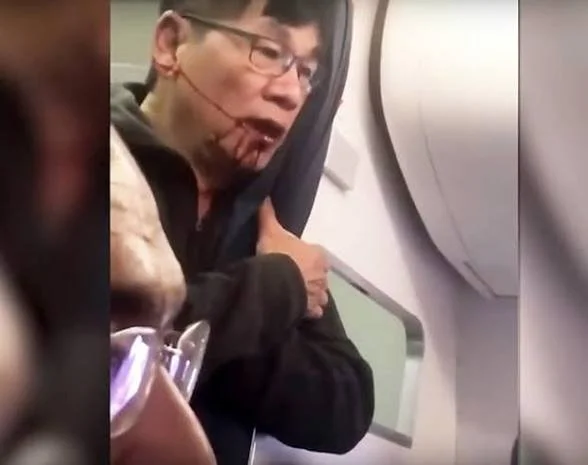
Dr. David Dao United Airlines removal https://en.wikipedia.org/wiki/2017_United_Express_passenger_removal