The Streaming Wars Are Over: The Cable Companies Won
The Streaming Wars Are Over: The Cable Companies Won
From “Watch Anywhere” to “You’ve Used All Your Away Requests”
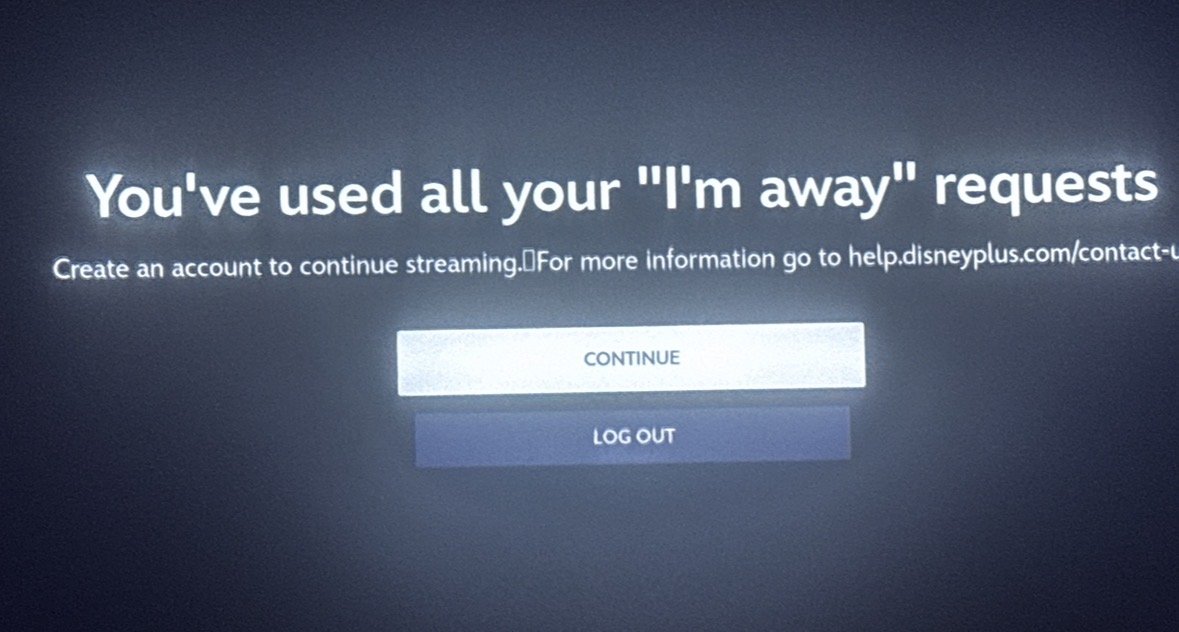
The other night, Disney+ hit me with a message that stopped me in my tracks.
Not because it was offensive.
Not because it was surprising.
Because it perfectly summarized everything that has happened to streaming over the last decade.
The message simply said:
“You’ve used all your ‘I’m Away’ requests.”
Think about that sentence for a moment.
Not:
“You have exceeded your simultaneous stream limit.”
Not:
“We detected unauthorized account sharing.”
Not:
“Someone is stealing your account.”
Instead, the platform was essentially informing me that I had reached the maximum number of times I was allowed to not be home.
As someone who spends an unhealthy amount of time studying systems, incentives, organizational behavior, regulation, and strategic decision-making, I found the message fascinating.
Because this isn’t really about streaming.
It’s about what happens when a disruptive business model matures.
And what happens when growth ends.
The Lifecycle of Disruption
Every disruptive industry follows a predictable pattern.
Phase One is attraction.
The goal isn’t profit.
The goal is adoption.
You make the experience easier, cheaper, and more convenient than the incumbent.
That is exactly what streaming did.
Consumers were told:
Watch anywhere.
Watch on any device.
No cable box.
No contracts.
No installation appointments.
No equipment rental fees.
Your content follows you everywhere.
Compared to cable television, it felt revolutionary.
Netflix, Hulu, Amazon Prime Video, Disney+, HBO Max, Peacock, AMC, Paramount+, Apple TV+, and countless others built their empires on one promise:
Convenience.
Convenience was the product.
The movies and television shows were almost secondary.
Then Growth Stopped
From a management and strategy perspective, every executive team eventually encounters the same problem.
What happens when you already have most of the customers?
Investors still want growth.
Wall Street still wants growth.
Shareholders still want growth.
Quarterly earnings still demand growth.
But the market begins approaching saturation.
When that happens, organizations stop focusing on acquiring customers and begin focusing on extracting additional value from existing customers.
That’s where streaming finds itself today.
The strategic question shifted from:
“How do we get people to subscribe?”
To:
“How do we increase revenue per subscriber?”
That single change explains nearly everything consumers are experiencing.
The Evolution of Restrictions
The progression has been remarkably consistent.
Stage One: Unlimited Freedom
The original model.
Share accounts.
Watch anywhere.
Use multiple devices.
Tell your friends.
Grow the ecosystem.
Stage Two: Device Limits
Companies introduced simultaneous stream restrictions.
Not a major problem.
Most consumers accepted it.
Stage Three: Household Definitions
Suddenly the term “household” became important.
Not family.
Not account owner.
Not subscriber.
Household.
An interesting shift in language.
Stage Four: Verification
Text messages.
Verification codes.
Location confirmations.
Network authentication.
Travel verification.
Stage Five: Monetization of Sharing
The final step.
Account sharing was no longer viewed as customer behavior.
It became a revenue opportunity.
Now consumers can pay additional fees for extra members, secondary households, or approved account sharing.
The behavior that once helped build these platforms became a product that could be sold back to users.
The Disney Example
The “I’m Away” notification represents perhaps the most fascinating evolution yet.
Historically, a streaming service asked:
“Are you paying?”
Today, the platform asks:
“Where are you?”
Tomorrow, the question becomes:
“How often are you allowed to be somewhere else?”
That is a fundamentally different business relationship.
The subscription is no longer tied exclusively to payment.
It becomes increasingly tied to location, behavior, and compliance with platform-defined usage patterns.
The Cableification of Streaming
One of the greatest ironies in modern business is that streaming appears to be slowly recreating many of the frustrations that made consumers abandon cable television.
Consumers left cable because:
Bundles became expensive.
Content became fragmented.
Rules became frustrating.
Equipment became restrictive.
Costs kept increasing.
Fast forward to today.
Many households subscribe to:
Netflix
Disney+
Hulu
HBO Max
Peacock
Paramount+
Prime Video
Apple TV+
ESPN services
Specialty streaming platforms
The total monthly cost can easily exceed what many consumers once paid for cable.
Only now every platform has its own password policies, device policies, household definitions, authentication systems, and sharing restrictions.
We’ve recreated the complexity.
We simply distributed it across multiple apps.
The Strategic Problem
From a systems perspective, companies face a dangerous balancing act.
Every additional restriction may generate short-term revenue.
However, every additional restriction also creates friction.
Friction reduces perceived value.
Reduced value increases cancellation risk.
Cancellation risk increases customer acquisition costs.
This creates what management theorists would recognize as a feedback loop.
Companies attempt to increase profitability.
The mechanisms used to increase profitability reduce customer satisfaction.
Reduced satisfaction creates pressure for additional revenue extraction.
Additional extraction creates additional dissatisfaction.
The loop continues.
The question becomes:
Where is the breaking point?
The Consumer Experience Problem
The average customer is not thinking about investor expectations, shareholder returns, or quarterly earnings reports.
They’re asking practical questions.
What if I travel for work?
What if I have a college student?
What if I spend time between two homes?
What if I’m caring for aging parents?
What if my child is on vacation?
What if I’m literally the person paying for the account?
These are not edge cases.
These are normal modern lifestyles.
Yet increasingly, platforms are treating them as exceptions requiring verification and approval.
South Park Wasn’t Wrong
The older I get, the more I realize that satire often arrives before reality.
South Park’s “Streaming Wars” mocked the absurdity of modern content distribution and monetization.
At the time, it felt exaggerated.
Now it feels observational.
Every platform is fighting for attention.
Every platform is building walls.
Every platform is attempting to maximize revenue from a finite customer base.
And every platform believes its restrictions will be tolerated because consumers have already invested in the ecosystem.
The Milkshake Problem
There is a scene in There Will Be Blood where Daniel Plainview famously explains competition by saying:
“I drink your milkshake.”
Streaming companies appear to have adopted a similar philosophy.
The problem is that eventually there are no new milkshakes left.
Only the existing customers.
When growth slows, companies begin drinking from the same customer repeatedly.
Extra member fees.
Premium tiers.
Ad-supported tiers.
Price increases.
Travel verification.
Household restrictions.
Away-from-home limits.
Each individual change may appear reasonable.
Collectively, they tell a larger story.
What Happens Next?
The future of streaming may depend on whether executives remember what made streaming successful in the first place.
It wasn’t technology.
It wasn’t content.
It wasn’t apps.
It wasn’t algorithms.
It was convenience.
Consumers tolerated fewer movies.
Consumers tolerated smaller libraries.
Consumers tolerated startup glitches.
Because the experience was easier than cable.
The moment streaming becomes more complicated than the thing it replaced, the value proposition begins to collapse.
And that is the risk every streaming platform now faces.
The greatest threat to streaming may not be piracy.
It may not be competition.
It may not even be content costs.
The greatest threat may be forgetting why consumers showed up in the first place.
Because nobody cut the cord so they could eventually receive a message telling them they’ve used too many permissions to be away from home.
Yet here we are.
The Streaming Wars are over.
And increasingly, it feels like the cable companies won.
Disney, the company that built its empire on family entertainment, may have accidentally revealed how modern streaming companies define “family.” Not parents traveling for work. Not kids away at college. Not relatives visiting grandparents. Not households spread across the realities of modern life. Instead, family appears to mean everyone sitting under one roof, on one internet connection, watching from approved devices in approved locations. The irony is hard to miss. The company famous for telling audiences to dream bigger now seems to prefer that nobody leaves home.