Riot Fest 2026: The Full F’nAround Guide to the Lineup, Headliners, Food and Chicago History
Riot Fest 2026: The Full F’nAround Guide to the Lineup, Headliners, Food and Chicago History
Chicago has music festivals, and then Chicago has Riot Fest, the annual weekend when punk lifers, metalheads, emo kids, alternative-rock obsessives, hip-hop fans and people who simply want to see what William Shatner sounds like fronting a heavy-metal band all end up in the same park.
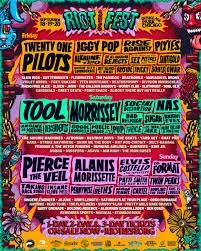
Riot Fest returns to Douglass Park from Friday, September 18, through Sunday, September 20, 2026. Gates are scheduled to open at 11 a.m. each day, with performances ending by Chicago’s 10 p.m. curfew. More than 100 artists are spread across the three-day bill, led by Twenty One Pilots, Tool, Pierce the Veil and Alanis Morissette, with Iggy Pop, Morrissey, Rise Against, Elvis Costello, Patti Smith, Nas, Social Distortion and dozens of other acts filling out one of the strangest and strongest lineups of Chicago’s festival season.
That mix is the point. Riot Fest may have been built on punk rock, but it has never been very interested in staying inside one genre long enough for anyone to put a fence around it.
Where and When Is Riot Fest 2026?
Riot Fest takes place September 18–20 at Douglass Park on Chicago’s West Side. The main entrance and box office are near West Ogden Avenue and South Sacramento Drive, Chicago, Illinois 60623. The box office is scheduled to operate from 11 a.m. until 9 p.m., while festival hours run approximately 11 a.m. to 10 p.m. each day.
The CTA Pink Line’s California station is only a few blocks from the entrance and is the simplest option for most attendees. Riot Fest strongly encourages public transportation, bicycles, taxis or rideshare services. Official off-site parking is available, but anyone who has ever tried to leave a major Chicago festival at closing time already understands why the train has appeal.
General-admission tickets permit one entry per day and do not include re-entry. VIP, Deluxe and Deluxe+ wristbands include re-entry privileges. The event is all ages, and children five and younger may enter free with a ticketed adult.
Friday: Twenty One Pilots, Iggy Pop and a Chicago Homecoming.
Friday opens the weekend with Twenty One Pilots at the top of the bill, but the day’s real identity is the collision of generations underneath them.
Iggy Pop remains one of the foundational figures of punk, a performer whose stage presence helped write the rulebook before most punk bands existed. Rise Against and Alkaline Trio bring the lineup directly back to Chicago, while Pixies connect late-1980s alternative rock to nearly everything that followed. The Sex Pistols, The All-American Rejects, Santigold, Motion City Soundtrack, Bayside and GWAR make Friday less a single-genre program than an accelerated tour through several decades of alternative culture.
The undercard is equally scattered in the best way: Slick Rick brings golden-age hip-hop, Tricky brings trip-hop, 3OH!3 brings late-2000s electropop chaos, Mariachi El Bronx brings the alter ego of punk band The Bronx, and Joey Valence & Brae connect old-school rap energy to a younger festival audience.
Friday’s complete lineup.
Twenty One Pilots; Iggy Pop; Rise Against; Pixies; Alkaline Trio; The All-American Rejects; Sex Pistols; Santigold; Motion City Soundtrack; Joey Valence & Brae; Bayside; Tricky; 3OH!3; GWAR; Slick Rick; Guttermouth; Fleshwater; The Paradox; Bratmobile; Mariachi El Bronx; Violet Grohl; Foxy Shazam; DeathbyRomy; División Minúscula; Radio Free Alice; Glixen; JMSN; The Callous Daoboys; Worry Club; Teen Mortgage; Slothrust; Soul Glo; Stephen Egerton; Cardinals; Greet Death; Panic Shack; and Almost There But Not Really.
Saturday: Tool, Morrissey, Nas and Punk-Rock Bedrock.
Saturday is the heaviest day at the top. Tool headlines with the kind of meticulously constructed progressive metal that turns a festival field into a massive audio-and-visual production. Morrissey supplies the weekend’s most complicated legacy booking, while Social Distortion and Bad Religion represent the durable punk institutions that helped make a festival like Riot Fest possible.
Nas gives the day one of hip-hop’s defining lyricists. Descendents, Public Image Ltd., The Suicide Machines, Less Than Jake and Strike Anywhere reinforce the punk and ska-punk core, while Gogol Bordello brings its full-speed gypsy-punk spectacle. Bright Eyes, PUP, Thrice and The Chats pull the program through indie, post-hardcore and garage punk.
Then there is Afroman, because any festival capable of placing Tool, Morrissey, Nas, Melt-Banana and Afroman on the same daily lineup understands exactly what kind of festival it wants to be.
Saturday’s complete lineup.
Tool; Morrissey; Social Distortion; Nas; Bad Religion; Sugar; Bright Eyes; Angine de Poitrine; Descendents; Gogol Bordello; Public Image Ltd.; PUP; Thrice; Less Than Jake; Brian Fallon & The Painkillers; The Suicide Machines; Afroman; Destroy Boys; The Chats; Yard Act; Chat Pile; VANA; Strike Anywhere; Show Me the Body; Hot Rod Circuit; Melt-Banana; Frankie and the Witch Fingers; Burning Airlines; Gurriers; Kiwi Jr.; NOBRO; Whispers; ASAVA; Aim High; and The Iron Roses.
Sunday: Pierce the Veil, Alanis Morissette and William Shatner Goes Metal.
Sunday may be the most eclectic day of all. Pierce the Veil represents the modern post-hardcore audience, while Alanis Morissette brings one of the defining catalogs of 1990s alternative rock. Elvis Costello & The Imposters and Patti Smith and Her Band supply two different branches of literate, confrontational rock history.
The Format, Taking Back Sunday, The Beths, Mom Jeans, Cartel and Bowling for Soup give Sunday a powerful emo, pop-punk and indie streak. Pennywise and Good Riddance carry the traditional punk side, Insane Clown Posse guarantees spectacle, and the Chicago representation continues with Twin Peaks and Sincere Engineer.
The wild card is 95-year-old William Shatner, scheduled to debut his heavy-metal band, The *uckers. Riot Fest reportedly pursued Shatner for more than a decade, making the set the latest payoff in the festival’s long tradition of turning an ongoing joke into an actual booking. The performance is expected to rework music from Shatner’s recording career and preview material from his forthcoming heavy-metal project. It may be brilliant, bewildering or both which makes it nearly perfect for Riot Fest.
Sunday’s complete lineup.
Pierce the Veil; Alanis Morissette; Elvis Costello & The Imposters; The Format; Patti Smith and Her Band; Twin Peaks; Taking Back Sunday; Insane Clown Posse; Pennywise; The Beths; Mom Jeans; Cartel; Bowling for Soup; This Is Lorelei; Sincere Engineer; Jejune; Arm’s Length; Saturdays at Your Place; Good Riddance; Haywire; Dead to Me; The Flatliners; Murphy’s Law; Pretty Girls Make Graves; Daisy Grenade; Holding Absence; Algernon Cadwallader; Ben Quad; Remember Sports; Macseal; Stomach Book; Largemouth; Rose of Demise; and William Shatner and his metal band The *uckers.
The Food: Chicago Institutions, Neighborhood Vendors and Festival Fuel.
Riot Fest’s food program is broad enough that nobody is limited to surviving on one sad slice of pizza. The 2026 lineup combines Chicago institutions, neighborhood restaurants, food trucks and familiar festival staples. Gluten-free, vegetarian and vegan options are marked by the festival at many booths.
The DoorDash Food Village includes Ralphie’s Donuts, Smoke Daddy, Taco Maya and Uncle Remus.
The main field includes Bacci Pizza, Banges, BDC Sports, Big Star, Billy Goat Tavern, Buona, Bust Outs, Cafe Tola, Caseras Food Truck, Dark Matter Coffee, Great American Pizza, Harold’s Chicken, Island Noodles, Lee’s Concessions, Lindsay Italian Ice, Los Comales, Lunch Box Cafe, Meet Stop by Ste Martaen, Potato Hut, The Publican, Quang Noodle, Reggie’s, Sabor a Cuba, Sabroso! Mexican Grill, Suzie’s Fun Foods, Table to Stix Ramen and The Stick Up.
VIP food options include Bacci Pizza, Bust Outs, Harold’s Chicken, Island Noodles and Quang Noodle. The Deluxe area adds Sabor a Cuba and Monster Dogs alongside Bacci Pizza.
The range is distinctly Chicago: Italian beef, tavern food, tacos, fried chicken, pizza, barbecue, coffee, ramen, Cuban food, vegan options and Italian ice all exist within walking distance of one another. It is less a carefully unified dining concept than a Chicago food argument held across an entire park, which is probably more appropriate anyway.
Riot Fest also reserves opportunities for surrounding communities. Its 2026 vendor workshop set aside six discounted food-vendor positions for restaurants from North Lawndale and Little Village, part of the festival’s effort to connect the enormous weekend event with businesses near Douglass Park.
More Than Music.
Riot Fest built its identity around more than stages. Carnival rides, sideshow energy, unusual activations, independent merchandise and the Riot Fest Mall have historically given attendees somewhere to wander between sets. The festival describes itself as independently operated, and that personality shows up in its humor, visual design and willingness to book combinations a corporate algorithm would probably reject.
Free water-refill stations will be available. Guests may bring empty plastic water bottles and qualifying transparent, removable water-bladder systems, but metal and glass containers are prohibited. Standard backpacks and purses are allowed and do not need to be clear. Nonprofessional cameras are permitted, but cameras with removable lenses and dedicated audio or video equipment are not. Ponchos are allowed; umbrellas are not. Riot Fest is rain or shine.
The official rules also list John Stamos as allowed and crying, cantaloupe and CM Punk as prohibited. That tells first-timers nearly as much about Riot Fest’s personality as the lineup does.
From Chicago Clubs to Douglass Park: A Short History of Riot Fest.
Riot Fest began in Chicago in 2005 as a multi-venue weekend rather than a giant outdoor festival. The first edition placed bands including Dead Kennedys, Misfits and The Bouncing Souls across Chicago clubs and promoted ticket giveaways on Myspace an origin story so thoroughly mid-2000s that it deserves to be preserved in amber.
The festival began expanding beyond Chicago in 2011 with Riot Fest East in Philadelphia, featuring Descendents, The Dead Milkmen and Hot Water Music. In 2012, editions reached Brooklyn, Dallas and Toronto, while the Chicago festival grew into an outdoor event at Humboldt Park. The outdoor format allowed Riot Fest to add carnival rides, Lucha Libre, sideshow attractions and the scale that now defines the weekend.
Riot Fest moved from Humboldt Park to Douglass Park in 2015. Its relationship with its host neighborhoods and the Chicago Park District has not always been simple. Community concerns have included park access, noise, traffic, restoration and how much benefit reaches the surrounding area. In 2024, organizers initially announced a move to SeatGeek Stadium in Bridgeview amid a public dispute over permitting and park requirements, only for the festival to return to Douglass Park. That episode made clear that Riot Fest’s location is not merely background scenery; it is part of the festival’s continuing Chicago story.
Over two decades, Riot Fest has become known for reunions, full-album performances, improbable bookings and artists who sit somewhere between legendary and delightfully confusing. Its lineups often treat punk not as a narrow sound but as permission to ignore the expected boundaries between punk, metal, alternative, emo, ska, indie rock and hip-hop.
Why the 2026 Lineup Works.
The simplest description of Riot Fest 2026 is that it is three different generations of alternative culture arguing over the aux cord.
Friday moves from Iggy Pop and the Sex Pistols to Rise Against, Alkaline Trio, Twenty One Pilots, Santigold and Slick Rick. Saturday places Tool beside Morrissey, Nas, Bad Religion and Gogol Bordello. Sunday stretches from Patti Smith and Elvis Costello to Alanis Morissette, Pierce the Veil, Insane Clown Posse and a 95-year-old Captain Kirk fronting a metal band.
That should not work as a single festival. Riot Fest has spent 21 years proving that it can.
For Chicago, the result is not simply another weekend of large outdoor concerts. It is a living timeline of subcultures that grew up, splintered, reunited, became influential and eventually learned that knee braces and earplugs are not signs of weakness. Riot Fest remains loud, sarcastic, occasionally chaotic and proudly difficult to categorize.
In other words, it remains Riot Fest.
Know Before You Go
● Dates: Friday, September 18–Sunday, September 20, 2026
● Hours: Approximately 11 a.m.–10 p.m. daily; schedule subject to change
● Location: Douglass Park, near West Ogden Avenue and South Sacramento Drive, Chicago
● Transit: CTA Pink Line to California is the most convenient rail option
● Re-entry: Not available with GA; included with VIP, Deluxe and Deluxe+
● Ages: All ages; children five and younger enter free with a ticketed adult
● Weather: Rain or shine
● Water: Free refill stations; bring an empty plastic bottle, not metal or glass
● Schedule: Use Riot Fest’s official daily schedule or app because set times can change
Lineups, schedules, policies and vendors remain subject to change. Confirm final details through Riot Fest before traveling.
Sources
● Riot Fest 2026 official lineup