How I Went My Entire Life Without Realizing Mortal Kombat Was Missing One Piece of the Puzzle
How I Went My Entire Life Without Realizing Mortal Kombat Was Missing One Piece of the Puzzle
Bloodsport, Johnny Cage, and the Game That Changed Everything
There are moments in life when something you’ve known for decades suddenly clicks into place.
Not because you learned something entirely new.
But because you finally found the missing piece.
For me, that moment happened while watching Mortal Kombat II.
Like millions of other people who grew up in the 1990s, Mortal Kombat wasn’t just another video game. It was sleepovers. Pizza. Arcades. Secret codes scribbled in notebooks. Rumors on the playground about hidden characters. Hours spent trying to figure out fatalities before the internet told you everything in thirty seconds.
Mortal Kombat has simply always existed in my life.
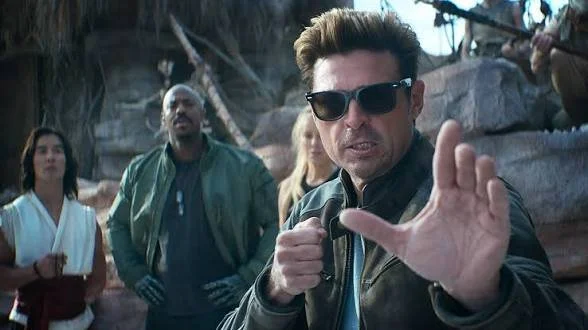
So while watching Karl Urban step onto the screen as Johnny Cage, something strange happened.
At first I was just enjoying the performance.
Urban has built a career playing characters that somehow balance arrogance, humor, and genuine likability. Whether he’s charging into battle in The Lord of the Rings, stealing every scene in Dredd, or playing the foul-mouthed Billy Butcher in The Boys, he has a way of making over-the-top characters feel surprisingly believable.
His version of Johnny Cage felt exactly right.
An aging Hollywood action star.
Cocky.
Self-aware.
Funny.
The kind of guy who still believes he’s the biggest celebrity in every room.
Then…
Something clicked.
Johnny Cage suddenly didn’t look like Karl Urban anymore.
He looked like someone else.
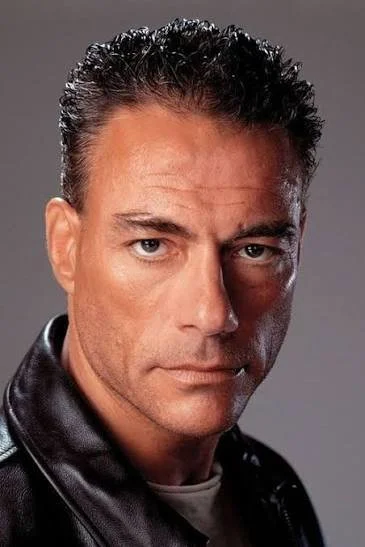
Jean-Claude Van Damme.
Not literally.
The attitude.
The swagger.
The split kicks.
The action-movie ego.
For the first time in my life I stopped and wondered:
“Wait… was Johnny Cage supposed to be Jean-Claude Van Damme?”
I opened my phone.
Started digging.
Five minutes later I couldn’t stop laughing.
How had I gone my entire life without realizing this?
Because the answer wasn’t “kind of.”
The answer was…
Almost entirely.
Suddenly my entire childhood made sense.
Before Mortal Kombat
To understand Mortal Kombat, you have to go back to a completely different era of gaming.
Kids today know online multiplayer.
Downloadable content.
Battle passes.
Constant updates.
In the early 1980s, none of that existed.
If you wanted to play the newest game…
You went to the arcade.
The arcade wasn’t just somewhere to kill time.
It was where gaming culture lived.
Rows of glowing cabinets.
The smell of pizza and popcorn.
Kids crowded around machines three or four deep.
The better you were…
The longer your quarter lasted.
Every arcade had its legends.
The teenager nobody could beat.
The guy who somehow knew every hidden move.
The kid who could finish games without losing a single life.
Arcades were competitive long before esports existed.
Then in 1991…
Everything changed.
Street Fighter II arrived.
Capcom’s masterpiece transformed fighting games overnight.
Instead of simple one-on-one combat, players suddenly had special moves, combos, unique fighters from around the world, and competitive gameplay that became addictive.
Street Fighter II wasn’t just successful.
It became a phenomenon.
Every game company wanted their own version.
One of those companies was Midway.
Based in Chicago.
Chicago’s Secret Weapon
When people think of great gaming cities, they often think of Japan.
Tokyo.
Osaka.
Kyoto.
Few people realize that one of the biggest revolutions in gaming history came from Chicago.
Midway Games had already built its reputation in arcades.
But now it wanted its own fighting game.
Not a clone.
Something different.
Something people couldn’t stop talking about.
That responsibility landed with two men.
Ed Boon.
John Tobias.
Together they would create one of the most recognizable franchises in entertainment history.
But here’s the part almost nobody knew at the time.
Their original idea…
Wasn’t Mortal Kombat.
The Van Damme Game That Never Happened
If you grew up in the late 1980s, there was one martial arts superstar who seemed larger than life.
Jean-Claude Van Damme.
Today younger audiences might know him from memes or commercials.
Back then?
He was everywhere.
Before superheroes dominated Hollywood, martial arts stars ruled the action genre.
Arnold Schwarzenegger.
Sylvester Stallone.
Steven Seagal.
Chuck Norris.
Bruce Lee’s legacy.
And standing right beside them…
Jean-Claude Van Damme.
His breakthrough came with 1988’s Bloodsport.
Whether every detail of Frank Dux’s story was true hardly mattered.
The movie was electric.
The underground Kumite tournament.
Impossible fighters from around the world.
Over-the-top villains.
Bone-crunching martial arts.
Slow-motion knockouts.
Split kicks.
Training montages.
It was exactly the kind of movie teenage boys watched over and over until the VHS tape nearly wore out.
Van Damme wasn’t simply acting.
He moved differently.
His flexibility looked impossible.
His spinning kicks became iconic.
His signature splits were instantly recognizable.
Hollywood had found a new action star.
Midway noticed too.
The company originally pursued the idea of making a video game starring Jean-Claude Van Damme himself.
Imagine that for a second.
One of the biggest video game franchises ever created…
Almost wasn’t Mortal Kombat.
It almost became Jean-Claude Van Damme: The Video Game.
Licensing discussions ultimately fell apart.
For most projects…
That would have been the end.
Instead…
It became the beginning.
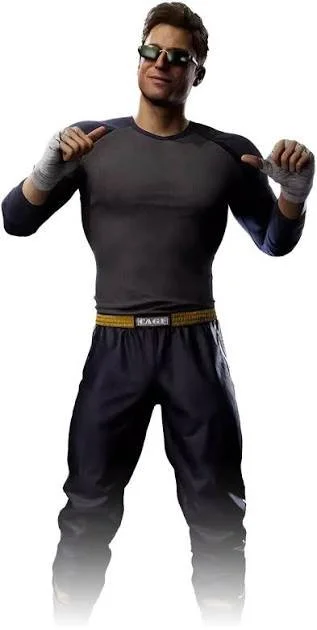
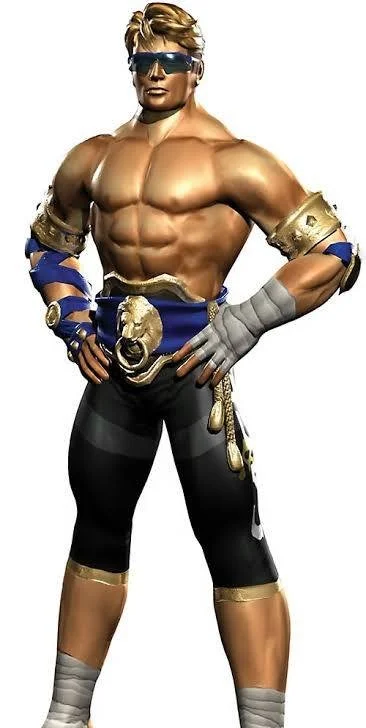
Enter Johnny Cage
When Midway lost Van Damme…
They didn’t lose the idea.
They reinvented it.
Johnny Cage became the spiritual successor.
A Hollywood action movie star.
Initials?
J.C.
Movie celebrity.
Flashy martial artist.
Cocky personality.
Split kick.
Shadow kick.
Everything about him carried traces of Van Damme’s influence.
Not enough to become a lawsuit.
Just enough to become unmistakable once you know the story.
Which made me laugh.
Because once you see it…
You can’t unsee it.
It suddenly feels obvious.
It’s like realizing Clark Kent was Superman after someone points at the glasses.
A Different Kind of Fighting Game
Street Fighter gave players colorful animation.
Mortal Kombat wanted realism.
Or at least…
1992’s version of realism.
Instead of drawing characters by hand, Midway digitized actual actors.
Real martial artists.
Real performers.
Real movements.
They filmed people performing punches, kicks, jumps, and attacks against blue screens.
Those recordings became the game’s sprites.
Looking back now they seem charmingly primitive.
At the time…
They looked unbelievable.
Characters didn’t resemble cartoons anymore.
They looked like actual people.
It gave Mortal Kombat a gritty feel that instantly separated it from everything else in the arcade.
Then there was the sound.
Every punch landed with a crack.
Every scream echoed.
Every victory felt brutal.
And then…
Players discovered fatalities.
The Fatality That Changed Gaming Forever
Imagine being twelve years old.
You’ve just beaten your friend.
Instead of the match ending…
The announcer shouts:
“Finish Him!”
You pause.
Input a strange combination of buttons.
Your character tears someone’s spine out.
Silence.
Then everyone standing around the cabinet loses their minds.
No one had seen anything like it.
Mortal Kombat didn’t invent violence.
Movies had been doing that for decades.
But it brought that violence into arcades where teenagers and often much younger kids were lining up to play.
Parents noticed.
Politicians noticed.
News programs noticed.
The controversy became free advertising.
Kids suddenly wanted to see what adults were trying to ban.
Ironically, the outrage helped make Mortal Kombat even more successful.
Sometimes controversy isn’t a problem.
It’s marketing.
Seven Fighters Who Became Legends
The original roster wasn’t enormous.
By modern standards it was tiny.
But nearly every character became iconic.
Liu Kang embodied the Bruce Lee-inspired martial arts hero.
Johnny Cage represented Hollywood excess.
Sonya Blade became one of gaming’s first major female fighting protagonists.
Raiden blended mythology with mystery.
Kano brought criminal brutality.
Sub-Zero introduced players to an ice-wielding ninja unlike anything they’d seen before.
And then…
Scorpion.
Perhaps no fighting game character has ever achieved the cultural staying power of Scorpion.
Yellow ninja.
Burning skull.
Chain spear.
“GET OVER HERE!”
Three words that became recognizable far beyond gaming.
Thirty years later…
People who have never touched a Mortal Kombat game can still imitate Scorpion.
That’s extraordinary.
A Franchise Bigger Than Anyone Expected
No one at Midway could have predicted what they had created.
Within months Mortal Kombat became one of the hottest arcade games in America.
Kids debated who was strongest.
Rumors spread about hidden fighters.
Magazines published secret codes.
Entire playground conversations revolved around Reptile sightings and impossible fatalities.
It wasn’t simply a game anymore.
It became a shared language.
One quarter at a time.
Suddenly My Childhood Made Sense
As I sat there watching Karl Urban’s Johnny Cage, I couldn’t believe I’d somehow missed the connection for decades.
Maybe that’s because Johnny Cage eventually became his own character.
He wasn’t just a Jean-Claude Van Damme parody anymore.
Over the years he developed into one of Mortal Kombat’s funniest, most self-aware personalities.
The inspiration faded into the background as the franchise grew.
But knowing where he came from changes how you see him forever.
It changes how you see Mortal Kombat.
Because suddenly the game isn’t just ninjas fighting monsters.
It’s a love letter to everything that made late-’80s action movies unforgettable.
Bruce Lee.
Hong Kong martial arts cinema.
Fantasy films.
Mythology.
Heavy metal album art.
Hollywood blockbusters.
And yes…
Jean-Claude Van Damme.
Sometimes all it takes is one missing piece for the entire picture to come into focus.
For me, Karl Urban’s performance didn’t just introduce a new Johnny Cage.
It helped me finally understand the original one.
And once that puzzle piece clicked into place, I realized the story of Mortal Kombat was far more fascinating than I had ever imagined.
Finish Him! How Mortal Kombat Conquered Arcades, Started a Moral Panic, and Changed Gaming Forever
By the time I finally connected Johnny Cage to Jean-Claude Van Damme, I realized something else.
I’d spent most of my life remembering playing Mortal Kombat.
I hadn’t spent much time thinking about why it became such a phenomenon.
Like a lot of kids growing up in the ’90s, I simply accepted that Mortal Kombat was everywhere.
Of course every arcade had one.
Of course everyone knew the fatalities.
Of course there were rumors about hidden characters.
Of course your parents hated it.
It wasn’t until years later that I appreciated just how unlikely Mortal Kombat’s success really was.
Because when the first game arrived in 1992, it wasn’t trying to become a cultural phenomenon.
It was simply trying to survive in Street Fighter’s world.
By the end of the decade…
It had become something much bigger.
The Arcade Wars
If you didn’t grow up in the arcade era, it’s difficult to explain what it felt like.
Today, when a game releases, millions of people can download it simultaneously.
In 1992…
There was one machine.
If someone else was playing…
You waited.
Sometimes for an hour.
Sometimes longer.
And watching someone else play wasn’t boring.
It was education.
You learned moves.
You memorized combos.
You discovered secrets.
Every player who lost taught everyone standing behind them something new.
Arcades were social media before social media existed.
Instead of comments…
You had crowds.
Instead of livestreams…
You had a ring of kids watching someone dominate an entire room.
When Mortal Kombat appeared, it immediately drew that crowd.
Not just because of the violence.
Because it looked different.
Street Fighter had bright colors and animated characters.
Mortal Kombat looked gritty.
Real people.
Real punches.
Real expressions.
Even today, those digitized actors give the original game a unique personality.
The Characters Everyone Argued About
Every fighting game needs memorable characters.
Mortal Kombat accidentally created legends.
Everyone had a favorite.
Some kids wanted Liu Kang because he felt like Bruce Lee.
Others picked Raiden because lightning powers were simply cool.
Some chose Kano because he looked dangerous.
Johnny Cage appealed to the movie fans.
Sonya Blade was unlike most female video game characters at the time strong, capable, and never treated as a sidekick.
Then there were the ninjas.
Scorpion.
Sub-Zero.
On paper they were almost the same character.
Different colors.
Different powers.
A practical decision born from limited arcade hardware.
Ironically…
Those limitations became one of gaming’s greatest rivalries.
Thirty years later people are still debating:
Scorpion or Sub-Zero?
Fire or Ice?
Revenge or Honor?
Few fictional rivalries have lasted as long.
Hidden Characters Changed Everything
One of Mortal Kombat’s greatest strengths wasn’t something players could see.
It was what they couldn’t.
There was always another rumor.
A green ninja.
A hidden fight.
A secret stage.
An impossible fatality.
Remember…
This was before YouTube.
Before Reddit.
Before Wikipedia.
Information spread through playground conversations.
Gaming magazines.
Word of mouth.
Sometimes your older cousin.
Sometimes a kid who swore his uncle worked for Nintendo.
Most of it wasn’t true.
Some of it was.
That mystery became part of Mortal Kombat’s identity.
Finding Reptile didn’t feel like unlocking content.
It felt like discovering buried treasure.
Mortal Kombat II Perfected Everything
Then came Mortal Kombat II.
For many fans…
This remains the greatest fighting game ever made.
Everything became bigger.
The graphics improved.
The controls tightened.
The stages became iconic.
The roster exploded.
Suddenly players met:
Kitana.
Mileena.
Baraka.
Kung Lao.
Jax.
Reptile as a playable fighter.
Kintaro.
Most importantly…
Shao Kahn.
Few bosses have ever generated as much frustration.
He cheated.
He taunted you.
He laughed at your failures.
He seemed almost impossible.
Which only made beating him feel legendary.
Mortal Kombat II wasn’t simply a sequel.
It was proof the first game wasn’t a fluke.
Ultimate Mortal Kombat 3 and the Era of Excess
Then came Mortal Kombat 3.
Animalities.
Babality.
Friendships.
Brutalities.
Stage fatalities.
Run buttons.
Huge rosters.
The series embraced ridiculousness.
And somehow…
It worked.
While Street Fighter leaned into precision and balance…
Mortal Kombat embraced spectacle.
It knew exactly what audiences wanted.
More secrets.
More blood.
More characters.
More outrageous fatalities.
It delivered.
The Console Wars
Kids today argue PlayStation versus Xbox.
The early ’90s had a different battle.
Nintendo.
Sega.
Mortal Kombat became one of its biggest weapons.
The Sega Genesis version kept the blood.
Sort of.
Players entered the now-famous blood code.
Suddenly…
The arcade experience came home.
Nintendo took a different approach.
The Super Nintendo version removed much of the blood.
Fatalities became noticeably toned down.
Parents appreciated it.
Kids absolutely did not.
Schoolyards quickly reached a verdict.
Genesis had the “real” Mortal Kombat.
Whether that was entirely fair hardly mattered.
Perception became reality.
It remains one of gaming’s greatest marketing victories.
Congress Enters the Fight
Then politicians noticed.
Television news showed clips.
Parents expressed concern.
Senators held hearings.
Violent video games became national news.
Mortal Kombat stood at the center of the storm.
Looking back now, it’s almost funny.
Compared to modern games, the violence seems almost cartoonish.
Digitized sprites.
Pixelated blood.
Stiff animations.
But in 1993…
It shocked people.
That controversy eventually led to something still affecting gamers today.
The Entertainment Software Rating Board.
The ESRB.
Every rating from E to M traces part of its history back to Mortal Kombat.
Without realizing it, a fighting game helped reshape the entire video game industry.
Mortal Kombat Didn’t Just Sell Games
It Sold Secrets
Every new release brought speculation.
Who’s hidden?
Who’s returning?
Who’s dead?
Who’s secretly alive?
Ed Boon became famous for teasing fans.
Sometimes trolling them.
Sometimes planting clues.
Sometimes letting rumors spread.
Long before viral marketing became standard…
Mortal Kombat understood mystery.
Fans became detectives.
The internet eventually replaced playground gossip.
But the culture stayed exactly the same.
Expanding the Universe
The series didn’t stop with tournaments.
The mythology grew.
Earthrealm.
Outworld.
Netherrealm.
Edenia.
Chaosrealm.
Orderrealm.
Ancient gods.
Elder Gods.
Fallen warriors.
Necromancers.
Time itself eventually became part of the story.
Some fans loved the increasingly complicated lore.
Others missed the simplicity of the original tournament.
Both opinions have merit.
But one thing became undeniable.
Mortal Kombat wasn’t just making fighting games anymore.
It was building a universe.
Reinvention
Like every long-running franchise, Mortal Kombat stumbled.
The move into fully 3D fighting during the late ’90s and early 2000s divided fans.
Some loved the experimentation.
Others felt something had been lost.
Yet even during its weaker years, the series kept trying new ideas.
Deadly Alliance shocked players by killing Liu Kang early in the story.
Deception introduced expansive adventure modes.
Armageddon attempted the impossible by bringing together nearly every fighter in franchise history.
Not every gamble succeeded.
But the willingness to reinvent itself kept Mortal Kombat alive while many other fighting franchises faded away.
Then Came the Reset
In 2011, NetherRealm Studios rebooted the franchise with what many fans simply call Mortal Kombat 9.
Instead of abandoning the past, it embraced it.
The game retold the original trilogy with modern graphics, refined gameplay, and cinematic storytelling.
For longtime fans, it felt like rediscovering an old friend.
For newcomers, it was the perfect entry point.
It reminded everyone why these characters had become icons in the first place.
The games that followed Mortal Kombat X, Mortal Kombat 11, and the recent Mortal Kombat 1 continued to evolve the series with increasingly cinematic stories, deeper combat systems, and an ever-expanding multiverse.
Love or hate the timeline resets, Mortal Kombat has never been content to stand still.
More Than a Fighting Game
Looking back now, what strikes me most isn’t the violence.
Or the controversy.
Or even the fatalities.
It’s how much imagination surrounded these games.
Before strategy guides became commonplace…
Before every secret was posted online…
Mortal Kombat rewarded curiosity.
Every cabinet felt like it might still be hiding one more mystery.
One more character.
One more fatality.
One more unbelievable rumor that just might turn out to be true.
That sense of discovery is difficult to recreate today.
The internet has made information instantaneous.
Back then, information was earned.
Sometimes through skill.
Sometimes through luck.
Sometimes through a kid who claimed his cousin worked at Midway.
The Legacy of the Arcade
Today, many of those arcades are gone.
Shopping malls have changed.
Family pizza restaurants rarely have rows of cabinets humming in the corner.
Kids no longer line quarters across the bottom of a machine to claim “next game.”
That world has largely disappeared.
But Mortal Kombat survived it.
It moved from smoky arcades to living rooms.
From cartridges to CDs.
From DVDs to digital downloads.
From local multiplayer to online tournaments watched by millions.
Few entertainment franchises have adapted as successfully while keeping their core identity intact.
The controls evolved.
The graphics became photorealistic.
The storytelling became cinematic.
Yet underneath it all, the formula remains remarkably familiar.
Two fighters.
One arena.
A booming voice announcing the start.
And somewhere, after the final blow…
The words every fan has been waiting to hear:
“Finish Him!”
From a Cheesy Movie to a Multimedia Empire: Why Mortal Kombat Refuses to Die
By the mid-1990s, Mortal Kombat had already accomplished something almost impossible.
It wasn’t just one of the biggest video games in the world.
It had become part of popular culture.
Even people who had never picked up a controller knew the phrases.
“Finish Him!”
“Fatality!”
“Get over here!”
Parents knew it.
Teachers knew it.
Politicians knew it.
Hollywood certainly knew it.
There was only one thing left to do.
Turn it into a movie.
The 1995 Film That Had No Business Being This Fun
Ask ten Mortal Kombat fans about the original 1995 movie and you’ll probably hear the same answer.
“It’s cheesy…”
“…and I absolutely love it.”
Objectively, the film has plenty of flaws.
The dialogue is overdramatic.
The special effects show their age.
Some performances are delightfully over-the-top.
But that’s also why it works.
Unlike many early video game adaptations, the filmmakers understood something important.
They weren’t trying to make Citizen Kane.
They were trying to make Mortal Kombat.
Robin Shou was a convincing Liu Kang.
Bridgette Wilson brought confidence and charisma to Sonya Blade.
Linden Ashby somehow made Johnny Cage both arrogant and lovable.
Christopher Lambert’s Raiden wasn’t particularly faithful to the games, but his eccentric performance gave the character a strange charm that fans still debate today.
Then there was Cary-Hiroyuki Tagawa.
For many fans, Tagawa didn’t simply play Shang Tsung.
He became Shang Tsung.
His delivery of lines like “Your soul is mine!” remains one of the most iconic villain performances in video game movie history.
Years later, NetherRealm Studios would bring him back to voice and portray Shang Tsung once again a testament to just how deeply his performance resonated with fans.
And then…
There was the music.
That Theme Song
Some movie soundtracks fade into history.
Others become inseparable from the film itself.
The opening notes of the original Mortal Kombat theme are instantly recognizable.
You don’t even need lyrics.
One shout of…
“MORTAL KOMBAT!”
…and millions of people immediately know what comes next.
It’s one of those rare pieces of music that transcended the movie itself.
It played in arenas.
Nightclubs.
Sporting events.
Internet memes.
Even people who couldn’t name a single Mortal Kombat character could recognize that soundtrack.
Then Came Annihilation…
And Reality Set In
If the first movie earned affection through enthusiasm…
The sequel became famous for almost the opposite reason.
Mortal Kombat: Annihilation promised more characters.
More fights.
More lore.
Instead, it became a cautionary tale.
Recasting several key roles disrupted continuity.
Visual effects often failed to match audience expectations.
The pacing felt rushed, with the film attempting to introduce too many characters in too little time.
Some fans still enjoy it as a nostalgic guilty pleasure.
Others pretend it never happened.
Regardless of where you fall, it demonstrated just how difficult adapting Mortal Kombat could be.
The games had become so expansive that squeezing everything into ninety minutes proved nearly impossible.
The Television Years
Hollywood wasn’t finished.
Mortal Kombat expanded to television with Mortal Kombat: Conquest, a live-action prequel series exploring the Great Kung Lao and earlier tournaments.
It embraced the campy style common to syndicated action shows of the late 1990s.
Around the same time, Mortal Kombat: Defenders of the Realm attempted to introduce younger audiences through animation.
Neither became a long-running phenomenon.
But both reflected something important.
Studios believed Mortal Kombat had become bigger than video games.
The Fan Project That Changed Everything
Then something remarkable happened.
Not from Hollywood.
From the internet.
In 2010, director Kevin Tancharoen released a short film titled Mortal Kombat: Rebirth.
It wasn’t officially part of the game series.
It was essentially a proof of concept.
A grounded, modern take on Mortal Kombat that imagined its characters through a darker, more realistic lens.
Fans loved it.
Warner Bros. noticed.
That short led to Mortal Kombat: Legacy, a web series that became one of the greatest video game adaptations ever produced.
Instead of trying to tell one enormous story, Legacy slowed down.
Each episode focused on individual characters.
Scorpion.
Sub-Zero.
Johnny Cage.
Kitana.
Jax.
Sonya.
The series explored who they were before the tournament.
Michael Jai White delivered a commanding performance as Jax.
Jeri Ryan portrayed Sonya Blade.
Ian Anthony Dale gave Scorpion emotional depth rarely seen in earlier adaptations.
For many fans, Legacy proved something Hollywood had struggled to understand.
Mortal Kombat worked best when the characters not just the fights were given room to breathe.
Looking back, it’s hard not to see Legacy as the bridge between the campy films of the 1990s and the more ambitious cinematic efforts that followed.
The Reboot Era
In 2021, Warner Bros. tried again.
This time with a darker, more violent reboot.
Visually, it was stunning.
Joe Taslim’s Sub-Zero was terrifying.
Hiroyuki Sanada brought genuine tragedy to Scorpion.
The opening sequence depicting the destruction of the Hasashi clan remains one of the strongest scenes in any Mortal Kombat adaptation.
The fights felt brutal.
The fatalities finally embraced the graphic violence fans expected.
Yet the film also divided audiences.
The introduction of Cole Young, a new original protagonist, drew mixed reactions.
Some appreciated having an audience surrogate.
Others questioned why beloved characters took a backseat.
The reception reflected a familiar truth about adapting long-running franchises.
The more people love something…
The harder it becomes to satisfy everyone.
Enter Karl Urban
Which brings me back to the moment that started this entire article.
Karl Urban as Johnny Cage.
Urban feels like inspired casting.
Not because he looks exactly like the original character.
Because he understands him.
Johnny Cage has always been more than a martial artist.
He’s Hollywood ego personified.
A man who desperately wants everyone to know he’s the star of the show.
Urban has spent years balancing action, comedy, and self-awareness in roles like Éomer, Judge Dredd, Dr. Leonard McCoy, and Billy Butcher.
Watching him embrace Johnny Cage’s arrogance while winking at the audience felt strangely perfect.
Ironically…
It was his performance that finally reminded me of Jean-Claude Van Damme.
Without Karl Urban…
I might never have gone looking.
Guest Fighters Became Events
While the movies continued evolving, the games found another way to remain relevant.
Guest characters.
Instead of limiting themselves to Mortal Kombat’s universe, NetherRealm Studios invited icons from across pop culture.
Freddy Krueger.
Jason Voorhees.
Leatherface.
Alien.
Predator.
The Terminator.
RoboCop.
Spawn.
Rambo.
The Joker.
Omni-Man.
Homelander.
Ghostface.
Conan the Barbarian.
Each announcement became a cultural event.
It wasn’t just about adding another fighter.
It was about asking impossible questions.
Who wins?
Alien or Scorpion?
Spawn or Sub-Zero?
Homelander or Liu Kang?
The discussions became as entertaining as the matches themselves.
In many ways, Mortal Kombat evolved into the ultimate crossover arena.
If comic books had the multiverse…
Mortal Kombat had the tournament.
The Comics Most Fans Forgot
While the games and movies grabbed headlines, comics quietly expanded the mythology.
Early Malibu Comics explored alternate stories during the arcade era.
Later comic series tied directly into the reboot timeline, fleshing out relationships, kingdoms, and conflicts only hinted at in the games.
For dedicated fans, they became another layer of a universe that had grown far beyond its arcade origins.
More Than Violence
One of the biggest misconceptions about Mortal Kombat is that its success came solely from gore.
The fatalities certainly attracted attention.
But violence alone doesn’t sustain a franchise for more than thirty years.
Characters do.
Scorpion isn’t memorable because he removes someone’s head.
He’s memorable because his story is tragic.
Sub-Zero isn’t iconic because he freezes people.
He’s iconic because honor defines him.
Johnny Cage isn’t beloved because he tells jokes.
He’s beloved because beneath the ego, he’s often willing to sacrifice himself for Earthrealm.
Over decades, these characters became more than fighters.
They became personalities.
Families.
Rivals.
Heroes.
Villains.
Legends.
Why Mortal Kombat Endures
Looking back now, I think that’s what surprised me most.
The Jean-Claude Van Damme connection wasn’t just a fun piece of trivia.
It explained the DNA of the franchise.
Mortal Kombat wasn’t created in isolation.
It was born from everything that made the late 1980s and early 1990s exciting.
Martial arts films.
Hong Kong action cinema.
Fantasy epics.
Comic books.
Heavy metal album covers.
Horror movies.
Professional wrestling.
Mythology.
Science fiction.
Action heroes.
It borrowed from all of them.
Then transformed those influences into something uniquely its own.
That may be why Mortal Kombat has survived while so many other fighting franchises faded.
It never stopped evolving.
It never stopped reinventing itself.
Yet somehow…
It always still felt like Mortal Kombat.
The Missing Piece
When I started watching Karl Urban play Johnny Cage, I thought I was simply watching another sequel.
Instead, I stumbled across one of gaming’s greatest origin stories.
A failed licensing deal.
A Hollywood martial arts superstar.
A character inspired by someone who never officially appeared.
One small piece of history that suddenly made decades of memories click into place.
Sometimes nostalgia isn’t about remembering.
Sometimes it’s about finally understanding.
And that’s what happened to me.
After all these years, I finally understood why Johnny Cage had always felt so familiar.
Not because he was Jean-Claude Van Damme.
But because he was never trying to hide the inspiration.
The clues had been there all along.
Like a hidden fighter.
Waiting for someone to discover them.
FINISH HIM.
Why This Story Matters
It’s easy to look back at Mortal Kombat as just another successful video game franchise.
It isn’t.
It helped transform gaming from a niche hobby into mainstream entertainment. It sparked national conversations about violence in media, contributed to the creation of the ESRB rating system, proved that fighting games could build rich, interconnected lore, and showed that characters created for an arcade cabinet could become cultural icons recognized around the world.
For me, though, the biggest revelation wasn’t about the industry.
It was personal.
Sometimes we spend decades looking at something we love without ever asking why it looks the way it does.
Then one day, one performance, one scene, or one conversation uncovers the missing piece.
You smile.
You laugh.
And suddenly, your entire childhood makes just a little more sense.
That’s exactly what Karl Urban’s Johnny Cage did for me.
Mortal Kombat: The Complete Mythology
Every Realm, Every Timeline, and Why Mortal Kombat Is Secretly One of Gaming’s Greatest Fantasy Universes
When most people hear the words Mortal Kombat, they probably think of one thing.
Fatalities.
Blood.
Spines being ripped out.
Scorpion yelling…
“GET OVER HERE!”
That’s understandable.
For decades, the violence became the franchise’s calling card.
But after spending months revisiting the games, the movies, the comics, and the history behind them, I came away with a completely different opinion.
The fatalities may have gotten everyone through the front door.
The mythology is why so many of us stayed.
Because hidden underneath all the gore is something surprisingly ambitious.
Mortal Kombat isn’t just a fighting game.
It’s a fantasy epic.
In many ways, it’s gaming’s version of Marvel, Lord of the Rings, Greek mythology, and ancient martial arts folklore rolled into one enormous universe.
The more I dug…
The more I realized I’d underestimated just how much world-building Ed Boon, John Tobias, and later NetherRealm Studios had created over the last three decades.
Before There Was Earth…
There Were the Elder Gods
Every mythology begins with creation.
Greek mythology had the Titans.
Norse mythology had Odin.
Christianity has Genesis.
Mortal Kombat has the Elder Gods.
These ancient cosmic beings exist above nearly everyone else in the universe.
They aren’t rulers in the traditional sense.
They’re guardians of balance.
When the One Being threatened existence itself, the Elder Gods defeated it and divided reality into separate realms.
Those realms became the foundation of everything that followed.
Every tournament.
Every war.
Every betrayal.
Every fatality.
Everything traces back to that original division.
The Six Major Realms
Most fans know Earthrealm.
Few realize there are multiple interconnected worlds constantly competing with one another.
Earthrealm
Our world.
The realm defended by Raiden.
Home to Liu Kang.
Johnny Cage.
Sonya Blade.
Jax.
Kung Lao.
Kenshi.
Cassie Cage.
Jacqui Briggs.
Nightwolf.
Most of the franchise’s heroes.
Earthrealm isn’t the strongest.
It simply refuses to quit.
Outworld
Imagine if Genghis Khan ruled an entire universe.
That’s Outworld.
A brutal empire built through conquest.
Its armies stretch across countless worlds.
Its rulers don’t negotiate.
They conquer.
Home to:
Shao Kahn
Baraka
Mileena
Reptile
Tarkatans
Shokan
Centaurs
Entire civilizations absorbed through war.
Outworld isn’t evil because of monsters.
It’s evil because conquest became government policy.
Netherrealm
Think Hell.
Only worse.
Ruled for centuries through manipulation.
Necromancy.
Dark magic.
The home of demons.
Revenants.
Quan Chi.
Noob Saibot eventually.
Countless tortured souls.
It’s where hatred literally becomes power.
Edenia
If Earthrealm represents humanity…
Edenia represents paradise.
Beautiful.
Peaceful.
Advanced.
The home of Queen Sindel.
Princess Kitana.
Jade.
Rain.
Unfortunately…
Paradise attracts conquerors.
Shao Kahn invaded.
Everything changed.
Chaosrealm
Exactly what it sounds like.
No rules.
Constant upheaval.
Individual freedom taken to dangerous extremes.
Home of Havik.
Perhaps one of the franchise’s strangest villains.
Orderrealm
Chaos’s opposite.
Absolute law.
Absolute structure.
Absolute obedience.
Freedom matters less than stability.
Together, Chaosrealm and Orderrealm represent one of Mortal Kombat’s recurring themes.
Too much order becomes tyranny.
Too much freedom becomes anarchy.
Balance matters.
The Tournament
People often ask…
“What exactly is Mortal Kombat?”
Ironically…
It’s literally the tournament.
Thousands of years ago the Elder Gods established strict rules.
One realm cannot simply invade another.
Instead…
Victories must be earned.
Win enough Mortal Kombat tournaments.
Then conquest becomes legal.
It’s an elegant idea.
Instead of endless wars…
Champions fight.
Entire civilizations rest upon individual warriors.
Raiden
The Protector
If there’s one constant throughout Mortal Kombat history…
It’s Raiden.
God of Thunder.
Protector of Earthrealm.
Teacher.
Strategist.
Sometimes hero.
Sometimes deeply flawed leader.
Raiden spends centuries trying to preserve balance.
The problem?
Even gods make mistakes.
Many of Mortal Kombat’s timeline disasters begin with Raiden trying to prevent disaster.
His good intentions often create even bigger problems.
Sound familiar?
Great mythology rarely has perfect heroes.
Liu Kang
From Monk to Fire God
No character has evolved more dramatically.
Originally…
He was the chosen martial arts champion.
Essentially Mortal Kombat’s Bruce Lee.
Simple.
Honorable.
Heroic.
Then the timelines began breaking.
Deaths.
Resurrections.
Corruption.
Revenant versions.
Eventually…
He becomes Fire God Liu Kang.
No longer merely Earth’s champion.
Now he’s responsible for shaping reality itself.
That’s an astonishing journey.
Very few video game protagonists evolve from tournament fighter…
…to creator of universes.
Scorpion
Gaming’s Greatest Anti-Hero
Hanzo Hasashi should have stayed dead.
Instead…
He became Scorpion.
His family murdered.
His clan destroyed.
Consumed by revenge.
Resurrected in hell.
Bound by rage.
What makes Scorpion compelling isn’t his powers.
It’s grief.
He’s one of gaming’s most human characters despite barely being human anymore.
Everything he does comes back to loss.
Sub-Zero
Honor Over Revenge
Ironically…
Sub-Zero’s greatest strength isn’t ice.
It’s discipline.
There have actually been multiple Sub-Zeros.
Bi-Han.
Then Kuai Liang.
The first embraced darkness.
The second embraced honor.
Their differences helped define the Lin Kuei.
Their rivalry with Scorpion became the emotional backbone of the franchise.
For years…
Fans thought the story was simply fire versus ice.
It wasn’t.
It was revenge versus forgiveness.
The Lin Kuei
An ancient assassin clan.
Masters of discipline.
Efficiency.
Cold professionalism.
Sometimes literally.
They value perfection.
Duty.
Strength.
Until technology changes everything.
Shirai Ryu
Created after betrayal.
Scorpion’s clan becomes the spiritual opposite of the Lin Kuei.
Where one embraces rigid order…
The other values family.
Loyalty.
Humanity.
Their centuries-long conflict drives dozens of games.
Shang Tsung
The Original Manipulator
Every great fantasy needs a deceiver.
Shang Tsung rarely wins through strength.
He wins through intelligence.
Manipulation.
Soul theft.
Political maneuvering.
He’s the chess player.
Others fight.
He plans.
That’s far more dangerous.
Shao Kahn
Power Without Limits
Few villains have ever felt as overwhelming.
He doesn’t simply defeat worlds.
He absorbs them.
Entire civilizations disappear beneath his empire.
Everything about Shao Kahn screams excess.
The helmet.
The hammer.
The laugh.
The arrogance.
He isn’t subtle.
He doesn’t need to be.
Quan Chi
The Devil Behind the Curtain
If Shang Tsung manipulates…
Quan Chi corrupts.
Nearly every tragedy somehow circles back to him.
Deaths.
Resurrections.
Betrayals.
Necromancy.
He’s the franchise’s master conspirator.
Kitana and Mileena
Perhaps Mortal Kombat’s greatest tragedy.
One born a princess.
One created in a laboratory.
One represents hope.
The other constantly searches for identity.
They’re sisters.
Enemies.
Victims.
Survivors.
It’s one of the series’ richest relationships.
Johnny Cage
More Than Comic Relief
It’s easy to dismiss Johnny.
Movie star.
One-liners.
Ego.
Sunglasses.
Then the writers quietly transformed him.
Father.
Leader.
Hero.
His humor became armor.
Behind the jokes sits someone willing to sacrifice everything for Earthrealm.
That’s excellent character development.
Time Broke Everything
Eventually…
Mortal Kombat ran into a problem.
Thirty years of storytelling creates contradictions.
Characters die.
Return.
Die again.
Different endings conflict.
So NetherRealm embraced the impossible.
Time travel.
Alternate timelines.
Parallel realities.
Some fans hated it.
Others loved it.
Personally…
I think it fits.
Mortal Kombat has always been larger than life.
Why stop at alternate dimensions?
Kronika
The Keeper of Time
One of the franchise’s most controversial additions.
A Titan.
Above Elder Gods.
Responsible for maintaining timelines.
Whether fans embraced her or not…
She fundamentally changed Mortal Kombat’s mythology.
History itself became a battlefield.
Mortal Kombat 1
The newest era asks a fascinating question.
What if the heroes finally won?
What if Liu Kang rebuilt existence?
Would everything become peaceful?
Of course not.
Because conflict doesn’t disappear.
It evolves.
Even paradise requires defenders.
Why This Universe Works
What impressed me most wasn’t the complexity.
It was the consistency.
Everything returns to a handful of timeless ideas.
Duty.
Honor.
Revenge.
Family.
Power.
Corruption.
Choice.
Balance.
Those themes appear again and again regardless of timeline.
That’s why Mortal Kombat doesn’t feel like random violence.
It feels like mythology.
The Real Secret
When I started writing this series, I thought I was exploring a fighting game.
Instead…
I found one of gaming’s richest fictional universes.
A world where martial arts films meet Eastern philosophy.
Where comic books meet ancient mythology.
Where horror meets fantasy.
Where Jean-Claude Van Damme somehow helped inspire a character who eventually became a father, a hero, and one of gaming’s funniest personalities.
Maybe that’s the biggest lesson Mortal Kombat teaches.
Every great story evolves beyond its inspiration.
Johnny Cage began as a wink toward an action movie legend.
Scorpion began as a color-swapped ninja.
Liu Kang began as a Bruce Lee homage.
Today…
They’re no longer copies.
They’re legends in their own right.
And after more than thirty years, Mortal Kombat continues to prove something remarkable.
The blood may have gotten our attention.
But the mythology earned our loyalty.
FINISH HIM…
…never really meant the end.
For Mortal Kombat, it was always just the beginning.
Mortal Kombat (1995)
Robin Shou — Liu Kang
Linden Ashby — Johnny Cage
Bridgette Wilson — Sonya Blade
Christopher Lambert — Raiden
Cary-Hiroyuki Tagawa — Shang Tsung
Trevor Goddard — Kano
François Petit — Sub-Zero
Chris Casamassa — Scorpion
Keith Cooke — Reptile
Brian Thompson
Mortal Kombat: Annihilation (1997)
Robin Shou
Sandra Hess
James Remar
Brian Thompson
Musetta Vander
Lynn Williams
Irina Pantaeva
Marjean Holden
Reiner Schöne
Talisa Soto
Mortal Kombat: Conquest (TV Series)
Paolo Montalban
Daniel Bernhardt
Kristanna Loken
Bruce Locke
Jeff Meek
Tracy Douglas
Mortal Kombat: Rebirth / Mortal Kombat: Legacy
These are some of the most searched names because the series became a cult favorite.
Michael Jai White
Jeri Ryan
Ian Anthony Dale
Matt Mullins
Casper Van Dien
Kevan Ohtsji
Samantha Tjhia
Jolene Tran
Darren Shahlavi
Ryan Robbins
Mortal Kombat (2021)
Lewis Tan
Hiroyuki Sanada
Joe Taslim
Ludi Lin
Jessica McNamee
Josh Lawson
Mehcad Brooks
Chin Han
Tadanobu Asano
Max Huang
Sisi Stringer
Nathan Jones
Mortal Kombat II (2025/2026)
These are the actors generating the biggest search traffic around the new film.
Karl Urban
Adeline Rudolph
Martyn Ford
Ana Thu Nguyen
Tati Gabrielle
Damon Herriman
Desmond Chiam
CJ Bloomfield
Lewis Tan
Hiroyuki Sanada
Joe Taslim
Biggest names from outside the franchise
These are the actors whose broader careers bring notoriety to the franchise:
Karl Urban (The Boys, The Lord of the Rings, Star Trek, Dredd)
Christopher Lambert
Hiroyuki Sanada (Shōgun, John Wick: Chapter 4, The Last Samurai)
Joe Taslim (The Raid)
Michael Jai White
Jeri Ryan
Cary-Hiroyuki Tagawa
Jean-Claude Van Damme (the inspiration behind Johnny Cage, though he has never appeared in a live-action Mortal Kombat film)