In the summer of 1998, I was 12 years old.
My little brother and I used to visit our older sister and her husband, and sometimes we would stay overnight. It was late in the summer, right before school started, when they took us to see Blade.
For two kids in 1998, Blade was unbelievable. Wesley Snipes walked into a blood-soaked nightclub and made every superhero movie that came before it suddenly look harmless. We left the theater completely blown away.
Then we went back to their place, watched some Simpsons, another cultural institution our sister had introduced us to and her husband, a police officer, showed us his favorite video game.
The graphics were horrible.
The camera looked straight down at the city. The cars were tiny. The people were little smears moving between buildings. Half the time, you could barely tell what you were looking at.
It was this shitty little game called Grand Theft Auto.
And it changed gaming for us forever.
The timing makes the memory even better. Blade opened in American theaters on August 21, 1998. The original Grand Theft Auto had arrived on the first PlayStation in North America less than two months earlier, on June 30. We were not discovering a famous franchise years after everybody else. We were sitting in front of it while it was still an ugly, strange new idea that almost nobody understood.
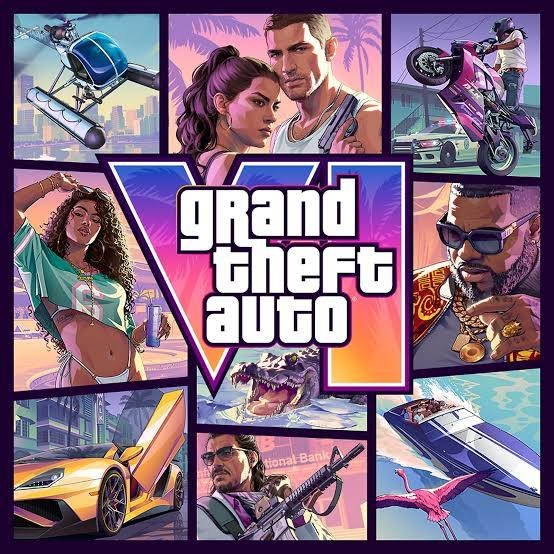
Nearly three decades later, that pixelated game has become one of the largest entertainment properties on Earth. Grand Theft Auto VI, better known as GTA 6, is scheduled to launch November 19, 2026, for PlayStation 5 and Xbox Series X|S. The standard edition costs $79.99. The series has sold more than 470 million units, while Grand Theft Auto V alone has moved more than 230 million.
That is an extraordinary distance to travel from a game that looked like something we probably should not have been playing in the first place.
Before Grand Theft Auto: The Game Was Called Race’n’Chase
The original concept was not supposed to become Grand Theft Auto.
Development began at DMA Design in Dundee, Scotland, on a cops-and-robbers project called Race’n’Chase. The idea was to create a fast multiplayer game built around driving, crashing and police pursuits. Players could originally be either the cops or the criminals.
Then the developers learned something simple and important: being the criminal was more fun.
The project was messy, late and reportedly came close to cancellation more than once. Its car handling had to be rebuilt. Its code was unstable. Its graphics already appeared outdated. Even members of its design team initially wondered why they had been assigned to what looked like a crappy 2D driving game.
What rescued it was freedom.
The team added missions delivered through ringing telephone boxes. It created fictional versions of New York, San Francisco and Miami called Liberty City, San Andreas and Vice City. Instead of forcing players down a narrow track, the game allowed them to steal a car, explore the city, accept a job, flee the police or ignore the intended objective and manufacture their own chaos.
The wanted level turned bad behavior into escalating consequences. The city became both the setting and the toy box. The mission was no longer the entire game. What happened between missions mattered just as much.
That became the Grand Theft Auto formula.
It did not invent every individual ingredient. Driving games, shooting games, simulations and open environments already existed. GTA’s breakthrough was smashing those ideas together inside a city that seemed willing to let the player try almost anything.
The Complete History of Grand Theft Auto Games
The GTA story is not simply a march from bad graphics to good ones. Each era expanded what an open-world game could be.
Grand Theft Auto (1997–1998)
The original game launched in Europe in 1997 and reached North America in 1998. Its top-down cities Liberty City, San Andreas and Vice City established locations Rockstar would revisit for decades. Crime earned points. Police attention intensified. Cars served as disposable transportation. Its crude appearance concealed a revolutionary structure: the player was free to make stories inside the developers’ world.
Grand Theft Auto: London 1969 and London 1961 (1999)
The two London expansions remain unusual because they moved GTA outside its fictionalized version of the United States and into a historical period. They showed how easily the basic format could absorb a new accent, soundtrack and cultural identity.
Grand Theft Auto 2 (1999)
GTA 2 kept the overhead view but introduced competing criminal factions, respect and a retro-futuristic city called Anywhere, USA. Players could improve their standing with one gang while making enemies of another. The world was becoming more reactive, even if the technology was still primitive.
Grand Theft Auto III (2001)
This was the detonation.
Grand Theft Auto III transformed Liberty City into a fully three-dimensional world. The player could drive through it, walk through it, shoot through it and listen to it. There had been open games before GTA III, but few had made a virtual city feel this coherent, cinematic and dangerously explorable.
Its influence spread through the industry. “GTA clone” became shorthand for an entire generation of open-world games. The format that looked like a novelty in 1998 had become a blueprint.
Grand Theft Auto: Vice City (2002)
Vice City proved that location, era and music could become inseparable.
Rockstar covered its fictional Miami in neon, cocaine money, pastel suits and 1980s excess. Tommy Vercetti, voiced by Ray Liotta, gave the series a memorable speaking protagonist. The soundtrack did more than fill silence inside stolen cars. It built the world.
For many players, GTA became a musical education. Switching stations exposed them to artists and genres they might never have deliberately sought out. The radio hosts, commercials and talk shows also turned every drive into satire. The city continued speaking even when the player was doing nothing.
That matters now because GTA 6 is returning to Vice City. Rockstar is not merely revisiting a map. It is returning to one of the strongest identities the company ever created.
Grand Theft Auto: San Andreas (2004)
San Andreas expanded the fantasy from one city to an entire state. Los Santos, San Fierro and Las Venturas were connected by countryside, desert and small towns. Carl “CJ” Johnson could eat, exercise, change his body, improve skills, customize cars, recruit gang members and fly aircraft.
The open world was no longer just a backdrop for missions. It became a place where the player could construct a version of a life.
Grand Theft Auto Advance (2004)
Released for the Game Boy Advance, this portable entry returned to the overhead presentation of the earliest titles while telling a new Liberty City story. It was a technological compromise, but it also demonstrated that GTA had become valuable enough to follow players away from their televisions.
Grand Theft Auto: Liberty City Stories (2005)
Originally released for the PlayStation Portable, Liberty City Stories placed a 3D GTA city in players’ hands. It later moved to PlayStation 2 and mobile devices, helping erase the old division between “full” console experiences and portable games.
Grand Theft Auto: Vice City Stories (2006)
Set in 1984, two years before Vice City, this prequel followed Victor Vance and expanded the criminal-empire mechanics. It offered another trip through the neon city while showing that Rockstar’s fictional locations could support different eras and overlapping histories.
Grand Theft Auto IV (2008)
GTA IV rebuilt Liberty City with greater physical realism and a darker immigrant story centered on Niko Bellic. The driving felt heavier. The violence felt less cartoonish. The city felt crowded, indifferent and alive.
Its downloadable chapters, The Lost and Damned and The Ballad of Gay Tony, showed the same events through different protagonists and social worlds. That intersecting structure later helped inspire the three-character design of GTA V.
Grand Theft Auto: Chinatown Wars (2009)
Designed first for the Nintendo DS, Chinatown Wars used a stylized overhead perspective, touchscreen interactions and a surprisingly deep drug-trading economy. It looked backward and forward at the same time: visually connected to GTA’s origins but designed around modern handheld hardware.
Grand Theft Auto V (2013)
Michael, Franklin and Trevor allowed players to switch among three protagonists whose lives intersected across Los Santos and Blaine County. The scale, heists, production values and seamless character changes turned the game into a technical landmark.
But GTA V also did something nobody could have predicted when it launched on PlayStation 3 and Xbox 360: it refused to die.
It moved to PlayStation 4 and Xbox One, then PlayStation 5 and Xbox Series X|S. One game survived across three console generations. By August 2026, Take-Two said it had sold more than 230 million units.
Grand Theft Auto Online (2013–present)
GTA Online transformed GTA from a product players finished into a service they inhabited.
Apartments, businesses, heists, nightclubs, casinos, cars, aircraft and years of free updates turned Los Santos into a persistent social world. Players did not merely follow Rockstar’s stories. They raced, role-played, filmed videos, created missions, formed communities and built identities of their own.
The internet completed the idea hidden inside the original game. GTA had always given players tools and encouraged them to create chaos. Online connectivity allowed millions of people to create that chaos together and allowed Rockstar to keep expanding the same world for more than a decade.
Grand Theft Auto: The Trilogy The Definitive Edition (2021)
The remastered collection brought GTA III, Vice City and San Andreas to modern platforms. Its troubled launch also demonstrated the danger of modern preservation: updating beloved games is not simply a matter of sharpening old textures. Nostalgia remembers a feeling, and technical changes can damage it.
Grand Theft Auto VI (2026)
Now GTA returns to Vice City and the wider state of Leonida with Jason Duval and Lucia Caminos, two criminals forced to depend on each other after an easy score goes wrong.
The question is no longer whether Rockstar can build an open world. The question is what “open world” can still mean after Rockstar spent nearly 13 years watching people live inside the last one.
How GTA Turned Music Into Part of the World
Music has been in Grand Theft Auto’s DNA since the beginning.
The original game included seven radio stations. Because of the limitations of the era, each vehicle could receive only certain stations. On PC, players could even remove the game CD after loading and replace it with one of their own, allowing personal music to play while they drove.
That little trick now feels like a prophecy.
As the series expanded, the radio became one of its greatest world-building devices. Vice City used 1980s pop, rock, new wave and hip-hop to create memory. San Andreas moved through West Coast hip-hop, country, funk, classic rock and house. Later games employed celebrity DJs, original programming and enormous licensed catalogs.
The music did not sit on top of the game. It gave neighborhoods, decades and characters emotional texture. A song heard while escaping the police could become permanently connected to a player’s own unscripted moment.
That is one reason GTA’s cultural reach extends beyond gaming. It does not just borrow music. It recirculates it. A trailer can introduce an older song to an entirely new generation before the game even arrives.
From Discs to Downloads: GTA 6’s Box Does Not Contain the Game
Our first GTA came on a physical disc. The disc was the game. You put it in the PlayStation, closed the lid and played.
GTA 6 provides a nearly perfect symbol of how much has changed.
Take-Two says the physical version will become available November 12, one week before launch, but the box will contain a download code rather than a game disc. Digital buyers can also begin preloading that day. Nobody gets to play until November 19, but the enormous game can be downloaded in advance.
The box remains. The disc is gone. Ownership, delivery and even launch night now depend on servers, accounts and internet access.
It is convenient. It is also the end of something.
In 1998, that small piece of plastic could be loaned to two kids who had never heard of the game. No account was needed. No preload was required. No storefront had to remain online. A police officer handed us a controller, and an entire new kind of game entered our lives.
GTA helped build the future of gaming. Its newest release also reveals what that future cost.
GTA 6 Leaks, Secrecy and Years of Delays
The road to Grand Theft Auto VI has been almost as chaotic as the games.
In September 2022, roughly 90 videos of unfinished GTA 6 development footage appeared online after what Rockstar described as a network intrusion. The material was never meant to represent the finished product, but it instantly became one of the largest leaks in video-game history.
Then, in December 2023, the first official trailer leaked shortly before its scheduled premiere. Rockstar responded by releasing the real version early. GTA had become so culturally enormous that even its carefully planned introduction could not remain under control.
The release itself moved repeatedly. Rockstar first announced a 2025 window. The company later set May 26, 2026, and then delayed the game again to November 19, 2026, saying it needed more time to finish the game at the expected level of polish.
Every delay produced frustration, memes and predictions of another delay. But the impossible position Rockstar occupies is obvious. Players demand the largest, deepest and most technically advanced open world ever created, while also demanding it immediately and dissecting unfinished footage stolen years before release.
After GTA V sold hundreds of millions of copies and lasted across three console generations, a merely good sequel would look like failure.
GTA 6 Preview: What the Official Extended Look Revealed
Rockstar’s 26-minute Grand Theft Auto VI: An Extended Look, released August 27, 2026, finally moved the conversation beyond cinematic trailers. The footage, captured on PlayStation 5, showed how GTA 6’s systems appear to work together inside Leonida.
This is a preview not a review of a finished game but what Rockstar showed was remarkable.
The greatest improvement is not any individual reflection, explosion or facial animation. It is density. Apartments look occupied. Stores, streets, rooftop bars, clubs, beaches and swamps appear filled with people who have somewhere to be. Even the clutter on Jason and Lucia’s refrigerator tells a story. GTA has always been obsessed with environmental jokes and background details; GTA 6 appears designed for a world in which every frame will be paused, enlarged and analyzed online.
Gunplay looks heavier and more controlled. Driving appears sharper and more dynamic. Police reportedly respond not only to a wanted level but to identifying details such as clothing, appearance and vehicles, potentially forcing players to change their look or abandon compromised cars. The six-star wanted system returns.
Leonida also appears built for distraction: basketball, racing, kayaking, scuba diving, hunting, beaches, wildlife and an in-game version of the endless social-media feed. That last element may be the most important. Earlier GTA games parodied radio, television and the internet. GTA 6 must satirize a culture in which ordinary people constantly perform their lives for cameras.
Jason and Lucia provide the story’s center. Some missions restrict the player to the character whose role makes sense, while others require or allow switching. Their relationship can reportedly develop romantically, but romance is optional; their partnership is not. That gives Rockstar a chance to move beyond the interchangeable-criminal fantasy and make loyalty, dependence and trust part of the player’s choices.
The preview is not flawless. Some animation still looks like work being polished, and Rockstar has not explained every major system especially the future relationship between GTA 6 and a new online world. Yet the footage suggests an important evolution. GTA V let players switch among three lives. GTA 6 appears more interested in how two lives affect each other.
GTA 6 Release Date, Price, Platforms and Physical Edition
Release date: November 19, 2026
Preload date: November 12, 2026
Platforms at launch: PlayStation 5 and Xbox Series X|S
Standard edition: $79.99
Ultimate Edition: $99.99
Physical copy: A retail box containing a download code, not a playable disc
Setting: Vice City and the state of Leonida
Main characters: Jason Duval and Lucia Caminos
PC version: No PC release date has been officially announced
Why Grand Theft Auto Still Matters
Plenty of games now offer open maps, side missions, vehicles, multiplayer worlds and downloadable expansions. GTA’s individual ideas have been copied so thoroughly that younger players may not realize how strange the original freedom once felt.
Before GTA, many games told you where to go and punished you for leaving the intended path. GTA asked a more dangerous question: what happens if the player does not want to behave?
That question reshaped game design.
It also created continuing arguments about violence, satire, representation, monetization, ownership and the limits of interactive art. GTA has never existed quietly. Every release becomes a cultural dispute, a technical benchmark and an economic event.
But beneath the controversy and the billions of dollars, its appeal is still surprisingly close to what grabbed us in 1998.
Here is a city.
Here is a car.
Go see what happens.
Nearly 30 Years Later, We Are Going Back to Vice City
That night began with Blade, moved through The Simpsons and ended with a game whose graphics were so bad that we could barely see what we were doing.
We had no idea DMA Design had struggled to finish it. We did not know its cities would be rebuilt again and again. We could not imagine licensed radio stations, three-dimensional worlds, online heists, role-playing servers or 230 million copies of a single sequel.
We only knew it felt different.
The game let us leave the road, steal another car, ignore the mission and find our own trouble. It made the world feel less like a level somebody had constructed and more like a place we had been turned loose inside.
On November 19, 2026, Grand Theft Auto VI will return to Vice City with photorealistic faces, a statewide criminal conspiracy, two connected protagonists and an online audience ready to inspect every inch of Leonida.
Somewhere inside all of that technology is the same shitty little idea we discovered after the movies in 1998:
Give people a city. Give them freedom. Then get out of the way.