Somebody Stole the Beer but Who Left the Driver Holding the Blame?
Somebody Stole the Beer but Who Left the Driver Holding the Blame?
A locked “24-hour” 7-Eleven, a scheduled delivery and one driver left outside with a truck full of beer
This morning, during my usual walk through Taylor Street, I passed the 7-Eleven at 1524 W. Taylor St. and saw something that looked completely ordinary at first.
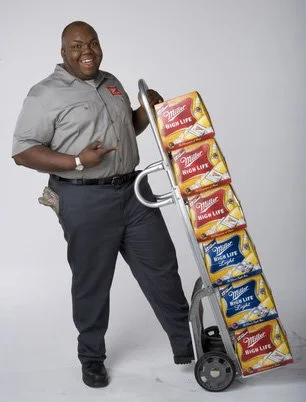
A Modelo branded delivery truck was parked outside. The driver had his dolly out with multiple stacks of beer ready to go into the store. It was not all Modelo; there were multiple beer brands in the delivery. The driver happened to be wearing a Miller Lite shirt, giving the whole scene the energy of one of those old Miller High Life commercials except nobody was delivering the High Life because the door was locked.
That was the problem.
The location is advertised as open 24 hours. Not “24 hours unless somebody inside decides otherwise.” Not “24 hours, but check the door before unloading several hundred pounds of alcohol.” Twenty-four hours.
Yet the driver was outside with the beer, his dolly and an entire delivery route waiting on a store that was supposed to be open. Another man in a black shirt was knocking on the door. I kept walking, went about another block and eventually turned around to come back on the other side of the street.
By the time I returned, the man in the black shirt was jumping into a car with beer. He hit the gas and screeched away like a bat out of hell.
From what I personally witnessed, it certainly appeared that somebody had just stolen part of the delivery.
The driver saw it too. He was visibly upset and began loading the remaining beer back onto the truck. I offered my condolences and continued walking, but the situation stayed with me. I called a family member who I knew would already be awake and told them what I had seen.
Their first question was obvious: “Did you call the police or give a statement?”
No. I had not. But they were right that I should go back.
When I returned, I found the driver about a block away with another delivery driver who had brought a second truck to help unload at a bar this time. I introduced myself, gave him my contact information and explained what we do at F’nAround. I also told him I would be willing to provide a witness statement about what I observed.
That mattered because missing alcohol on a delivery route can raise questions. Beer does not simply disappear from a truck without someone eventually asking where it went. The driver explained that he would have to complete a report when he returned.
He appeared genuinely relieved that an independent witness was willing to say what happened: the beer did not “fall off the truck,” and the driver was not inventing a story to explain missing inventory. Someone appeared to take it while he was attempting to make a delivery to a locked store.
And that is where this stops being a strange Chicago morning story and becomes a legitimate operational question.
Who Is Supposed to Carry the Risk?
Yes, the safest place for the beer was probably on the truck. But deliveries do not unload themselves. A driver has to move the product from the truck to the business, and there will inevitably be moments when he cannot physically touch every case while also operating a dolly, checking a door, speaking with store personnel or moving the rest of the order.
Was he supposed to keep every case locked inside until an employee physically opened the door? Does his employer have a rule about how far he may move from unattended product? Was this store expecting the shipment? How long had he already been waiting? Was he supposed to abandon the delivery, reload everything and disrupt the rest of his route?
Those are fair questions for the distributor to review. They are not facts F’nAround can answer without seeing the company’s delivery procedures.
But the questions cannot stop with the driver.
Why was a store advertised as open 24 hours locked during a scheduled commercial delivery? Did the store know the truck was coming? Is there a receiving procedure for situations like this? Is there a number drivers can call when employees will not answer the door? If a bar must be available during its assigned delivery window or risk missing the shipment, why should a national convenience-store location operate under a different standard?
Most importantly, why should the person standing outside doing his job become the easiest person to blame?
Delivery drivers already work under a difficult contradiction. They are responsible for valuable inventory, expected to keep moving and discouraged for good reason from placing themselves in physical danger over replaceable merchandise. Chasing the person who took the beer could have turned a property loss into an assault, a crash or something worse. Anyone who has seen Sleepers understands the basic problem: run after the little thing and you may lose the whole load.
Even if the driver had been standing two feet away, this is Chicago. Someone willing to grab cases of beer in daylight and peel away may not suddenly reconsider because a working man asks politely for them back.
There is also the weather question. This happened on an ordinary morning, but what happens when it is below zero, dangerously hot or pouring rain? Is a driver expected to stand outside indefinitely because a business advertising 24-hour service has locked its doors? At what point does the store’s staffing or access problem become a workplace-safety problem for somebody who does not even work for the store?
Call It What We Actually Saw.
For accuracy, this should be described as an apparent theft based on what I witnessed not automatically a robbery. I did not see a weapon, physical force or a threat directed at the driver. I also do not know the precise value of the beer that was taken, so I am not going to guess at the final criminal classification.
What I can say is simple: I saw a man leave the area with beer, enter a vehicle and accelerate away. I saw the driver react, begin recovering the remaining product and later explain that he would have to report the loss. I provided my information because a working person should not be left alone to prove that something happened in public merely because everyone else kept walking.
This is not an argument that the person who took the beer bears no responsibility. Of course he does. The person who takes property that does not belong to him is responsible for taking it.
But responsibility for the theft and responsibility for the conditions surrounding it are not necessarily the same question.
The 7-Eleven at 1524 W. Taylor St. was publicly listed as open 24 hours. This driver arrived with merchandise to deliver and encountered a locked door. The store’s failure to provide access left him outside with valuable inventory, other stops waiting and no especially good option.
Maybe the store had an emergency. Maybe there was a legitimate staffing or safety problem inside. If so, that deserves to be explained. But when locked doors during advertised hours become common enough that customers simply shrug and say, “That’s 7-Eleven,” it stops looking like an isolated emergency and starts looking like an operational practice.
And operational practices have consequences.
This time, the consequence was missing beer, a report the driver did not expect to write and an uncomfortable question waiting for him back at work.
So, to the driver: F’nAround is sorry this happened to you. We hope your employer looks at the locked door before it looks at the missing inventory. You arrived to do your job. From everything I personally witnessed, the store was not available to do its part.
When a business promises to remain open around the clock but leaves its delivery driver stranded outside, the failure should not automatically be unloaded onto the person already carrying everything else.