First Hemp, Now Kratom: Why America Keeps Regulating Gray Markets After They Become Industries
First Hemp, Now Kratom: Why America Keeps Regulating Gray Markets After They Become Industries
The products are different. The regulatory pattern is starting to look remarkably familiar.
Picture 2019.
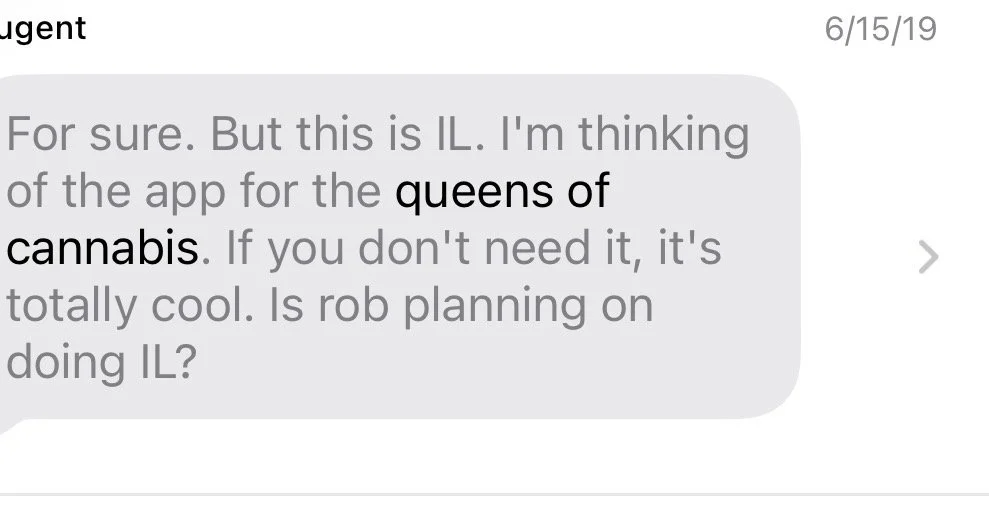
We’re sitting around a table discussing opportunities in Illinois’ emerging cannabis industry. Among the people at that table was a group whose original goal was to build a brand around becoming the “Queens of Cannabis” and eventually launch in Illinois.
One of the individuals involved was a Native American holistic healer who also had ties to something considerably less expected: a cricket farm.
Somewhere in those conversations, the subject turned to kratom.
She talked about the plant, its potential benefits and what she had seen among people dealing with addiction. Her argument was that kratom deserved far more attention than CBD or marijuana because of what it could potentially do for people.
The response from almost everyone else was essentially the same:
There’s no money in it.
Nobody wanted to touch it.
I remember joking at the time:
Give it a few years. When the money figures out what it’s worth, they’ll find a way to screw everyone over.
It was a throwaway line at a table in 2019.
A lot happened after that table.
Some of the people sitting there eventually became part of a much larger cannabis business dispute one that included comments about women belonging in the kitchen and refusing to partner with them, and ultimately spent years working its way through Cook County court.
In 2026, a unanimous jury found in my favor on the breach of contract claim against my former nuEra cannabis partners. The jury also rejected the counterclaims brought against us.
So I’ve learned something over the years about what can happen when emerging industries, government regulation and increasingly valuable markets collide.
But the kratom conversation disappeared into the background.
Until now.
Seven years after sitting at that table hearing someone explain why kratom mattered and joking that eventually enough money would discover it, we’ve arrived at a fascinating moment.
Kratom is suddenly attracting exactly the kind of attention nobody around that table thought existed in 2019.
Federal regulators are moving against highly concentrated 7-OH and synthetic kratom derivatives. Massachusetts has gone considerably further, temporarily placing kratom itself into Schedule I. Public-health researchers are raising alarms. Retailers are facing a changing legal landscape.
And another alternative-product market that grew in smoke shops, gas stations and specialty retailers is suddenly staring at the possibility of being dramatically reshaped by regulation.
Sound familiar?
It should.
Because we just watched America do something remarkably similar with hemp.
And this time, instead of making a joke and waiting seven years to see what happens, we’re going to follow it from the beginning.
Who wants it banned? Who wants it regulated? Who invests in the compounds? Who patents them? Who gets permission to research them? And, if a legal commercial market eventually emerges on the other side of prohibition, who gets permission to sell them?
Because maybe that stupid joke I made around a table in 2019 stays a stupid joke.
We’d actually prefer that.
But now we get to find out.
Every few years, America appears to accidentally invent a new industry.
First, a plant, chemical or derivative exists somewhere between clearly legal and clearly prohibited.
Then somebody figures out how to extract it.
Somebody figures out how to concentrate it.
Someone puts it in a gummy.
Another company puts it in a brightly colored package.
A distributor gets involved.
Smoke shops start carrying it.
Gas stations put it next to the register.
Consumers discover it.
Entrepreneurs invest in it.
Entire businesses begin depending on it.
Then regulators walk into the room and ask:
Wait. Who allowed all of this?
We just watched a version of that story unfold with hemp-derived intoxicants.
Now we’re watching something remarkably similar happen around kratom and, more specifically, increasingly potent products containing 7-hydroxymitragynine, better known as 7-OH.
Kratom isn’t hemp.
7-OH isn’t Delta-8.
And concentrated 7-OH isn’t necessarily equivalent to traditional kratom leaf.
Those distinctions matter.
But if you stop looking exclusively at the substances and start looking at the markets that formed around them and the government’s response to those markets, the similarities become much harder to ignore.
We Have Seen This Movie Before
Congress fundamentally changed America’s hemp marketplace with the 2018 Farm Bill.
The law excluded qualifying hemp from marijuana’s treatment under the Controlled Substances Act, using a threshold of no more than 0.3% delta-9 THC by dry weight.
What followed was considerably more complicated than shelves filled with CBD lotion.
Manufacturers discovered that the statutory definition created room for products containing other intoxicating cannabinoids. Delta-8 THC, THC-P, HHC and an alphabet soup of additional products began appearing across the country.
They weren’t being sold exclusively through licensed marijuana dispensaries.
They were appearing in smoke shops.
CBD stores.
Convenience stores.
Gas stations.
And online.
A parallel intoxicating-cannabinoid marketplace emerged alongside America’s heavily regulated state cannabis industries.
The Congressional Research Service has acknowledged essentially this progression: after the 2018 Farm Bill, manufacturers began producing products that remained within the federal delta-9 threshold while containing other psychoactive cannabinoids capable of producing intoxicating effects.
Eventually, regulators caught up.
Illinois provides an almost perfect example.
In June 2026, Governor JB Pritzker signed SB 3222. Illinois immediately prohibited sales of intoxicating hemp products to people under 21 and established a much larger change effective November 12.
Products such as Delta-8, THC-P and HHC will be reclassified as cannabis and brought under the state’s existing cannabis regulatory framework. Non-intoxicating CBD products meeting the new limits can remain outside that system.
Think about what happened there.
The product didn’t simply disappear.
The regulatory category changed.
And when a regulatory category changes, so does who can legally participate in the market.
Now Look at Kratom
Kratom has existed for considerably longer than the current controversy surrounding it.
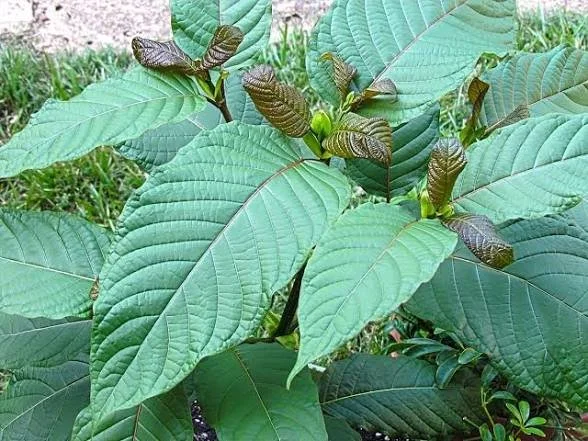
Derived from Mitragyna speciosa, a tree native to Southeast Asia, kratom has traditionally been consumed in forms vastly different from some of the products now sitting on American retail shelves.
That distinction is increasingly important.
One of kratom’s naturally occurring alkaloids is 7-hydroxymitragynine, or 7-OH.
In natural kratom leaf, 7-OH occurs in trace amounts.
Modern commercial chemistry changed the equation.
Highly concentrated or synthetic 7-OH products began appearing as tablets, gummies, shots, powders, capsules and dissolvable strips.
The FDA now describes enhanced 7-OH products as potent opioid products and warns consumers against using them. Importantly, the agency has repeatedly distinguished these products from natural kratom leaf.
That isn’t a minor technicality.
It’s central to understanding what’s happening.
The federal government isn’t currently treating a traditional kratom leaf and a highly concentrated synthetic product as exactly the same thing.
At least not yet.
From Smoke-Shop Shelf to Schedule I
On July 1, 2026, the Drug Enforcement Administration announced its intent to temporarily place 7-OH above a specified threshold and three related substances into Schedule I of the Controlled Substances Act.
Those related substances are mitragynine pseudoindoxyl, MGM-15 and MGM-16.
The DEA described the action as targeting highly concentrated and synthetic products rather than ordinary botanical kratom containing naturally occurring 7-OH below the proposed threshold.
The distinction is significant.
Schedule I isn’t a warning label.
It fundamentally changes the legal marketplace surrounding a substance.
Manufacturing, distribution, sale and possession become subject to the Controlled Substances Act’s criminal, civil and administrative provisions once a scheduling order applies.
Three of the synthetic compounds mitragynine pseudoindoxyl, MGM-15 and MGM-16 were placed into federal Schedule I effective August 26, 2026.
As of August 26, however, 7-OH itself had not yet completed that process. The government reopened public comments concerning the proposed threshold for 7-OH, with comments running into September.
So the federal story is still developing.
Then Massachusetts went considerably further.
Massachusetts Didn’t Wait for the Distinction.
Effective August 28, Massachusetts temporarily placed all forms of kratom into Schedule I under state law.
Not merely MGM-15.
Not merely MGM-16.
Not merely highly concentrated 7-OH.
Kratom.
The emergency regulation can remain effective for as long as one year.
And the consequences for retailers are particularly noteworthy.
Massachusetts’ emergency regulation says possession or distribution of kratom by a food, retail or other commercial establishment constitutes an “imminent health hazard.”
Local authorities can take enforcement action that may extend all the way to summary suspension of a municipal license or permit.
Suddenly, something that could previously sit on a retail shelf can threaten the retailer’s ability to operate.
That is a remarkable regulatory transition.
The Public-Health Argument Is Real.
None of this means concerns surrounding 7-OH should be dismissed.
University of Michigan clinicians have documented patients seeking addiction treatment associated with 7-OH and related synthetic products.
Michigan Medicine reported something particularly revealing this summer: after word spread that federal scheduling could make certain products disappear, patients began contacting treatment clinics.
Clinicians have also warned about dependence, withdrawal and the possibility that people losing access to 7-OH without treatment could turn toward more dangerous opioids.
FDA has similarly warned about addiction and other serious adverse effects associated with enhanced 7-OH products.
Those concerns deserve to be taken seriously.
But acknowledging a legitimate public-health concern doesn’t eliminate another legitimate question:
How did the marketplace get this far before government established the rules?
Because that’s where this starts looking familiar.
Plant. Extract. Concentrate. Commercialize. Regulate.
Strip away the names of the substances and look at the sequence.
A botanical product exists.
A legal or regulatory opening allows a commercial marketplace to develop.
Manufacturers begin extracting individual compounds.
Chemistry allows increasingly concentrated products.
Products become easier to consume.
Distribution expands.
Gas stations, convenience stores and smoke shops become retail channels.
Consumers develop habits.
Companies invest.
The market grows.
Health concerns emerge.
Government scrutiny increases.
Then regulators begin drawing lines between the original plant and what manufacturers created from it.
Sound familiar?
That’s essentially what happened with hemp.
CBD wasn’t the endpoint of the hemp boom.
Chemistry pushed the marketplace toward Delta-8, THC-P, HHC and other intoxicating cannabinoids.
Traditional kratom leaf similarly isn’t necessarily the endpoint of the kratom marketplace.
7-OH and synthetic derivatives demonstrate what happens when modern extraction and chemistry begin optimizing individual compounds from a plant.
And once potency increases, the regulatory calculus changes.
The Regulatory Gray-Market Business Model.
There’s an even larger story hiding underneath both industries.
For years, smoke shops, CBD stores, vape shops, gas stations and independent retailers have occupied an unusual corner of American commerce.
They sell products that don’t always fit neatly into America’s traditional regulated categories.
Not marijuana dispensaries.
Not pharmacies.
Not liquor stores.
Not necessarily tobacco stores.
Something in between.
And successive regulatory changes are beginning to squeeze that space.
First came restrictions on vape products.
Then intoxicating hemp.
Delta-8.
THC-P.
HHC.
Now concentrated 7-OH and synthetic kratom derivatives.
And in Massachusetts, kratom itself.
For a retailer, each regulation might technically concern a different substance.
Economically, however, they can have a cumulative effect.
One shelf disappears.
Then another.
Then another.
Eventually the question isn’t whether a particular substance survives.
It’s whether the regulatory gray-market retail model survives.
Hemp Offers Another Warning
There is another reason to pay attention to what happens next.
When Illinois decided intoxicating hemp required stronger regulation, the state didn’t simply create an entirely independent regulatory universe.
Beginning November 12, intoxicating hemp products will be brought under Illinois’ existing Cannabis Regulation and Tax Act.
That means an emerging marketplace that developed largely outside Illinois’ licensed cannabis system is being moved toward the system already occupied by licensed cannabis businesses.
Again, that doesn’t automatically mean the policy is wrong.
But it changes the economics.
Whenever government redraws the boundary around a market, there are winners and losers.
Some businesses lose products.
Some lose access to customers.
Some suddenly need licenses.
Some can’t obtain those licenses.
Some existing regulated businesses face less competition.
Others gain an entirely new category of products.
And sometimes entirely new industries eventually develop around whatever comes next.
That is why the kratom story shouldn’t end with whether government bans 7-OH.
That may only be where the interesting part begins.
Schedule I Doesn’t Mean the Story Ends
There is a tendency to think of Schedule I as the end of a substance’s commercial story.
History suggests things can become considerably stranger.
Cannabis remains the obvious example of how radically the politics, science and economics surrounding a prohibited substance can evolve.
For decades marijuana existed within Schedule I while states gradually constructed medical and adult-use cannabis industries around it.
Research expanded.
Companies formed.
Investors arrived.
Licenses became enormously valuable.
Lobbyists appeared.
Patent portfolios grew.
Pharmaceutical products derived from cannabinoids were developed.
State governments began collecting tax revenue.
A plant associated with criminal prohibition became the foundation of a multibillion-dollar regulated industry.
That doesn’t mean kratom will follow the same path.
It means we shouldn’t assume scheduling answers the economic question.
It may simply change the question.
Follow What Happens After the Ban
So F’nAround isn’t going to predict that kratom becomes the next cannabis industry.
We’re going to do something simpler.
We’re going to watch.
Watch who pushes for prohibition.
Watch who pushes for regulation instead.
Watch which substances are prohibited and which remain legal.
Watch whether natural kratom continues being treated differently from concentrated 7-OH.
Watch whether those distinctions change.
Watch the research.
Watch the clinical trials.
Watch the patents.
Watch the lobbying disclosures.
Watch the campaign contributions.
Watch the investors.
Watch which companies begin funding research.
Watch which pharmaceutical companies become interested in kratom alkaloids or related compounds.
Watch which companies acquire intellectual property.
Watch who argues that retail products are too dangerous for smoke shops but potentially appropriate in another controlled setting.
Watch whether a licensing framework eventually appears.
Watch who qualifies for those licenses.
Watch who doesn’t.
Watch who gets pushed out.
Watch who gets invited in.
And most importantly:
watch who eventually gets paid.
And Then There Was Money
Maybe the funniest part of remembering that conversation from 2019 is the reason nobody wanted to touch kratom.
There wasn’t enough money in it.
Seven years later, kratom has grown into a billion-dollar-scale American market.
And suddenly everybody seems to have an opinion about what should happen to it.
Maybe that’s coincidence.
Maybe regulators are simply responding to a marketplace that evolved faster than the laws surrounding it. Maybe concentrated 7-OH genuinely changed the risk calculation. Maybe what happens next will be nothing more than government trying to catch up with chemistry and legitimate public-health concerns.
But after watching what happened with cannabis and then hemp, there’s another question worth asking:
What happens when something that nobody cared about becomes worth a billion dollars?
Because from the outside, the progression can look remarkably simple.
When there’s no money in it, nobody cares.
When there’s a little money in it, entrepreneurs build businesses.
When there’s a billion dollars in it, suddenly the room gets crowded.
Regulators arrive. Lobbyists arrive. Lawyers arrive. Researchers arrive. Investors arrive. Established industries start paying attention.
And eventually somebody looks across the table and thinks:
Wait a minute. There’s a billion dollars over there. Why aren’t we getting any of it?
We don’t know whether that’s what is happening with kratom.
That’s why we’re going to watch.
Watch who supports Schedule I.
Watch who opposes it.
Watch who funds the research.
Watch who develops the patents.
Watch who invests.
Watch who gets licenses.
Watch which companies disappear.
Watch which companies suddenly appear.
And if today’s smoke-shop product eventually emerges years from now as a tightly controlled, patented, licensed or pharmaceutical product, watch very carefully who gets permission to sell it and how much they charge.
Back in 2019, I joked that eventually the money would figure out kratom.
Seven years later, the market is worth roughly a billion dollars.
Maybe the money finally noticed.
Now let’s see what it does.