Boss: The Greatest Chicago Political Drama Most People Never Watched
Boss: The Greatest Chicago Political Drama Most People Never Watched
Before there was Succession.
Before House of Cards turned political corruption into prestige television.
Before streaming platforms discovered audiences loved watching powerful people destroy themselves.
There was Boss.
And somehow one of the smartest, darkest, and most brutally honest political dramas ever made only lasted two seasons.
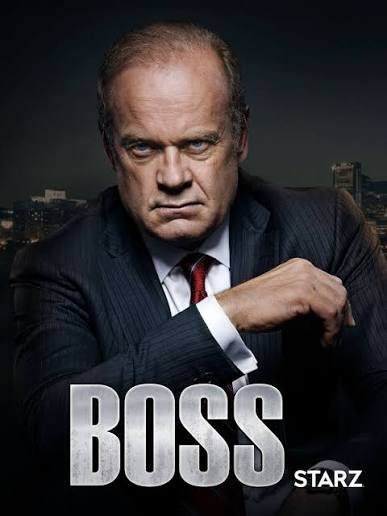
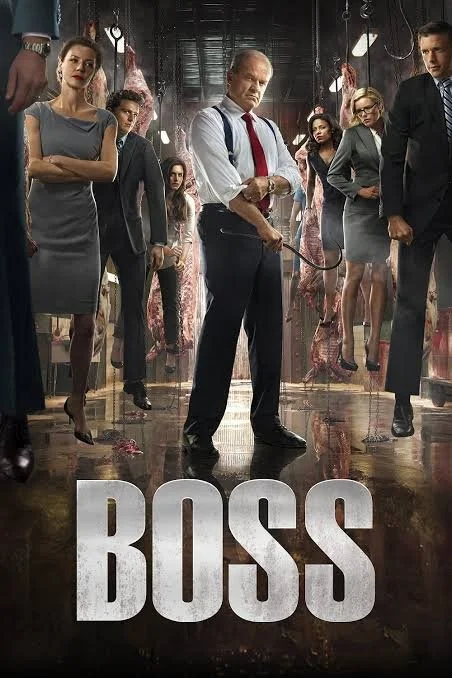
Originally airing on Starz from 2011 to 2012, Boss stars Kelsey Grammer as Mayor Tom Kane, the iron-fisted ruler of Chicago who discovers he is suffering from a degenerative neurological disease while trying to maintain control over the city’s political machine.
The premise alone is compelling.
The execution is extraordinary.
Kelsey Grammer’s Greatest Performance
Most people know Kelsey Grammer as Frasier Crane.
Refined.
Educated.
Lovably arrogant.
A man who worries about opera tickets and wine pairings.
Tom Kane is the exact opposite.
Kane is ruthless.
Manipulative.
Terrifying.
The kind of politician who can destroy careers, control newspapers, punish enemies, reward allies, and make entire city departments move with a single phone call.
Grammer doesn’t just play the role.
He disappears into it.
Every scene feels like watching a man trying to hold together a collapsing empire while simultaneously losing control of his own mind.
It’s one of the greatest television performances of the last twenty years and remains criminally underrated when discussions about elite TV acting come up.
Chicago Is The Real Star
While Boss never explicitly says Tom Kane is Richard J. Daley, nobody familiar with Chicago politics misses the inspiration.
The fingerprints are everywhere.
The old-school machine politics.
The patronage networks.
The loyalty tests.
The ward organizations.
The behind-the-scenes power brokers.
The understanding that real power often exists far away from cameras and press conferences.
The series draws heavily from the legacy of Richard J. Daley, whose influence shaped modern Chicago politics for generations.
The result is less a biography and more a fictionalized exploration of what happens when one man becomes synonymous with an entire political system.
Chicago itself becomes a character.
The skyline.
The neighborhoods.
The city hall offices.
The backroom meetings.
The endless negotiations between developers, politicians, unions, media figures, and wealthy donors.
For anyone fascinated by Chicago political history, urban governance, city corruption, machine politics, public administration, or municipal power structures, Boss feels less like a television show and more like a dramatized case study.
The Politics Feel Uncomfortably Real
What makes Boss stand apart from many political dramas is that it doesn’t present corruption as some shocking exception.
It presents it as infrastructure.
Everyone owes somebody.
Everyone has leverage.
Everyone has secrets.
Every decision has three unintended consequences.
Every alliance is temporary.
Every favor creates another obligation.
Rather than portraying corruption as cartoonishly evil, Boss examines how political systems evolve around incentives, power, loyalty, and survival.
That’s why the show still feels relevant years later.
The technology changes.
The headlines change.
The personalities change.
But the underlying dynamics remain remarkably familiar.
The Tragedy Of Tom Kane
At its core, Boss is not really a political show.
It’s a tragedy.
Tom Kane spends the series fighting two enemies.
His political opponents.
And his own deteriorating mind.
The disease slowly strips away the one thing that made him powerful: control.
Watching a man who controls an entire city lose control of himself creates some of the most compelling television ever produced.
The series asks a haunting question:
What happens when the most powerful person in the room can no longer trust his own brain?
The answer is equal parts fascinating and horrifying.
Why Its Cancellation Still Hurts
The biggest disappointment surrounding Boss is that it ended far too early.
The show was critically acclaimed.
Kelsey Grammer won a Golden Globe.
The writing was sharp.
The cast was excellent.
The world felt rich enough to sustain multiple additional seasons.
Yet after only two seasons, the series ended before it had fully explored everything it was building.
You can still feel the unrealized potential.
There were deeper stories to tell.
More alliances to betray.
More political wars to fight.
More consequences to unfold.
In an era where average streaming shows receive five seasons simply because an algorithm says so, it’s frustrating that a series this intelligent never received the runway it deserved.
Final Verdict
Boss remains one of the best political television dramas ever created.
It’s a masterclass in acting.
A fascinating examination of Chicago political culture.
A compelling character study.
And a reminder that some of television’s greatest shows don’t always get the endings they deserve.
If you enjoy political thrillers, Chicago history, urban politics, machine governance, corruption dramas, character-driven storytelling, or simply watching elite actors operating at the peak of their abilities, Boss is essential viewing.
Years later, it still feels ahead of its time.
And much like the political machines it portrays, its influence remains visible long after it disappeared from public view.
Rating: 9.5/10
A brutal, intelligent, sophisticated political drama that deserved twice the seasons and ten times the audience.