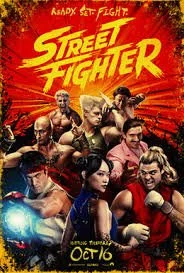
Street Fighter 2026 Review: Cheesy Like He-Man, But It Missed The Mark
F'nAround movie review. Spoilers ahead for the ending, because the ending is half the problem.
I watched Street Fighter, and I went in wanting to love it. I grew up on this game, I grew up on the 1994 movie, and I wanted the new one to be the dumb, loud, perfect arcade movie. It is dumb and loud. It is not perfect. It is cheesy on the same level as He-Man, and that is the compliment and the indictment at the same time, because He-Man knew what kind of cheese it was serving. Street Fighter 2026 does not. It had the cast, the colors, the fights, and the history, and it still missed the mark on almost every respect that matters after the credits roll.
The Verdict First: A Flop With A Great Trailer Campaign
Street Fighter opened October 16, 2026, directed by Kitao Sakurai, with a reported budget of 82 million dollars. It opened at number one with about 31 million dollars domestic and 51.1 million dollars worldwide, which sounds fine until you see what happened next. It fell about 70 percent in its second weekend, to roughly 8 to 9 million dollars domestic, taking its domestic total to about 47 million dollars after two weekends. By its third weekend Paramount had cut it from 3,575 theaters to 2,825, a loss of 750 theaters. One projection put its eventual loss at more than 50 million dollars. Critics gave it about 41 percent on Rotten Tomatoes. Audiences were kinder, at about 79 percent, with a B minus CinemaScore, the same grade the 1994 film earned. That split tells the whole story. Fans showed up, fans had fun in the room, and fans did not come back with friends.
That is why the social media campaign stings. The TikTok shorts, the videos, the Times Square stunt with a giant Street Fighter arcade cabinet, Noah Centineo doing a real life Hell Wheel in Times Square, Cody Rhodes showing off an AMC popcorn bucket shaped like Guile's flat top hair, Roman Reigns posting AKUMA to his millions of followers, all of that was better than the movie. The promo understood the assignment in 15 seconds. The movie had 119 minutes and still could not land it.
Street Fighter History: From Capcom Arcade To A 60 Million Unit Franchise
You cannot judge this movie without the game, because the game is the reason anybody cares. Street Fighter launched in arcades in 1987, designed by Takashi Nishiyama and Hiroshi Matsumoto for Capcom. The first game let you play Ryu in a worldwide tournament across five countries and ten opponents. Street Fighter II followed in 1991 and did not just sell, it built a culture. It set the template for the one on one fighting game, six button controls, command based special moves, Hadoukens, Sonic Booms, and a roster you could argue about in the arcade line. Street Fighter is now the longest running fighting game franchise, with total sales of 60 million units worldwide as of July 2026, and it is one of Capcom's flagship series. Street Fighter 6, released June 2, 2023, is the latest main game, and it is still the reason the fighting game community exists in the form we know it.
That history is also a trap for a movie. The games do not have a plot in the normal sense. They have a tournament, a roster, and a reason for two people to fight. A movie has to invent the connective tissue, and every Street Fighter movie has struggled with that invention. The 2026 film set itself in 1993, the year after Street Fighter II ruled the arcade, and that should have been a gift. Instead it became an excuse for a 90s jukebox and a plot that keeps stopping to explain itself.
Street Fighter 1994: The First Movie, The Cheese Standard, And Raul Julia
The first live action Street Fighter, released December 23, 1994, was written and directed by Steven E. de Souza, the man who wrote Die Hard. It starred Jean-Claude Van Damme as Colonel William Guile, Raul Julia as General M. Bison, Ming-Na Wen as Chun-Li, Kylie Minogue as Cammy, Byron Mann as Ryu, Damian Chapa as Ken, Wes Studi as Sagat, and a roster that made sense only if you squinted. The plot was not the tournament. It was Guile and the Allied Nations trying to stop Bison, the dictator and drug kingpin of Shadaloo, who had taken hostages and wanted a 20 billion dollar ransom, and who wanted an army of genetic supersoldiers.
Critics panned it. Fans panned it. It still made money, roughly three times its production cost, and it survived because of one performance. Raul Julia, already sick with stomach cancer, took the role because his children were fans of the game. He died of a stroke on October 24, 1994, two months before the film opened, and the film is dedicated to his memory. His Bison was theatrical, funny, terrifying, and completely committed, and he got a posthumous Saturn Award nomination for Best Supporting Actor. That is the standard every later Bison has to live up to, and it is not a fair standard, because Julia was playing a villain in a bad movie like it was Shakespeare. That is why his most famous line stuck. When Chun-Li tells Bison he destroyed her village and killed her father, and he cannot even remember it, he says, for you, the day Bison graced your village was the most important day of your life, but for me, it was Tuesday. That line is not just a joke. It is the whole character in one sentence, a man so drunk on power that other people's tragedies are calendar entries.
The 1994 film also ended with a post credits tease for a sequel that never happened. Remember that, because 2026 repeats the mistake, only bigger.
Street Fighter 2026: The New Movie, The New Cast, And The Same Tournament Problem
The 2026 film is the third major theatrical Street Fighter movie, after 1994 and the 2009 spinoff Street Fighter: The Legend of Chun-Li. Legendary and Capcom co-financed it, Paramount distributed it, and Sakurai directed it from a script he wrote with T.J. Fixman. It is set in 1993. Ryu, played by Andrew Koji, and Ken Masters, played by Noah Centineo, are estranged brothers in arms. They won a first World Warrior Tournament in 1987, Ryu beat Sagat and scarred him, and Ryu tapped into the Dark Hadou to do it. Now Ken is a global celebrity more famous for endorsements and party boy antics than for fighting, Ryu is slinging bad ramen and trying to live quietly, and Chun-Li, played by Callina Liang, recruits them for a second World Warrior Tournament.
The tournament is a trap. M. Bison, played by David Dastmalchian, is hosting it to lure Ryu out of hiding and steal his power to build his own Psycho Power. Chun-Li is not just a recruiter. She went rogue from Interpol to kill Bison herself, because he murdered her father years earlier. That is a solid spine for a Street Fighter movie. The problem is what the film does with it. It keeps cutting to fights, then to jokes, then to explanations, then to another fight, and the tournament itself starts to disappear. Critics called the storytelling incoherent and the humor juvenile, and the Rotten Tomatoes consensus said the film has affection for the source material and dizzying style, but incoherent storytelling and juvenile humor make for a disappointing regression among video game adaptations. That is harsh, but it is not wrong about the script. The fights are good. The look is good. The story in between the fights is where it falls apart.
The Social Media Was Better Than The Movie: TikTok, Times Square, And The Popcorn Bucket
This is the part that should embarrass a studio. The Street Fighter movie social team understood the assignment better than the movie did. A giant arcade cabinet appeared in Times Square, with performers dressed as Ryu and Ken fighting, and Centineo performing a Hell Wheel in real life. The official accounts pushed character posters, first looks, and short clips that made the casting look like a dream. Cody Rhodes, as Guile, unveiled an AMC popcorn bucket shaped like Guile's hair, and that bucket got more joyful press than most of the film's second act. Roman Reigns, as Akuma, posted a single word, AKUMA, and the wrestling internet did the rest. TikTok shorts and Instagram reels could sell this movie in ten seconds because they only had to sell a look, a move, and a name. The movie had to sell a story, and it could not.
That is not a small point. For a franchise movie in 2026, the short form campaign is the first movie most people see. If the shorts are better than the feature, audiences feel tricked, even if they liked the fights. They do not recommend it, they do not rewatch it, and they do not drag a second group to it. That is exactly what the second weekend drop looks like.
Cartoon And Real Life: Amazing In Concept, Horrible In Practice
Here is the boldest idea in the movie, and the one that proves the point about concept versus execution. The film opens with, and keeps returning to, hand drawn anime style flashbacks by Titmouse, the studio run by Chris and Shannon Prynoski. Those flashbacks show young Ryu beating Sagat in 1987, the Dark Hadou taking hold, and the fracture between Ryu and Ken. They are gorgeous, serious, fluid, and emotionally clear in a way the live action scenes often are not. They nod to Street Fighter II: The Animated Movie from 1994, and they give the film a second visual language.
In concept, mixing cartoon and real life is amazing. It says, this world is too big, too colorful, and too impossible for one camera. In practice, in this movie, it backfires. The animated sequences are so good that they outshine the live action, and critics noticed it immediately. Some said the animation was the best looking, best sounding, most coherent part of the film. Others said the flashbacks became a crutch, a way to double back and explain emotion the live action scenes had not earned. I agree with both. When the cartoon is better than the real thing, you start wishing the whole movie was the cartoon, and that is a fatal thought for a live action reboot that cost 82 million dollars. The mix did not fail because animation is wrong for Street Fighter. It failed because the live action side did not hold up its end of the bargain. The fights are well shot, the stunt team is strong, and Andrew Koji can actually move, but the scenes between fights are chopped, loud, and busy, with no quiet to let a character land. The cartoon gets quiet. The movie does not.
Our Favorite Part: Bison, Raul Julia, And The Tuesday That Did Him Proud
Now the part I actually loved, and I am not going to bury it under the flop talk. My favorite part of this movie was the Bison material, because it is the one place where the new film honors the old film instead of just quoting it.
David Dastmalchian does not try to be Raul Julia. That is the smartest choice in the movie, because nobody can be Raul Julia. Julia's Bison was charismatic, theatrical, and funny in a way that made you understand why people would follow him. Dastmalchian's Bison is weirder, creepier, and more cult leader than general, a man who will offer you snails as a snack, wash an opponent's feet without asking, and talk about Psycho Power like it is a shortcut to godhood. He is openly perverted in the sense that he enjoys making people uncomfortable, and he is clearly having fun. He is not Julia, and he does not need to be, because the film gives him two specific tributes that do the honoring for him.
The first is the painting. In 1994, Julia's Bison had a painting of himself in his office, styled like Napoleon on horseback, and he showed it to Chun-Li with total sincerity. In 2026, Dastmalchian's Bison has a similar grandiose painting of himself in his office, and he discusses it with Chun-Li, played by Callina Liang, in a red dress, in a scene that mirrors the 1994 conversation. It is not a copy. It is a rhyme, and it works because it understands what the painting meant. Bison does not just want power. He wants to be remembered as a conqueror, and he decorates accordingly.
The second is the line, and this is the moment that made the theater feel like a theater again. In 1994, Bison told Chun-Li that the day he graced her village was the most important day of her life, but for him, it was Tuesday. In 2026, after beating Chun-Li with a Psycho Crusher, Dastmalchian's Bison says, for you, this is the day you die, for me, it is Tuesday. It is a remix, not a replica, and it lands because it respects the original without trying to outdo it. Julia is a lost great, a Shakespearean actor who took a video game villain seriously because his kids loved the game, and who died before he could see the film. Dastmalchian does him proud not by imitating him, but by understanding him. Bison is a man for whom other people's worst day is a weekday. That is the character, in one line, across 32 years.
That is why it hurts that Bison is underused as the main villain. For most of the runtime, the film treats Akuma as the primary threat, and Bison as the man setting events in motion. He is fun to watch, but he is secondary. The film knows Bison is supposed to be the big bad, and it saves that version of Bison for a sequel that may never happen. That is a waste of the best thing in the movie.
Ending A Horrible Movie On A Cliffhanger Sucks, Especially When The Sequel Is Not Real
Let us be blunt about the ending, because this is where high expectations go to die. Ryu beats Akuma, but only after turning into Dark Ryu, fighting Ken, Chun-Li, and Dan, and being brought back when Ken finally unleashes a Hadouken of his own. Bison does not get Ryu's power. He gets something else. He takes the unconscious Akuma's body and rides off with it, planning to harvest Akuma's power instead. Ryu, Ken, Chun-Li, and Dan end up on the side of the road, hitchhiking, until Guile and Dhalsim pick them up to go after Bison. Then the credits roll. Then a mid credits scene shows Bison, Cammy, and Vega visiting a scarred, eyepatch wearing Sagat on a beach or in a jungle, clearly recruiting him for the next fight.
That is not an ending. That is a trailer for a movie that does not exist. A sequel has not been officially greenlit. Director Kitao Sakurai has said he wants to make one, and he has refused to confirm or deny sequel plans, but wanting a sequel is not the same as having one. The box office makes it even less likely. A film that drops 70 percent in week two, loses 750 theaters in week three, and is projected to lose more than 50 million dollars does not get to end on a cliffhanger and expect patience. It gets to end on a cliffhanger and expect anger, because audiences paid for a complete movie and got the first half of a franchise pitch.
The 1994 film did the same thing, teasing a sequel in a post credits scene that never arrived, and fans learned to live with it because the 1994 film was at least a complete, if ridiculous, story. The 2026 film is not complete. Bison is still at large, Akuma is a prisoner, Sagat is waiting, and the heroes are literally hitchhiking toward a fight we may never see. That is not a bold choice. That is a broken promise, and it is the single biggest reason the movie feels worse on the walk out than it felt in the theater. You do not end a movie that already struggled to land its story by refusing to land the story at all.
High Expectations, Nothing Landed: Where The 90s Spin Went Wrong
Street Fighter 2026 had every reason to work. The game is beloved. The cast is stacked. The 90s setting is perfect for this material. The animated flashbacks are beautiful. The fights are well performed. And still, nothing landed the way it should have, because the film tried to be everything at once and committed to none of it.
The 90s spin is the clearest example. The soundtrack leans hard into the 90s, with Tupac, Soundgarden, Meredith Brooks, and 4 Non Blondes, whose song What's Up is surprisingly integral to Ken and Ryu's journey. That should be fun. Instead, the film keeps underlining its jokes, explaining its references, and cutting so fast that a fight that should feel brutal feels busy. The humor is juvenile in the way a teenager thinks is edgy, not in the way a good comedy is sharp. The script is sloppy in the way a first draft is sloppy, with characters arriving, fighting, and leaving before you know why they were there. The film knows exactly what type of movie it wants to be, a deranged live action cartoon, but it does not trust that type enough to slow down and let a scene breathe. It moves like a theme park ride, one set piece after another, with no stop in between, and by the end you are tired, not thrilled.
He-Man, by comparison, worked as cheese because it leaned into the cheese and let it be the point. Masters of the Universe 2026, directed by Travis Knight, starring Nicholas Galitzine as Prince Adam and He-Man, Camila Mendes as Teela, and Jared Leto as Skeletor, was also cheesy, also self aware, and also a box office flop, making about 101 million dollars worldwide against a 200 million dollar budget. But critics and fans could at least say what it was. It was a fun, cheesy ride that knew it was a toy commercial turned into a movie, and it let Skeletor ham it up. Street Fighter 2026 is cheesy in the same way, but it does not have He-Man's confidence. It is loud when it should be quiet, jokey when it should be menacing, and serious only in the animated flashbacks, which are not even the main movie. That is the difference between cheese that works and cheese that just sits there. One knows it is cheese. The other thinks it is a meal.
WWE And Wrestling In Street Fighter: Roman Reigns As Akuma, Cody Rhodes As Guile
If you are searching for Street Fighter WWE, Roman Reigns Akuma, or Cody Rhodes Guile, this is the section you came for, because wrestling is not a gimmick in this cast. It is the spine of the marketing, and it is the best and most frustrating part of the ensemble.
Roman Reigns, real name Joe Anoa'i, plays Akuma, and that casting is perfect on paper. Akuma first appeared in Super Street Fighter II Turbo in 1994 as a hidden boss, a ruthless master of the dark energy called Satsui no Hado, the younger brother of Gouken, the mentor to Ryu and Ken. Reigns is built for that role. He is a former football player, a WWE star since 2012 as part of The Shield with Seth Rollins and Dean Ambrose, and the Tribal Chief who held the Universal Championship for 1,316 days from August 2020 to April 2024, the fourth longest world title reign in WWE history. He lost that title to Cody Rhodes at WrestleMania 40 in 2024, after beating Rhodes at WrestleMania 39 in 2023, and the two have gone from rivals to allies in WWE, teaming at Bad Blood in 2024 and in WarGames at Survivor Series. On screen, Reigns has played Mateo Hobbs in Fast and Furious Presents: Hobbs and Shaw in 2019, voiced a zebra in Zootopia 2 in 2025 alongside CM Punk, and appeared in The Pickup in 2025. Akuma should have been his biggest film role yet, a silent, terrifying force who does not need to talk to be scary. In the movie, he is underused, and his best moments are physical, not dramatic, which is both a compliment to his presence and an indictment of the script. You do not hire the Tribal Chief to stand around while other people explain Psycho Power.
Cody Rhodes plays Guile, and that casting is even better on paper. Guile has been a face of Street Fighter since Street Fighter II in 1991, an American Air Force officer with a flat top, a Sonic Boom, and a Flash Kick, and Rhodes looks like Guile walked out of the game. Fans said it immediately, Cody Rhodes IS Guile in real life, and the trailer proved it. Rhodes is the American Nightmare, the man who finished his story at WrestleMania 40 by beating Reigns, and he has been building a Hollywood career in parallel. He had a recurring role as Derek Sampson on Arrow between his WWE release and the formation of AEW, he had a cameo as a bartender in The Naked Gun in 2026 with Liam Neeson, and Street Fighter is his largest film role to date. He is also the third wrestler in the film in a major sense, because Hirooki Goto, a New Japan Pro Wrestling star, plays E. Honda. Rhodes was praised by Dastmalchian for his performance, and he looks the part completely, but Guile arrives late, picks up the heroes on the road, and sets up the sequel. That is not a role. That is a cameo with a flat top, and it wastes the one actor who looked most like his character.
Wrestling in movies is hit or miss by nature, and Street Fighter proves it. Dave Bautista went from Guardians of the Galaxy to a real acting career because Drax let him be funny and human. Dwayne Johnson went from wrestling to the biggest movie star in the world because he understood charisma translates. John Cena went from wrestling to comedy and action because he understood timing. Reigns and Rhodes have the presence, but presence is not a script. If a movie gives a wrestler a great entrance and nothing to do, the wrestler looks like a poster, not a character. That is what happens here, and it is not their fault. It is the film's fault for casting wrestlers for their bodies and their social followings, then forgetting to write them scenes.
Jason Momoa As Blanka, And The Rest Of The Roster: Hit Or Miss
Jason Momoa plays Blanka, and that is a perfect example of the hit or miss problem. Blanka is a green skinned, orange haired, electricity generating beast who can roll himself into a ball, a character who should be impossible to play straight. Momoa, who started on Baywatch Hawaii, played Ronon Dex on Stargate Atlantis, Khal Drogo on Game of Thrones, Conan in Conan the Barbarian in 2011, Duncan Idaho in Dune in 2021, Dante in Fast X in 2023, and Arthur Curry in Aquaman in 2018 and Aquaman and the Lost Kingdom in 2023, is also a producer on Street Fighter. He can be a hit, as Aquaman and Dune proved, and he can be a miss, as Conan and Aquaman and the Lost Kingdom proved. As Blanka, he is mostly a visual, a wild, physical presence who looks right and does not get enough to do. That is the pattern for the whole supporting cast. They look right, they fight well, and they disappear.
The rest of the roster deserves a quick hit or miss check, because SEO aside, this is why fans showed up. Andrew Koji as Ryu is a hit, a real martial artist and actor from Warrior and Bullet Train who can carry the emotional weight and the fights. Noah Centineo as Ken is a mixed bag, charming and funny as the celebrity Ken, less convincing when the film asks him to be a warrior again, but he sells the brother dynamic with Koji. Callina Liang as Chun-Li is a hit in the fights and in the Bison scenes, and she carries the revenge plot that should have been the film's heart. David Dastmalchian as Bison is a hit, as covered above, even if he is underused. Andrew Schulz as Dan Hibiki is a joke character played as a joke, which is either perfect or exhausting depending on your tolerance for Schulz. Eric Andre as Don Sauvage is pure Eric Andre, chaotic and funny in short bursts. Orville Peck as Vega is visually perfect, a masked, clawed, narcissistic fighter, but underwritten. Vidyut Jammwal as Dhalsim, a real action star, brings physical credibility to a stretchy yoga master, which is a sentence that should not work and mostly does. Olivier Richters, the Dutch bodybuilder known as the Dutch Giant, as Zangief is perfect casting for a massive Soviet wrestler, and he looks like he walked out of the game. Mel Jarnson as Cammy, Rayna Vallandingham as Juli, and Alexander Volkanovski, the UFC featherweight champion, as Joe round out a cast that is too big for a 119 minute movie. That is the problem in one sentence. Seventeen characters, one movie, and no time for any of them to be more than a poster.
50 Cent As Balrog: Many Men, The Tupac Theme, And The Contract Question
Curtis Jackson, known as 50 Cent, plays Balrog, and this is where the movie gets weird in a way that is actually interesting. Balrog, first introduced in Street Fighter II in 1991, is a disgraced boxer turned Shadaloo enforcer, modeled in part on Mike Tyson, a brute force puncher who was banned from professional boxing. 50 Cent, born July 6, 1975, is a rapper, actor, and television producer who broke through with Get Rich or Die Tryin in 2003, starred in the semi autobiographical film Get Rich or Die Tryin in 2005, played a traumatized soldier in Home of the Brave in 2006, shared the screen with Robert De Niro and Al Pacino in Righteous Kill in 2008, played a boxer in Southpaw in 2015, and built the Power television universe as an executive producer and star. His film career is hit or miss by design. He is great as a presence, as a producer, and as a brand, and he is less convincing when a film asks him to be a subtle actor. As Balrog, he is a presence, and that is enough for the fights, but not enough for a character.
Then there is the song, and this is the part that made me stop and wonder if it was contract based. During a fight featuring Balrog, the film plays 50 Cent's song Many Men (Wish Death). It is temporally out of place, because the film is set in 1993 and Many Men is from 2003, but it is also completely on the nose. 50 Cent is playing Balrog, and 50 Cent's song is playing while Balrog fights. That is either a joke, a synergy play, or a contract clause, and I do not know which one it is. What is on the public record is this. 50 Cent told Extra at the Los Angeles premiere that he wrote a version of Tupac's Ambitionz Az a Ridah for the film's theme, called Ambitionz Az a Fighta, based on a version Tupac originally wrote for Mike Tyson, with Tupac's vocals cleared by his estate and not generated by artificial intelligence. He also teased a collaboration with Eminem and Tupac for the theme in July 2026, and then said at the premiere that Eminem had worked on it but stepped back because he was preparing his next album. The full Eminem and Tupac theme has not been released as a finished song, and the film's soundtrack, released October 16 by Milan Records, includes Many Men, Tupac's Ambitionz Az a Ridah, Soundgarden's Black Hole Sun, Meredith Brooks' Bitch, 4 Non Blondes' What's Up, and The Weather Girls' It's Raining Men as the final song, a choice director Sakurai said was deliberate and picked late in editing after a joke take of the cast singing it worked.
So, was Many Men contract based? I have not found a public contract, a deal memo, or a studio statement saying 50 Cent's deal required his own song to be used. That does not mean it was not in a deal. It means we cannot say it was. What we can say is that it reads like a deal. When a rapper actor plays a boxer, and his own hit plays over his own fight, in a movie that is already a marketing exercise, the audience is right to ask if the song was there because it served the scene or because it served the star. In this case, it served the star more than the scene, because it breaks the 1993 setting and it tells you, this is 50 Cent, not Balrog. That is a small moment, but it is a perfect example of the film's larger problem. It keeps winking at the audience instead of trusting the audience to care about the characters.
Why It Bombed: The Numbers, The Reviews, And The Sequel That May Never Come
Let us put the flop in plain terms, because flop is a word people throw around too easily. Street Fighter did not bomb because nobody showed up. It bombed because the people who showed up did not bring anybody back. It opened at number one, with a 41 percent critics score and a 79 percent audience score, which is a gap that usually means a film serves its core base and leaves general audiences cold. Its CinemaScore was B minus, which predicts soft word of mouth, not passionate repeat viewership. Its second weekend drop of about 70 percent is the number that kills a franchise, because it means the opening was front loaded by fans and marketing, not by a movie people were recommending. Its budget was 82 million dollars, co-financed by Legendary and Capcom, with Paramount distributing, and its theatrical break even is roughly double that budget, around 164 to 205 million dollars, once marketing and distribution are counted. At about 47 million dollars domestic after two weekends, and roughly 79 million dollars worldwide in later reporting, it was nowhere near that range, and the theater cut in week three confirmed the run was over as a theatrical event.
That matters for the cliffhanger, because a cliffhanger is a promise, and a promise needs a sequel to keep it. As of now, there is no official greenlight for Street Fighter 2, and the director's interest is not a greenlight. If a sequel ever happens, it would have to be the movie this film promised, Bison as the real big bad, with Akuma's power, Sagat as his ally, and Ryu and Ken actually finishing the fight they started. That movie sounds great. It also sounds expensive, and studios do not usually spend more money to finish a story audiences did not pay to see the first time. The most likely future for this version of Street Fighter is not a sequel. It is a cult afterlife on streaming, where fans can rewatch the fights, the Bison scenes, and the animated flashbacks, and pretend the cliffhanger was a choice, not a gamble that lost.
Final Verdict: Cheesy, Yes. He-Man Cheesy, No. And That Is The Difference
Street Fighter 2026 is cheesy on the same level as He-Man in the sense that both movies are loud, colorful, ridiculous, and built from toys and cartoons. It fails where He-Man, at its best, succeeded, because He-Man understood that cheese needs confidence. Street Fighter 2026 has the ingredients for a cult classic, a great Bison tribute, great animated flashbacks, a cast that looks like the game, and fights that are actually fun, but it misses the mark on every respect that turns a fun night into a franchise. The script is incoherent, the humor is juvenile, the cartoon outshines the live action, the wrestlers are posters instead of characters, 50 Cent's song feels like a brand deal instead of a scene, and the ending is not an ending.
I will still rewatch the Bison scenes. I will still show people the Tuesday line, because Dastmalchian did Raul Julia proud, and Julia deserves to be remembered as a lost great who took a silly role seriously and made it immortal. I will still watch the TikTok shorts, because they are better than the movie, and that is not a joke, it is a diagnosis. But I cannot recommend Street Fighter 2026 as a complete movie, because it is not complete. It is a first act, a trailer, and a cliffhanger, wearing a 119 minute movie's clothes. If you love Street Fighter, watch it for the fights and for Bison, and then go play Street Fighter II, because the game still knows how to end a fight. The movie, sadly, does not.
Street Fighter 2026: Quick Facts For Search
Street Fighter 2026 release date: October 16, 2026. Director: Kitao Sakurai. Runtime: 119 minutes. Budget: 82 million dollars. Opening weekend domestic: about 31 million dollars. Second weekend drop: about 70 percent. Rotten Tomatoes critics: about 41 percent. Rotten Tomatoes audience: about 79 percent. CinemaScore: B minus. Cast: Andrew Koji as Ryu, Noah Centineo as Ken Masters, Callina Liang as Chun-Li, David Dastmalchian as M. Bison, Cody Rhodes as Guile, Joe Anoa'i, Roman Reigns, as Akuma, Jason Momoa as Blanka, Curtis 50 Cent Jackson as Balrog, Orville Peck as Vega, Andrew Schulz as Dan Hibiki, Eric Andre as Don Sauvage, Vidyut Jammwal as Dhalsim, Hirooki Goto as E. Honda, Olivier Richters as Zangief, Mel Jarnson as Cammy, Rayna Vallandingham as Juli, Alexander Volkanovski as Joe. Original 1994 cast: Jean-Claude Van Damme as Guile, Raul Julia as M. Bison, Ming-Na Wen as Chun-Li, Kylie Minogue as Cammy. Game history: Street Fighter 1987, Street Fighter II 1991, Street Fighter 6 2023, 60 million units sold as of July 2026.