By the Power of Grayskull, They Almost Had It Review of He-Man and The Masters of The Universe
By the Power of Grayskull, They Almost Had It
How a Toy Line Became a Pop Culture Phenomenon, Why Hollywood Has Struggled to Adapt He-Man for More Than 40 Years, and Why the New Masters of the Universe Finally Comes Close
There are certain childhood memories that never really leave you.
For some people, it’s Star Wars.
For others, it’s Transformers, G.I. Joe, or Teenage Mutant Ninja Turtles.
For me, Masters of the Universe has always been one of those franchises.
It wasn’t just a cartoon.
It wasn’t just a toy.
It was an entire world.
A world where a scrawny prince could raise a glowing sword over his head and somehow transform into the strongest man in the universe.
Where a frightened green tiger suddenly became an armored battle cat.
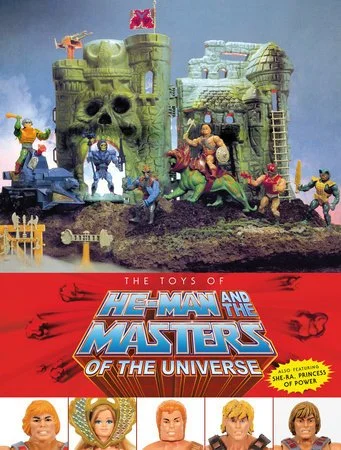
Where castles were shaped like giant skulls.
Where robots, wizards, laser guns, dragons, spaceships, magic, monsters, and medieval knights all somehow existed together without anyone questioning it.
And somehow…
It all made perfect sense.
That’s probably why watching the new Masters of the Universe movie left me feeling so conflicted.
Not because I hated it.
I didn’t.
Actually…
I enjoyed it.
The filmmakers clearly understood something many modern adaptations forget.
They weren’t embarrassed by He-Man.
They didn’t try to turn him into another brooding superhero.
They didn’t strip away the bright colors.
They didn’t make Skeletor into some realistic military dictator.
They didn’t pretend Eternia needed to become darker or “grittier” just because that’s what Hollywood often thinks audiences want.
Instead…
They embraced the weirdness.
The giant swords.
The ridiculous costumes.
The over-the-top villains.
The larger-than-life heroes.
The strange blend of fantasy and science fiction that has always made Masters of the Universe feel unlike anything else.
Honestly…
I appreciated that.
Because let’s be honest.
The original cartoon was cheesy.
Really cheesy.
Prince Adam somehow fooled everyone simply by putting on a pink vest and pretending not to be muscular.
Every episode ended with a moral lesson.
Characters announced their attacks before throwing them.
Skeletor spent years inventing elaborate plans that almost never worked.
Nothing about the original series was subtle.
And that’s exactly why people loved it.
The cheesiness wasn’t a flaw.
It was part of the charm.
The new movie understood that.
The problem wasn’t the direction.
It was the execution.
Watching it felt like listening to someone tell a joke.
The setup was perfect.
The timing was close.
The delivery was enthusiastic.
Then the punchline landed…
…just a second too late.
You understood exactly what they were trying to do.
You appreciated why they made those choices.
You smiled.
But you never quite laughed as hard as you expected.
That’s how I felt leaving the theater.
I never thought,
“They ruined He-Man.”
Far from it.
If anything, I walked away thinking,
“They actually respected He-Man.”
That alone deserves credit.
Because for more than forty years, Hollywood has struggled with a surprisingly difficult question.
How do you faithfully adapt something that was always unapologetically ridiculous without making it look ridiculous?
That challenge has defeated nearly everyone who has tried.
The answer isn’t making He-Man darker.
It isn’t making Skeletor more realistic.
It isn’t pretending Eternia should look like Game of Thrones.
It isn’t filling every scene with self-aware jokes to reassure audiences that everyone knows how silly this all looks.
The answer has always been sincerity.
The original cartoon never apologized for itself.
Neither did the toys.
Neither did the kids who played with them.
And that’s why this franchise has survived for more than four decades.
To understand why this latest movie comes so close but never quite reaches greatness you first have to understand something most people forget.
He-Man wasn’t created to become one of the biggest cartoons of the 1980s.
He wasn’t created to launch movies.
Or television shows.
Or comic books.
Or one of the most recognizable fantasy universes ever built.
He started life for a much simpler reason.
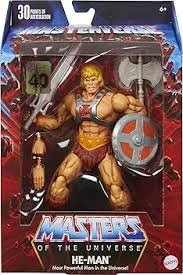
Someone at Mattel wanted to sell action figures.
Before There Was He-Man, There Was an Empty Shelf
It’s almost impossible to imagine today, but one of the biggest fantasy franchises in history was never part of some grand creative plan.
There wasn’t a novelist sitting at a typewriter mapping out the kingdoms of Eternia.
There wasn’t a filmmaker pitching a sprawling cinematic universe.
There wasn’t even a cartoon.
There was simply a toy company looking for its next hit.
In the late 1970s and early 1980s, the toy industry was changing rapidly.
Star Wars had rewritten the rules.
Action figures were no longer just pieces of plastic.
They were gateways into entire worlds.
Kids didn’t simply buy Luke Skywalker.
They bought the Millennium Falcon.
The Death Star.
Stormtroopers.
Darth Vader.
Every new character expanded the universe.
Mattel watched this happen from the sidelines.
The company had passed on producing Star Wars toys a decision that has become one of the most famous “what ifs” in toy history.
Now it needed its own phenomenon.
The answer wasn’t another cowboy.
Or another soldier.
It needed a hero who looked larger than life.
Someone who combined the strength of Conan the Barbarian with the appeal of a superhero.
Artists began sketching impossibly muscular warriors.
Gigantic shoulders.
Massive arms.
Tiny waists.
Animal-themed armor.
Primitive weapons mixed with futuristic technology.
The result didn’t belong to one genre.
It borrowed from all of them.
Part barbarian.
Part science fiction.
Part mythology.
Part comic book.
It shouldn’t have worked.
But somehow…
It did.
Before children even knew who He-Man was, they were already creating stories in their heads.
Each action figure included a miniature comic book.
Those tiny comics were the first real glimpse into Eternia.
Interestingly, this early version of He-Man wasn’t quite the Prince Adam most fans remember.
He was rougher.
More barbarian than prince.
The mythology was still taking shape.
Castle Grayskull wasn’t yet the fully defined mystical fortress it would become.
Relationships between the characters shifted.
Even the rules of the universe seemed flexible.
Looking back now, those little comics feel like archaeological artifacts.
You can almost watch the franchise discovering itself one page at a time.
Then Filmation entered the picture.
And everything changed.
Because the moment He-Man started talking…
He stopped being just another toy.
He became someone’s hero.
The Greatest Toy Commercial Ever Made
It’s funny to think about today, but one of the most beloved cartoons of the 1980s began with a business problem.
Mattel had an incredibly successful toy line.
What it needed was a way to keep kids interested between trips to the toy store.
The solution was something that, at the time, was still relatively new.
Instead of making a cartoon and then selling toys based on it…
Why not make a cartoon about the toys?
Filmation, already known for family-friendly animation, took on the challenge.
What could have become a thirty-minute commercial somehow turned into one of the defining cartoons of an entire generation.
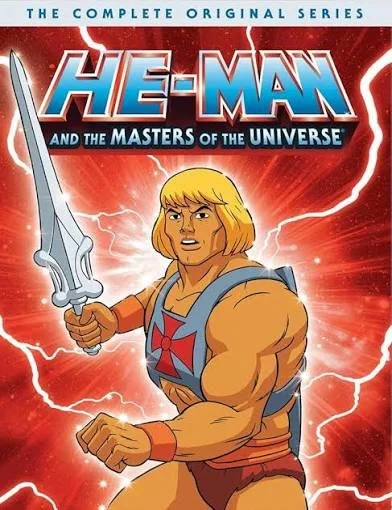
Premiering in 1983, He-Man and the Masters of the Universe didn’t just introduce children to Eternia.
It gave the world a mythology.
Suddenly, the rough barbarian from the mini-comics became Prince Adam.
Instead of being a wandering warrior, He-Man now had a secret identity.
A royal family.
Friends.
Mentors.
Enemies.
A kingdom worth protecting.
It was a simple formula, but it worked beautifully.
Every episode began with Prince Adam looking like the least intimidating hero imaginable.
Pink vest.
Purple tights.
Almost comically relaxed.
No one not even the people closest to him seemed capable of realizing that the scrawny prince and the most powerful man in the universe were the same person.
Looking back as adults, it’s hilarious. Thankfully the new 2026 movie addressed this.
As kids?
We never questioned it.
Because that’s just how superheroes worked.
Clark Kent had glasses.
Batman had a mask.
Prince Adam had… confidence issues and a pink vest.
Then came the moment every child waited for.
Adam would lift the Sword of Power into the air and declare:
“By the power of Grayskull…”
Lightning crashed.
The sky exploded with light.
Cringer transformed into the fearless Battle Cat.
Prince Adam became He-Man.
Even today, it’s difficult to hear those words without instinctively finishing the sentence.
”…I HAVE THE POWER!”
Few transformation sequences in television history have become as iconic.
Children didn’t just watch it.
They acted it out.
Every stick became the Sword of Power.
Every bicycle became Battle Cat.
Every backyard became Eternia.
The transformation wasn’t simply animation.
It became playground theater.
The Characters Who Made Eternia Feel Real
He-Man may have been the star, but Eternia only worked because of the people surrounding him.
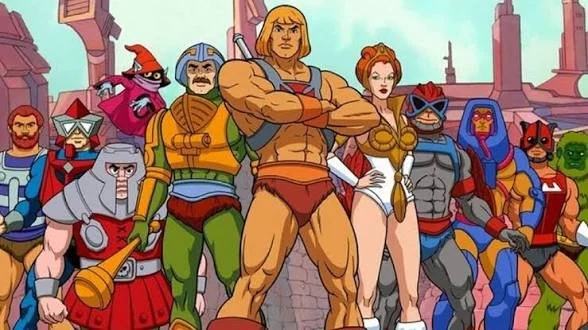
There was Duncan, better known as Man-At-Arms the inventor, engineer, soldier, and father figure who somehow managed to build laser cannons one day and medieval weapons the next without anyone finding that strange.
Teela brought determination, intelligence, and skepticism. She constantly wondered why Prince Adam always seemed to disappear whenever He-Man appeared, creating one of the franchise’s longest-running jokes.
Then there was Orko.
Poor Orko.
Floating magician.
Terrible spellcaster.
Professional comic relief.
As kids, opinions on Orko varied wildly.
Some loved him.
Some wished he’d stop accidentally blowing things up.
Looking back now, it’s hard to imagine the show without him.
Every fantasy world needs someone who reminds the audience not to take everything too seriously.
Even Battle Cat became more than a mount.
Watching timid Cringer transform into a fearless armored tiger mirrored Adam’s own transformation.
Both characters overcame fear together.
It was simple storytelling.
But it was effective storytelling.
Enter Skeletor
Then there was Skeletor.
Few villains have ever looked this ridiculous.
And few villains have ever become this iconic.
Blue skin.
Yellow skull.
Purple hood.
A ram-headed Havoc Staff.
An evil laugh that sounded like he was enjoying every second of failure.
By almost every objective measure, Skeletor should have become a forgotten Saturday morning cartoon villain.
Instead, he became immortal.
Part of that came from the voice acting.
Alan Oppenheimer didn’t simply read Skeletor’s dialogue.
He attacked it.
Every threat.
Every insult.
Every frustrated scream at Beast Man.
Every sarcastic jab at Evil-Lyn.
He treated Skeletor like Shakespeare trapped inside a comic book.
The result was unforgettable.
Unlike many villains, Skeletor wasn’t frightening because he constantly won.
He rarely did.
He was entertaining because he refused to quit.
No matter how spectacularly his latest scheme failed, he always came back with another plan.
Another invention.
Another monster.
Another attempt to seize Castle Grayskull.
Failure wasn’t the end of Skeletor’s story.
It was simply next week’s episode.
There’s something strangely admirable about that level of persistence.
More Than Good Versus Evil
As children, most of us saw the show in the simplest possible terms.
He-Man was good.
Skeletor was bad.
The end.
Watching it as an adult, you notice something different.
The world of Eternia never fit neatly into one genre.
There were castles and kings.
But there were also spaceships.
There were dragons.
But there were laser cannons.
Magic existed alongside advanced technology.
Ancient prophecies lived comfortably beside robotic warriors.
It was Conan the Barbarian standing next to Flash Gordon.
King Arthur sharing a battlefield with Star Wars.
None of it should have worked.
Yet somehow it created one of the most visually distinctive worlds in animation.
That’s probably why the franchise has remained so memorable.
You can show someone a silhouette of Castle Grayskull, Battle Cat, or Skeletor decades later, and they’ll know exactly what they’re looking at.
Not because the stories were always masterpieces.
But because the imagination behind the world was unlike anything else on television.
And just when it seemed like Eternia had reached its limits…
Mattel did something surprisingly bold.
Instead of making another He-Man show…
They created someone powerful enough to stand beside him.
Her name was Adora.
The world would come to know her by a very different name.
She-Ra.
She-Ra Was Never Just “Girl He-Man”
If He-Man proved boys would build an entire world around a toy line…
Mattel wondered if they could do it again.
The answer wasn’t simply creating another hero.
It was expanding the universe.
In 1985, audiences were introduced to Princess Adora through the animated movie The Secret of the Sword.
For longtime fans, it was one of the biggest twists the franchise had ever attempted.
Prince Adam wasn’t an only child.
He had a twin sister.
Kidnapped as a baby.
Raised on another world.
Completely unaware of who she really was.
Her name was Adora.
The world knew her as…
She-Ra.
Like Adam, she possessed a magical sword.
Like Adam, she transformed into something extraordinary.
But unlike Adam, her story wasn’t about protecting the kingdom she had always known.
It was about discovering who she really was.
That made She-Ra feel different from the beginning.
She wasn’t simply another version of He-Man.
She had her own journey.
Her own villains.
Her own allies.
Her own world.
Instead of Eternia, much of her story unfolded on Etheria.
A planet under the iron rule of Hordak and the Evil Horde.
If Skeletor was theatrical…
Hordak was terrifying.
Cold.
Calculated.
Emotionless.
His empire wasn’t driven by ego.
It was driven by conquest.
That difference gave She-Ra’s stories a slightly darker edge while still keeping the optimism and humor that defined Filmation.
The supporting cast also helped separate the two series.
Bow.
Glimmer.
Swift Wind.
Madame Razz.
Shadow Weaver.
Catra.
Each brought something unique to Etheria.
Looking back today, it’s fascinating how much attention Catra receives.
In the original series, she was memorable.
In later adaptations, she became one of animation’s most emotionally complex characters.
It’s proof that sometimes the supporting cast grows into something far larger than anyone originally imagined.
Most importantly, She-Ra proved something Mattel probably hoped was true but couldn’t guarantee.
The Masters of the Universe wasn’t just one successful toy line.
It was becoming an actual universe.
Eternia Was Stranger Than We Remember
When people describe He-Man today, they often simplify it.
“It’s Conan for kids.”
Or…
“It’s a fantasy cartoon.”
Neither description is completely accurate.
Because Eternia has always been one of the strangest fictional worlds ever created.
Imagine trying to explain it to someone who has never seen it.
A barbarian prince rides an armored tiger into battle against a blue skeleton wizard.
The battlefield is filled with dragons, robots, laser rifles, castles, spaceships, ancient magic, mutant beasts, giant insects, sorceresses, and cyborgs.
Some characters carry swords.
Others carry blasters.
Nobody seems confused by either.
The more you think about it…
The less sense it makes.
And yet…
It works perfectly.
The franchise never worried about fitting neatly into one genre.
It borrowed whatever looked cool.
Sword-and-sorcery.
Science fiction.
Comic books.
Classic mythology.
Professional wrestling.
Heavy metal album covers.
Ancient castles.
Future technology.
Everything found its way into Eternia.
That freedom gave designers endless opportunities.
Every new toy could introduce another creature.
Another kingdom.
Another weapon.
Another vehicle.
Another castle.
Unlike many fantasy worlds that were built from novels first, Eternia evolved visually.
Artists often imagined the next character before writers figured out exactly where that character belonged.
Oddly enough…
That creative process gave Masters of the Universe one of the most distinctive visual identities in entertainment.
Then Hollywood Came Calling
By the mid-1980s, He-Man wasn’t simply a toy anymore.
The cartoon was a massive success.
The action figures were everywhere.
Lunch boxes.
Bed sheets.
Halloween costumes.
Comic books.
Coloring books.
Video games.
If there was a way to put He-Man’s face on it…
Someone probably did.
Eventually, the question became inevitable.
When was the movie coming?
Hollywood answered in 1987.
On paper, it sounded perfect.
Dolph Lundgren had recently become a worldwide star after playing Ivan Drago in Rocky IV.
He certainly looked like He-Man.
Standing nearly six-and-a-half feet tall with an incredible physique, he seemed almost designed to hold the Sword of Power.
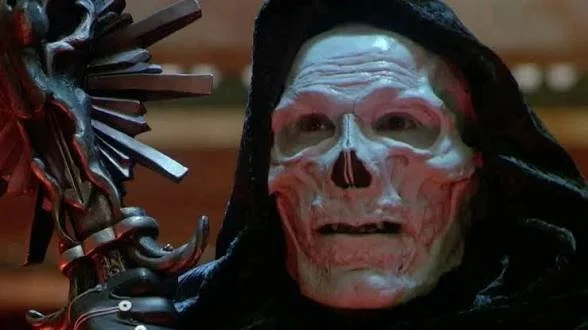
Then there was Frank Langella.
One of the most respected actors of his generation.
Cast as Skeletor.
It sounded impossible.
Until people saw him.
Langella didn’t treat Skeletor like a joke.
He didn’t wink at the audience.
He didn’t act embarrassed.
He committed completely.
Every speech.
Every threat.
Every declaration about the power of Grayskull.
He delivered them with the conviction of a Shakespearean king.
Decades later, fans still point to Frank Langella as one of the greatest parts of the entire film.
Ironically…
He took the role more seriously than many people expected.
And that’s exactly why it worked.
The Movie That Almost Worked
The 1987 Masters of the Universe movie has become one of those fascinating films that depends entirely on when you discovered it.
Critics largely dismissed it.
It struggled at the box office.
Fans complained that too much of the movie took place on Earth instead of Eternia.
Battle Cat was gone.
Orko was gone.
Prince Adam barely existed.
The world many children loved had been replaced by suburban America.
Looking back, it’s easy to understand why.
Budget.
Technology.
Studio limitations.
Building all of Eternia in live action during the 1980s would have been enormously expensive.
Moving much of the story to Earth wasn’t simply a creative decision.
It was a financial one.
And yet…
Despite all of those compromises…
The movie has become strangely lovable.
Part of that is nostalgia.
Part of it is Dolph Lundgren’s sincerity.
But a huge part is Frank Langella.
He understood something Hollywood still struggles with today.
Skeletor doesn’t work when you make him realistic.
He works when you let him be Skeletor.
Grand.
Theatrical.
Power hungry.
Completely convinced he deserves the universe.
Sometimes embracing the absurdity is exactly what makes a fantasy believable.
Ironically, that’s the same lesson the newest movie seems to have rediscovered nearly forty years later.
The difference is that today’s filmmakers have something Cannon Films never did.
Technology finally capable of bringing Eternia to life exactly as children imagined it.
The Years He-Man Refused to Die
Most franchises disappear quietly.
A few bad movies.
Declining toy sales.
One last cartoon.
Then they slowly fade into nostalgia.
He-Man never really did that.
He just kept reinventing himself.
After the original toy line cooled and the Filmation era came to an end, Masters of the Universe entered one of the strangest periods in its history.
Mattel wasn’t ready to give up.
So instead of returning to Eternia…
They went to space.
The New Adventures of He-Man
If you grew up with the original cartoon, The New Adventures of He-Man probably felt like someone had swapped your favorite fantasy series with a completely different show.
Gone were many of the familiar castles, forests, and mystical landscapes.
Instead, He-Man found himself battling Skeletor in a futuristic galaxy filled with spaceships, advanced technology, and science-fiction settings.
Looking back today, you can understand what Mattel was trying to do.
The late 1980s and early 1990s belonged to science fiction.
Kids loved lasers.
Robots.
Aliens.
High-tech armor.
The company wanted He-Man to evolve with the times.
The problem?
He-Man wasn’t just another action hero.
He belonged to Eternia.
Without Castle Grayskull…
Without Battle Cat…
Without the strange blend of medieval fantasy and futuristic technology…
It just didn’t feel like Masters of the Universe.
The series found its audience, but it never captured the same magic as the original.
Ironically, trying to modernize He-Man taught an important lesson.
People didn’t love the character because he was strong.
They loved the world around him.
The 2002 Reboot Everyone Should Watch
If there’s one version of He-Man that deserves far more attention than it receives, it’s the 2002 animated reboot.
For many longtime fans, this wasn’t just another remake.
It was the version that finally treated the mythology with the depth it deserved.
The animation was sharper.
The action was faster.
The characters became more layered.
Skeletor felt genuinely dangerous.
The origins of Eternia expanded.
King Grayskull entered the mythology.
The Snake Men became major players.
Relationships between characters carried real emotional weight.
It respected the original without being trapped by it.
That’s one of the hardest balancing acts any reboot can achieve.
It didn’t ask fans to forget the Filmation series.
It asked them to imagine what those stories might look like with twenty years of hindsight.
Unfortunately, like so many smart cartoons, it ended before it truly had the chance to finish what it started.
Today it has become something of a cult favorite.
If you ask many dedicated Masters of the Universe fans where new viewers should begin…
A surprising number point to 2002.
The Fans Grew Up…
But They Never Left
Something interesting happened during the years when He-Man wasn’t dominating Saturday mornings.
The children who grew up with him became adults.
Instead of asking their parents to buy them action figures…
They started buying them for themselves.
Collectors became the franchise’s lifeline.
Limited-edition figures.
Convention exclusives.
Faithful recreations of the original toys.
Massive collector communities sprang up online, debating paint colors, packaging variations, prototype designs, and characters that had only appeared briefly decades earlier.
He-Man had quietly transformed.
He was no longer just a children’s property.
He had become nostalgia.
And nostalgia is one of the most powerful forces in entertainment.
Every generation wants to revisit the stories that made them feel like kids.
Very few franchises understand that better than Masters of the Universe.
Netflix Divided the Fans
When Netflix announced new Masters of the Universe projects, excitement spread quickly.
Finally, Eternia was returning.
But Netflix did something unexpected.
Instead of creating one version of He-Man…
It created two.
The first, Masters of the Universe: Revelation, was aimed squarely at the audience that grew up in the 1980s.
Produced by filmmaker Kevin Smith, it treated the original Filmation cartoon almost like ancient mythology.
It explored what happened after the heroes won.
What did victory cost?
What happened when legends grew older?
Could Eternia survive without its greatest champion?
Some fans loved the emotional storytelling.
Others were frustrated by the creative choices surrounding He-Man himself and the increased focus on Teela.
The debates became almost as famous as the show.
A follow-up series, Masters of the Universe: Revolution, continued expanding that version of Eternia, leaning even harder into the mythology, technology, and history of the world.
At the same time, Netflix released a completely separate computer-animated He-Man and the Masters of the Universe aimed at younger audiences.
Bright.
Fast.
Modern.
Completely different.
Some longtime fans rejected it immediately.
Children who had never seen the 1983 cartoon often embraced it.
Looking back, I actually think Netflix understood something important.
You don’t need one He-Man for everyone.
You need one He-Man for every generation.
She-Ra Found a New Audience
Perhaps no revival surprised people more than She-Ra and the Princesses of Power.
Instead of trying to recreate the Filmation series scene for scene, the creators completely reimagined the world.
The animation style changed.
The characters evolved.
Relationships became more nuanced.
The storytelling became deeply serialized.
At first, some longtime fans weren’t sure what to make of it.
It looked different.
It felt different.
But as the series unfolded, something remarkable happened.
It stopped being judged against the original.
It became its own thing.
Adora’s journey felt richer.
Catra became one of the most compelling characters in modern animation.
The relationship between hero and villain became emotionally complex in ways few people expected from a franchise that originally existed to sell toys.
It proved something Masters of the Universe had been quietly demonstrating for decades.
The universe was always bigger than He-Man alone.
By now, Eternia wasn’t just surviving.
It was growing.
And after decades of canceled movies, abandoned scripts, and false starts, Hollywood was finally ready to try one more time.
Only this time…
Technology had finally caught up with imagination.
By the Power of Grayskull… They Almost Had It
Which brings me back to the movie that started this entire trip down memory lane.
After spending weeks revisiting the toys, the cartoons, the comics, the movies, and the countless reinventions of Masters of the Universe, I understand why adapting He-Man has been so difficult.
The challenge isn’t making He-Man look realistic.
The challenge is making audiences believe in a world that was never meant to be realistic in the first place.
Eternia has always existed somewhere between fantasy and science fiction.
It’s a place where kings rule from ancient castles while laser cannons fire across battlefields.
Where magic and technology don’t compete with one another they coexist.
Where a floating magician named Orko can stand beside a cybernetic inventor like Man-At-Arms and somehow it all feels perfectly normal.
It’s ridiculous.
And it’s wonderful.
That’s the balancing act every filmmaker has faced since 1983.
Lean too hard into the camp, and audiences laugh for the wrong reasons.
Make it too serious, and you lose the colorful optimism that made generations of kids fall in love with Eternia in the first place.
The new movie came closer than most.
I genuinely appreciated that it wasn’t embarrassed by its source material.
It didn’t try to apologize for the costumes.
It didn’t strip away the bright colors.
It didn’t turn Skeletor into a generic fantasy villain or He-Man into another brooding superhero searching for his destiny.
It let Eternia be Eternia.
It let the Sword of Power remain magical.
It let the world stay unapologetically strange.
That matters.
After decades of Hollywood trying to “fix” beloved franchises by making them darker, grittier, or more cynical, it was refreshing to watch a movie that remembered Masters of the Universe was always supposed to be fun.
The problem is that recognizing what made the original work isn’t quite the same as recreating the feeling.
The movie often reminded me of hearing a joke from someone who understands why it’s funny but can’t quite find the rhythm.
The setup is there.
The enthusiasm is there.
The affection is obvious.
But the punchline lands just a little softer than you hoped.
That’s why I walked out feeling conflicted.
Not disappointed.
Not thrilled.
Just… somewhere in the middle.
I enjoyed it.
I smiled more than once.
I appreciated the respect it showed the franchise.
But I never had that moment where I thought,
“This is the definitive He-Man movie we’ve been waiting forty years to see.”
Maybe that’s an impossible expectation.
After all, every generation has its own version of He-Man.
Some remember the original mini-comics.
Some grew up with Filmation.
Others discovered the 2002 reboot.
Some found Eternia through Netflix.
A new generation will probably meet He-Man through Amazon.
Every one of those fans carries a slightly different version of Castle Grayskull in their imagination.
No movie can perfectly match all of them.
And maybe it shouldn’t.
What matters most is that the spirit survives.
Looking back now, what amazes me isn’t that He-Man became a hit.
It’s that he survived.
He survived changing toy trends.
He survived canceled cartoons.
He survived a movie that became a cult classic for all the wrong and eventually many of the right reasons.
He survived years when people thought the franchise was finished.
He survived endless reboots and redesigns.
He survived an entertainment industry that constantly insists old ideas need to become darker to stay relevant.
Through it all, one thing never really changed.
A young man raises a sword.
Lightning fills the sky.
A frightened tiger finds courage.
A kingdom finds hope.
And somewhere, whether you’re eight years old or fifty, you still want to say the words with him.
“By the power of Grayskull…”
Because that’s what Masters of the Universe has always been about.
Not muscles.
Not toy sales.
Not cartoons.
Not even nostalgia.
It’s about believing that ordinary people can become extraordinary when they’re willing to stand up for what’s right.
That’s a lesson that never goes out of style.
Maybe that’s why, more than forty years later, we’re still talking about He-Man.
The toys started it.
The cartoons made us believe it.
The movies keep trying to recapture it.
And no matter how many times Hollywood revisits Eternia, I’ll probably be there, hoping that this is the version that finally captures the magic we all remember.
Because even after all these years…
I still have the power.