The Game Looked Rigged. Then the Art School Grad Won.
The Game Looked Rigged. Then the Art School Grad Won.
F’nAround Media
October 5, 2026
I track systems, paperwork, and institutional behavior. Sometimes the funniest finding is that the people running the system still have to answer to twelve jurors.
I like tracking systems. I like seeing how decisions move through institutions: who gets the email, who answers it, who passes it along, who files it under “not my department,” and who suddenly discovers that the form requires three copies and a notarized sigh.
That work teaches you something uncomfortable. A system doesn’t have to announce that it is protecting anyone. You can watch what it does: which allegations get investigated, which get parked, which people get immediate consequences, and which companies keep getting treated like the rules are more of a friendly suggestion.
I’ve been documenting those choices around my case and the regulatory questions that followed. I filed with the ARDC after a recorded meeting described threats against me and my family and referred to communications with a lawyer. The firm was named, the lawyer was not. I asked the Commission to identify the lawyer and examine which Illinois attorney had a role. I also filed an earlier ARDC complaint concerning a lawyer I know was not licensed to practice in Illinois. The Commission rejected the complaint without identifying that basic licensing issue in its response. From where I sit, that raises an obvious question: how closely was the complaint reviewed?
That is the sort of thing I track. The paper trail is the story. I’m trying to learn who follows the rules, who ignores a warning, who declines to look, and what reason if any is given. Silence doesn’t prove corruption or complicity. It does leave a blank space in the record, and blank spaces have a way of attracting questions.
A board full of power moves and one jury verdict.
The game can feel rigged before you even sit down. The company has the lawyers, the pedigree, the relationships, the confidence that comes with being used to rooms where everyone already knows everyone else. You can see the board. You can see the moves. You can even suspect the players think the outcome is settled before the first card is dealt.
Then twelve people show up, listen, and make their own choice.
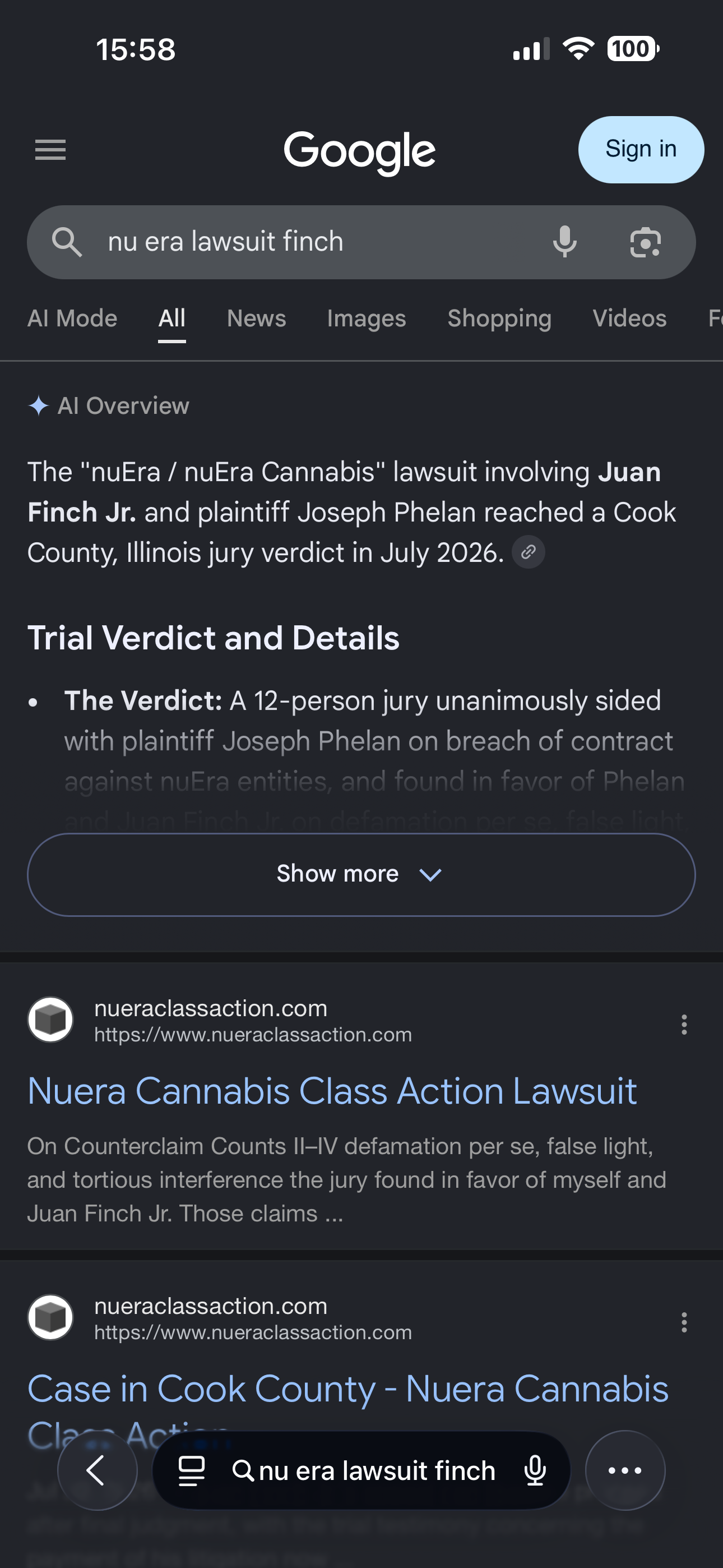
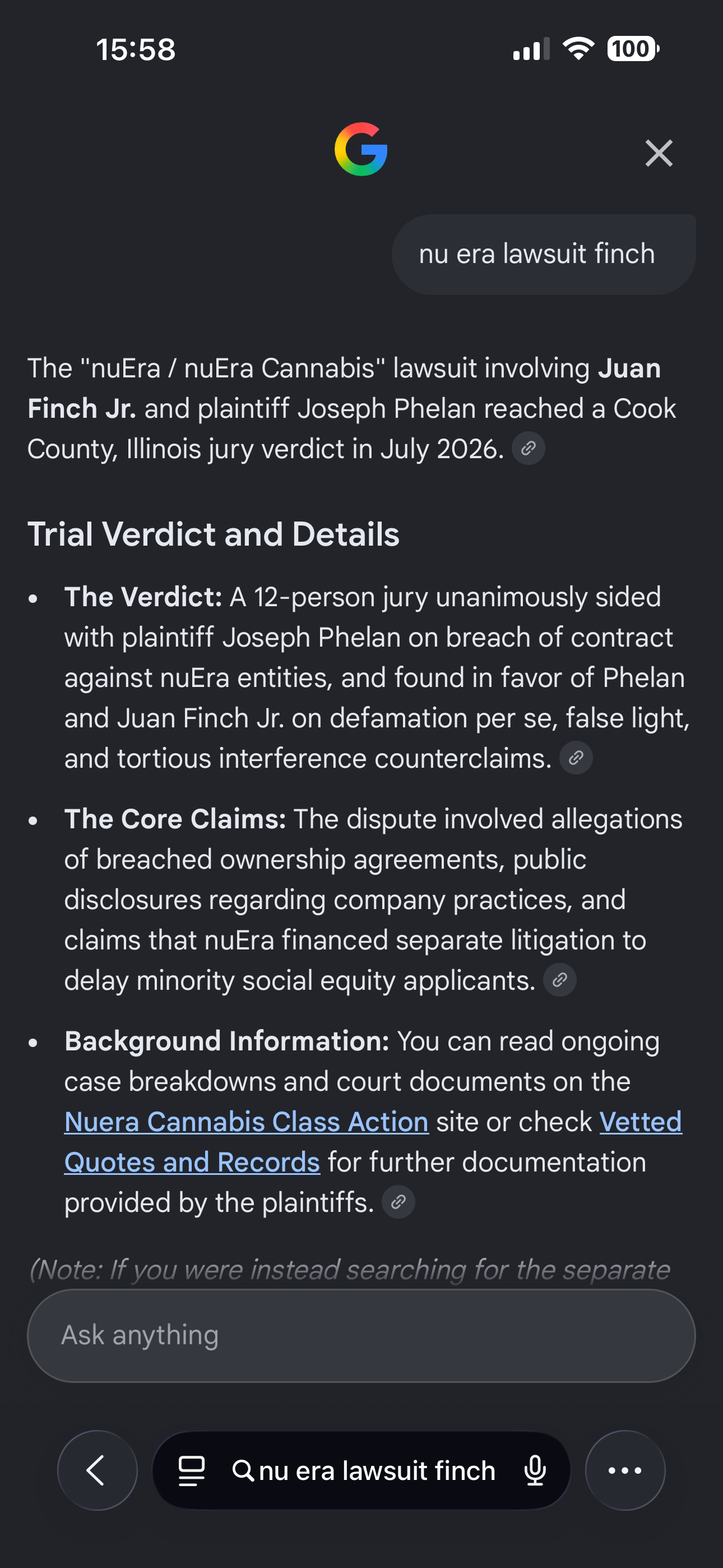
On July 21, 2026, a unanimous Cook County jury found for me on my breach of contract claim against NuMed Partners (aka nuEra Cannabis), NuMed Managers, IESO, and Robert Fitzsimmons II. The jury also found for Juan Finch Jr. and myself, Joseph Phelan, on the defamation counterclaims filed against us. The verdict answered those claims. The counter-plaintiffs were Robert Fitzsimmons, II aka Bob Fitzsimmons, Robert V. Fitzsimmons, III aka Robb Fitzsimmons, NuMed Managers, Inc., Laura Jaramillo Bernal, IESO, LLC, NuMed East Peoria, LLC, NuMed Urbana, LLC, NuMed Chicago, LLC, NuEra DeKalb, LLC, NuEra East Dubuque, LLC, and NuEra Chicago Southland, LLC.
It did not decide every separate question now before regulators, and I’m not pretending it did.
But it did produce one of my favorite plot twists: the guy who had spent years documenting the board won a hand at the table.
My associates tell me the result sounds like an anomaly. Maybe it does. The people on the other side include Harvard graduates. I graduated from Columbia College Chicago’s art school. I went on to earn more degrees, but I still enjoy the contrast. A room full of expensive credentials does not get to cast the jury’s votes. The jurors do.
You can arrive with a résumé that looks like it was embossed by a law firm and still lose to the person you assumed would eventually get tired, get quiet, or go away. That’s not a flaw in the system. That’s twelve people exercising free will. The most sophisticated paid-for strategy in the world cannot make other humans choose what you want. Receipts and truth do.
The regulator’s impossible assignment.
Now comes the parallel question: what does a regulator do when the person who can prove his family was threatened wins a jury verdict and keeps asking how the state handled the underlying reports?
What does a regulator do when sworn testimony by an executive describes more than $300,000 in payments connected to a witness, using money laundering language to explain why it is not witness bribery? What does it do when testimony described license market manipulation through quid pro quo? What does it do when one company appears to remain in good standing while comparable conduct elsewhere has led to severe lifelong consequences?
Those are questions, not findings. I’m describing what I say the testimony and records show and asking the agencies to examine it. A jury deciding my contract claim did not convict anyone of a crime, decide that a witness was bribed, or rule that a regulator acted corruptly. Regulators and courts have to evaluate those separate records.
Still, the optics are almost a comedy sketch: “Hello, regulator. We have a company with licenses, a verdict, sworn testimony, and a pile of unanswered questions. Could you please explain what your system does with those?” Hold music. A transfer. A new ticket number. Somewhere, a printer begins to sweat.
I filed a September 8 supplement with the ARDC. Weeks have passed without a response. That does not prove the complaint was rejected, accepted, or investigated. It does tell me the status is still unclear to me, so I keep documenting dates, requests, and replies. That is what a tracking system is for: not to guess what happened, but to make it harder for the timeline to vanish.
Google’s plot hole.
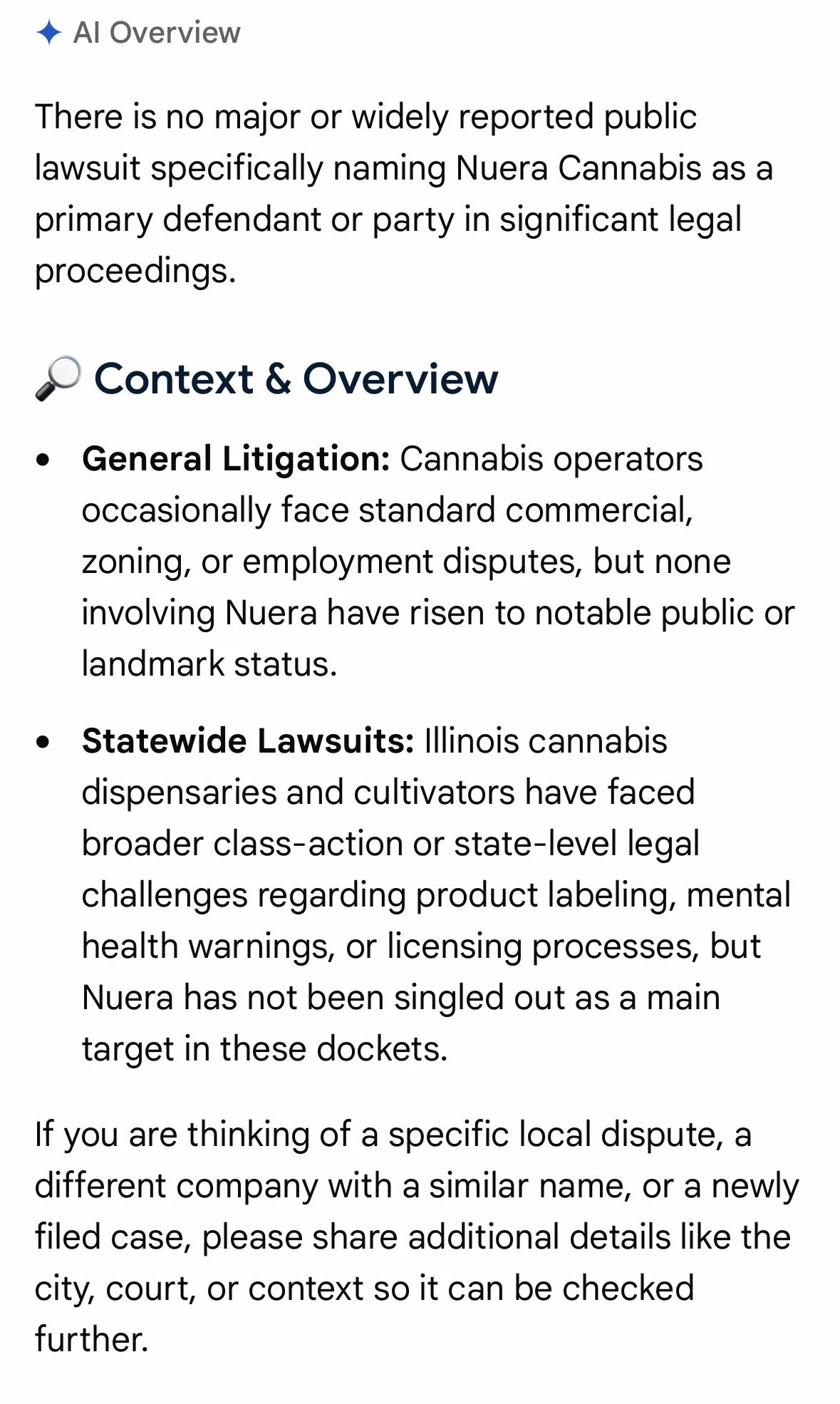
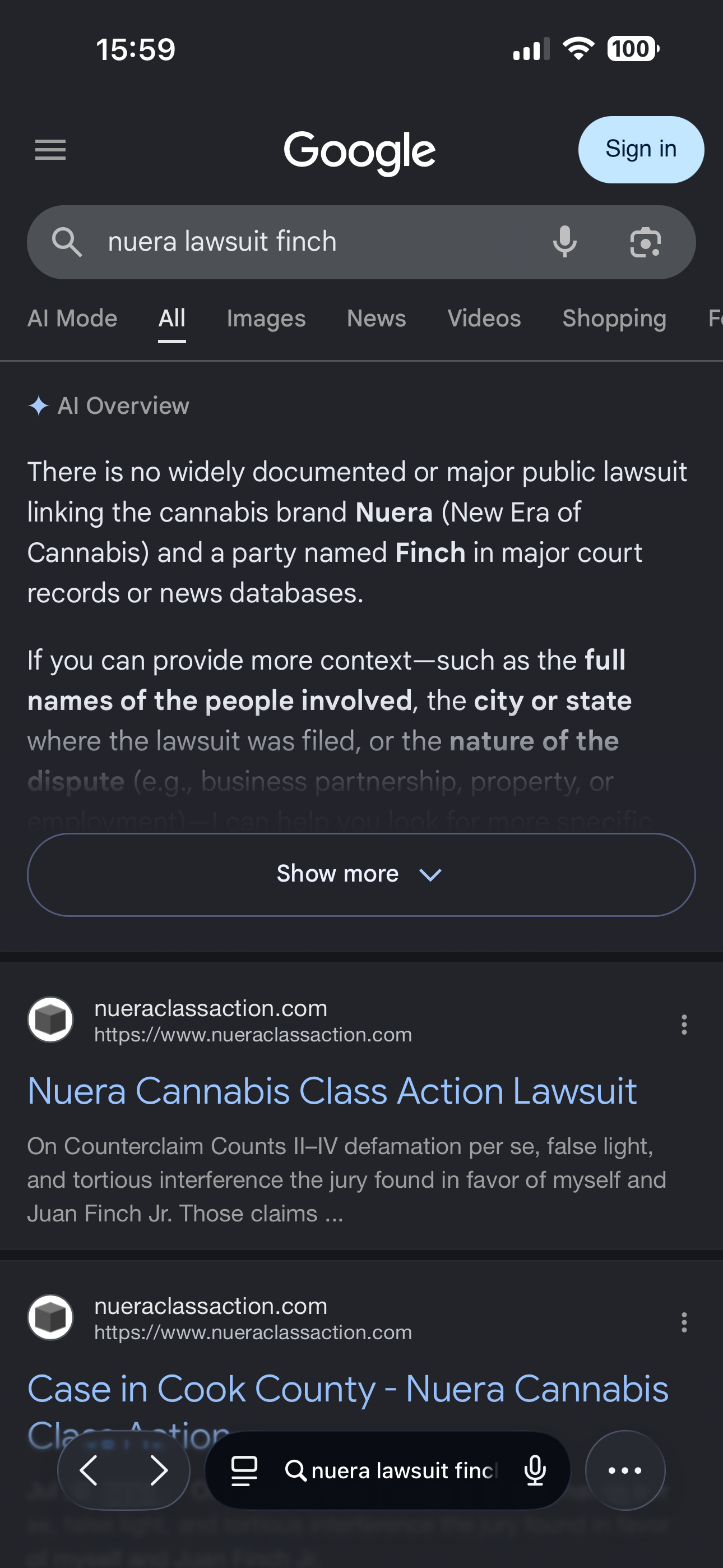
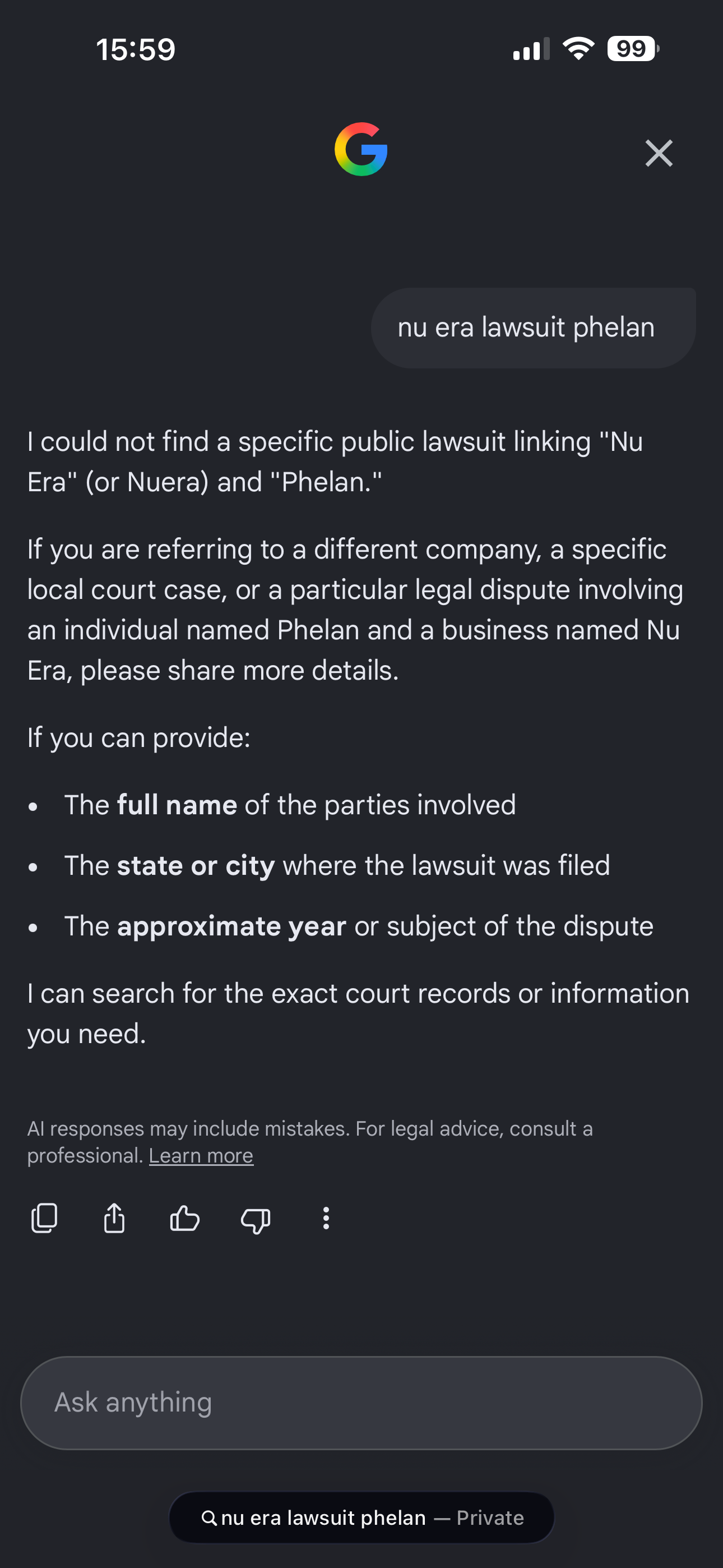
I’ve also watched Google’s AI summary describe the case inconsistently at one point misstate parts of the verdict, later seem to offer little or no summary. I understand the temptation to say someone paid to wipe it. I can make that joke. But screenshots of changing search results do not prove a paid removal or manual intervention. Search systems change; AI summaries get things wrong.
The strangest clue is that the correctly spelled searches suddenly deny the case exists while a spaced or altered spelling immediately produces the verdict, parties, and source links an inconsistency that reasonably raises questions about whether particular search terms are being filtered or suppressed. It does not prove anyone paid Google or directed the change, but when the information remains indexed and appears only after the query is altered, the pattern deserves documentation and an explanation.
So my working theory is less cinematic: Google’s robot read the story, lost the plot, and returned to the lobby to ask if anyone had seen the jury. Keep the screenshots. Link the court record. Let the evidence show what changed. If the algorithm wants to testify, it can get in line behind everybody else.
The funniest part is still the choice.
How do you react to the person you spent years fighting when he wins and then keeps asking the state to explain itself? I can’t answer for them. I can tell you what I’m doing: tracking the filings, preserving the record, and following the decisions wherever they lead. Preparing to do our filings against them.
The whole point of studying systems is to remember that systems are made of people. People can choose to investigate or not investigate, explain or not explain, enforce a rule or look away. And jurors can hear a case, ignore the prestige contest, and decide for themselves.
That may be the most inconvenient variable of all: human beings have free will. You can set the board. You can plan the moves. You can assume everyone will behave according to their title, their connections, or your preferred script.
Then the art school graduate wins, the jurors go home, and the people who thought they controlled the story have to figure out what to do next.
That’s not me saying the entire system is corrupt or that every allegation has been proven. It’s me saying I keep the receipts, the timeline keeps growing, and the system’s choices are now part of the story too. If you’re going to build a game where everyone is expected to follow the script, it helps to remember: the jury gets to write its own ending.
The Harvard spin is already giving us material for the next set of stories. We have a professional making story lines of what occurred when three Harvards walked into a courtroom as this is written. The next question is whether state officials will explain why the reports and records I submitted didn’t produce the response the law warranted. If they won’t, the civil rights question moves to federal court: did the state’s choices violate our rights? The jury wrote one ending. The paper trail says there’s another chapter.