Necropolitical Endorsements and the Illinois Electoral System
Necropolitical Endorsements and the Illinois Electoral System
A Personal and Academic Reflection on the Voting Preferences of the Deceased
This morning I experienced one of the more unexpected emotional responses a citizen can have while drinking coffee and scrolling the news.
Nostalgia.
Not because of the snowy weather.
Not because of a childhood memory.
But because of a political endorsement.
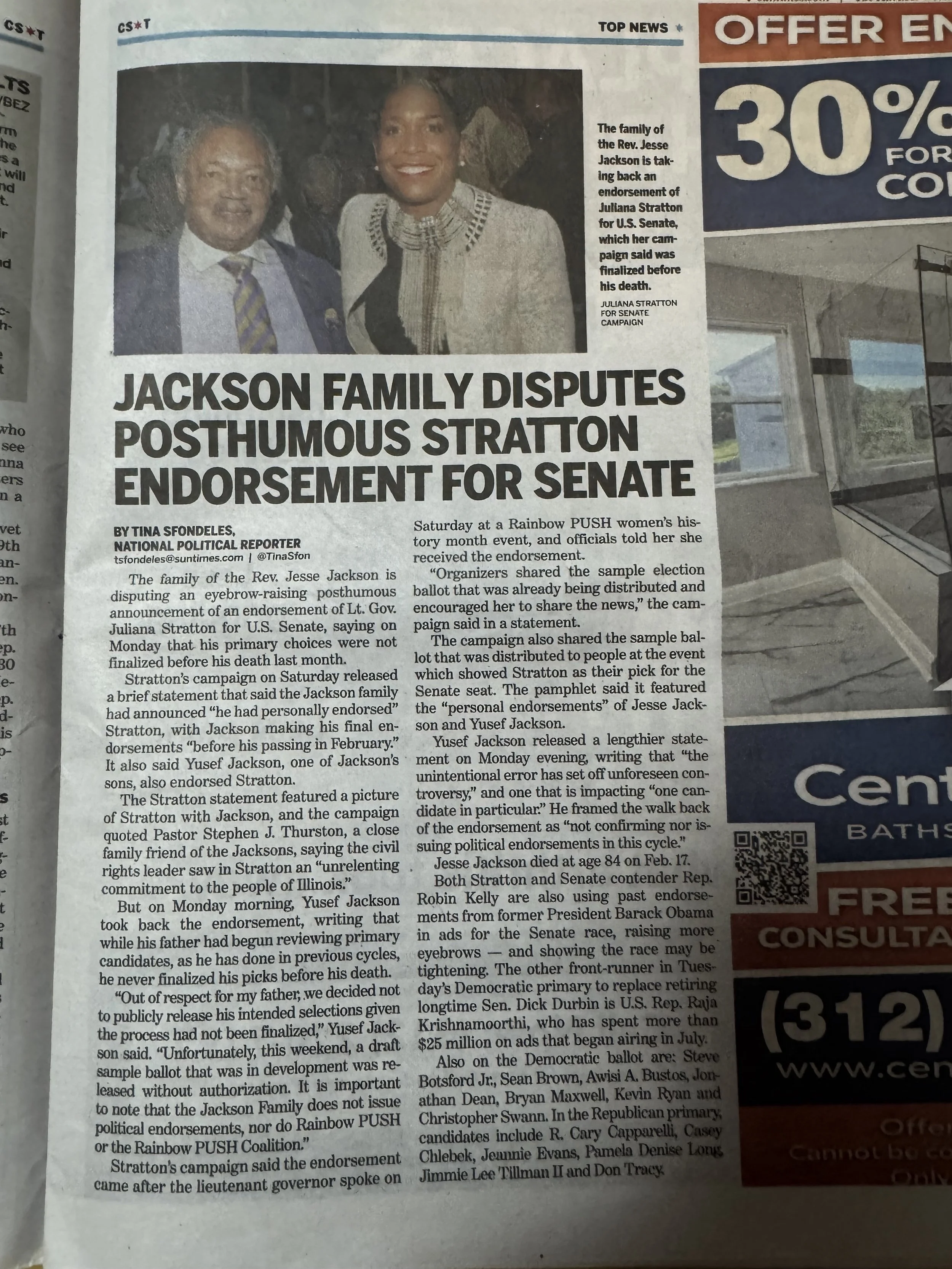
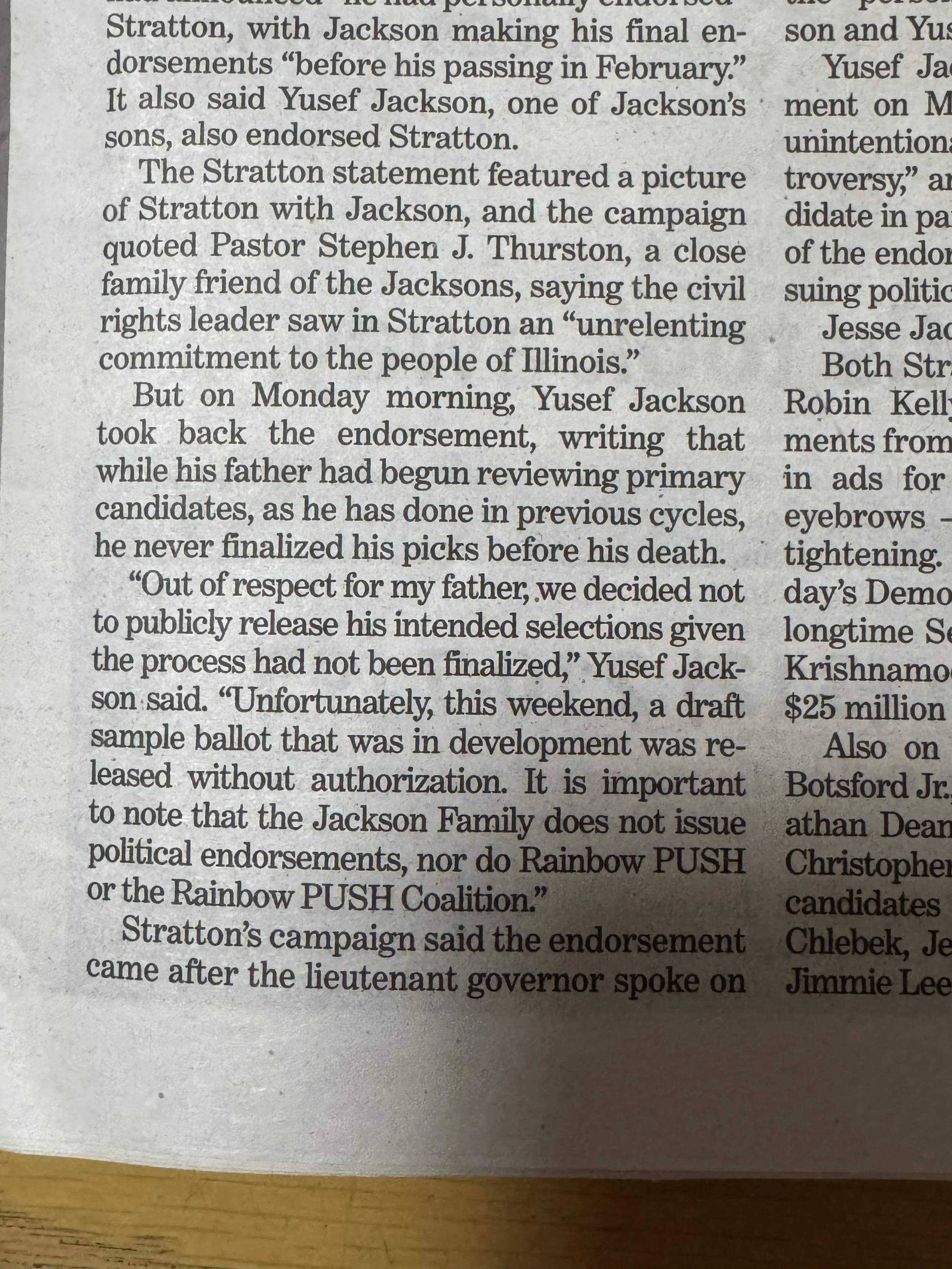
According to recent reporting, Illinois Senate candidate and current Lieutenant Governor Juliana Stratton has received an endorsement from the late civil-rights icon Jesse Jackson an endorsement that, we are told, existed before his passing but surfaced publicly only afterward.
This apparently surprised some political observers and rival campaigns, several of whom indicated they were unaware of the endorsement previously.
Now, to be clear, there is nothing inherently impossible about someone giving their approval before passing away and that endorsement being announced later.
That happens.
However, the situation triggered something for me that I had not thought about in years.
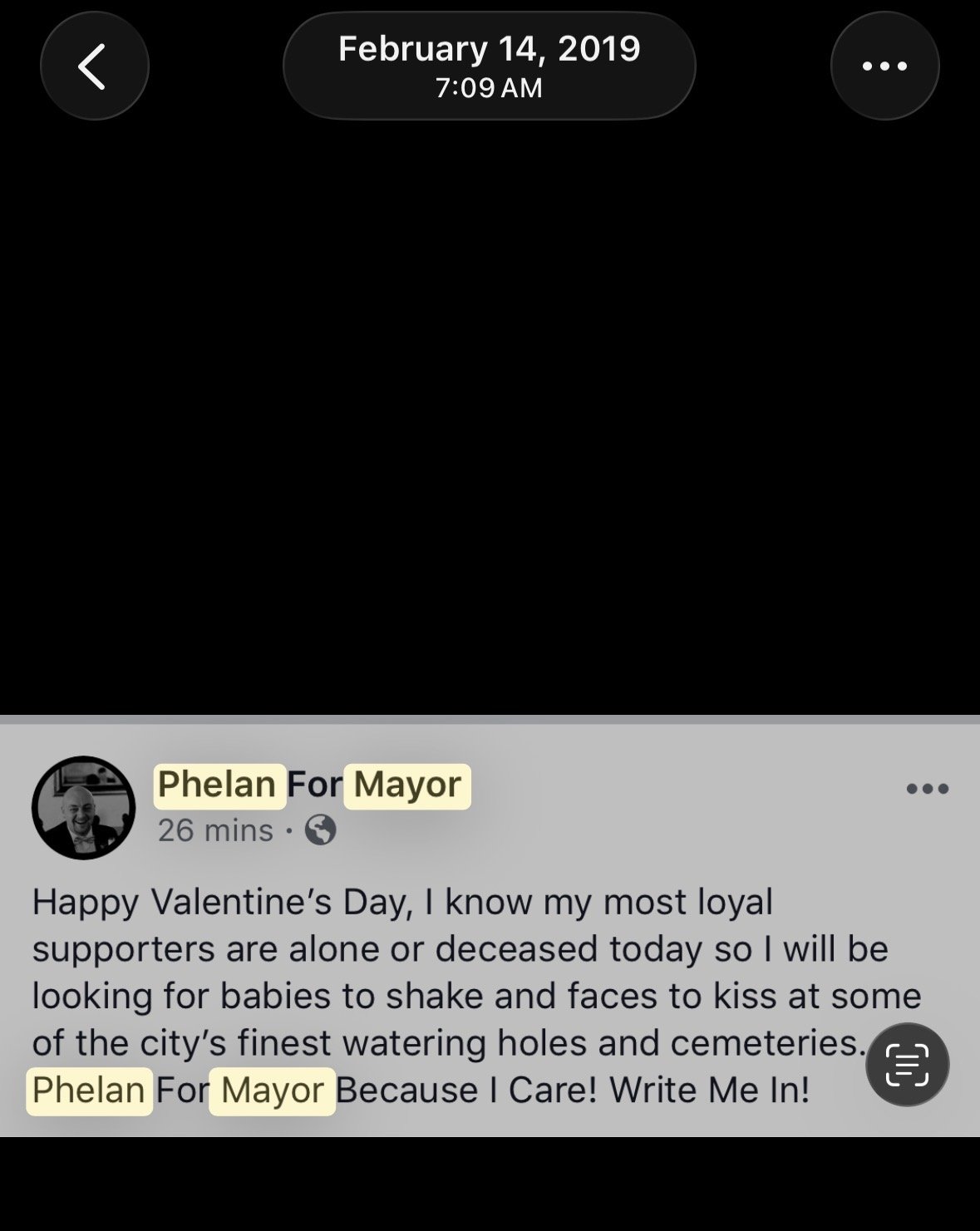
A piece of Chicago political satire I conducted in 2019.
In 2019, during the Chicago mayoral election cycle, I conducted what can only be described as a deeply unserious but academically valuable civic experiment.
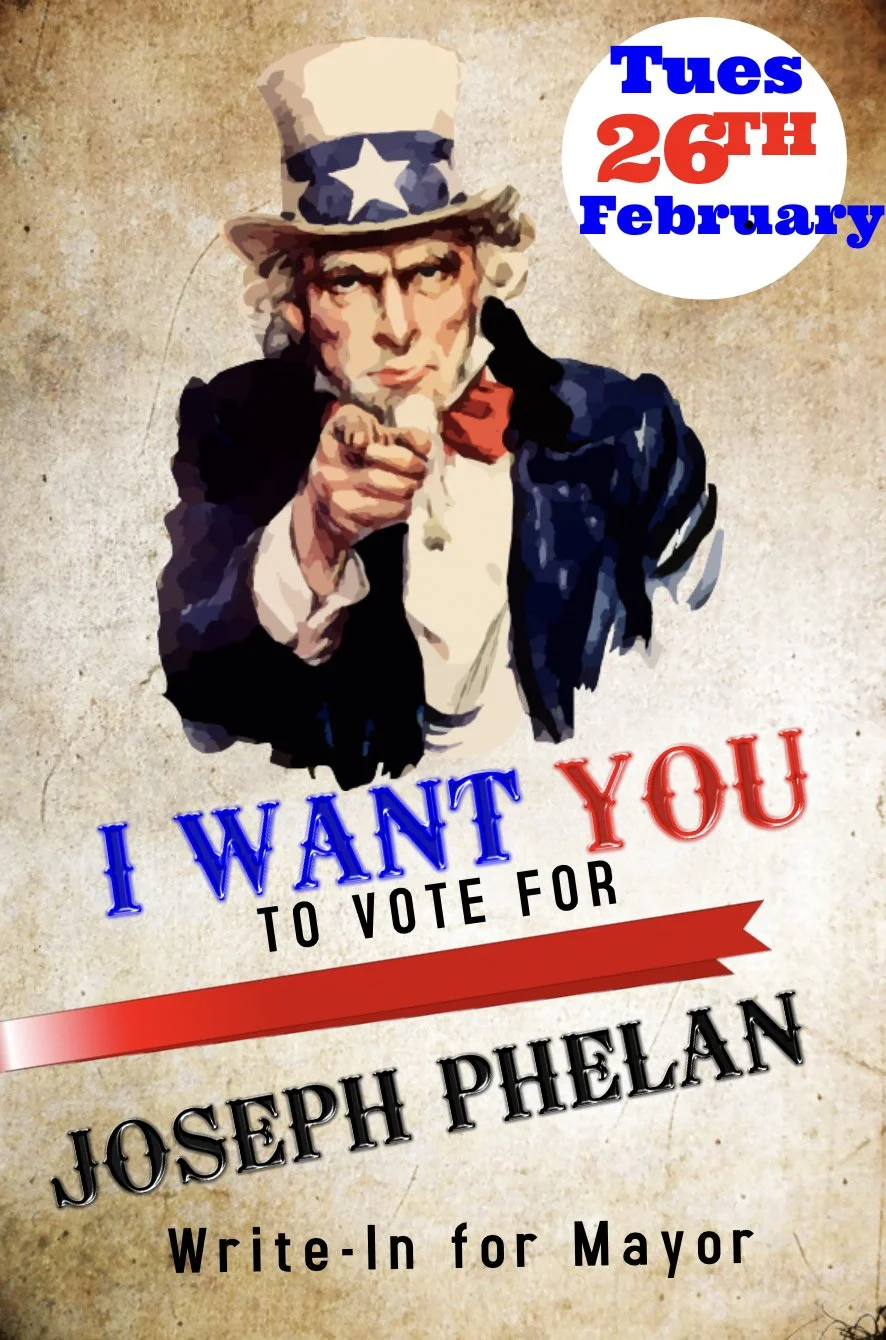
I launched a write-in campaign.
The platform was simple.
The messaging was direct.
“Phelan for Mayor. Because I Care.”
But unlike traditional campaigns that rely on polling firms, consultants, or political data models, our campaign relied on something far more innovative.
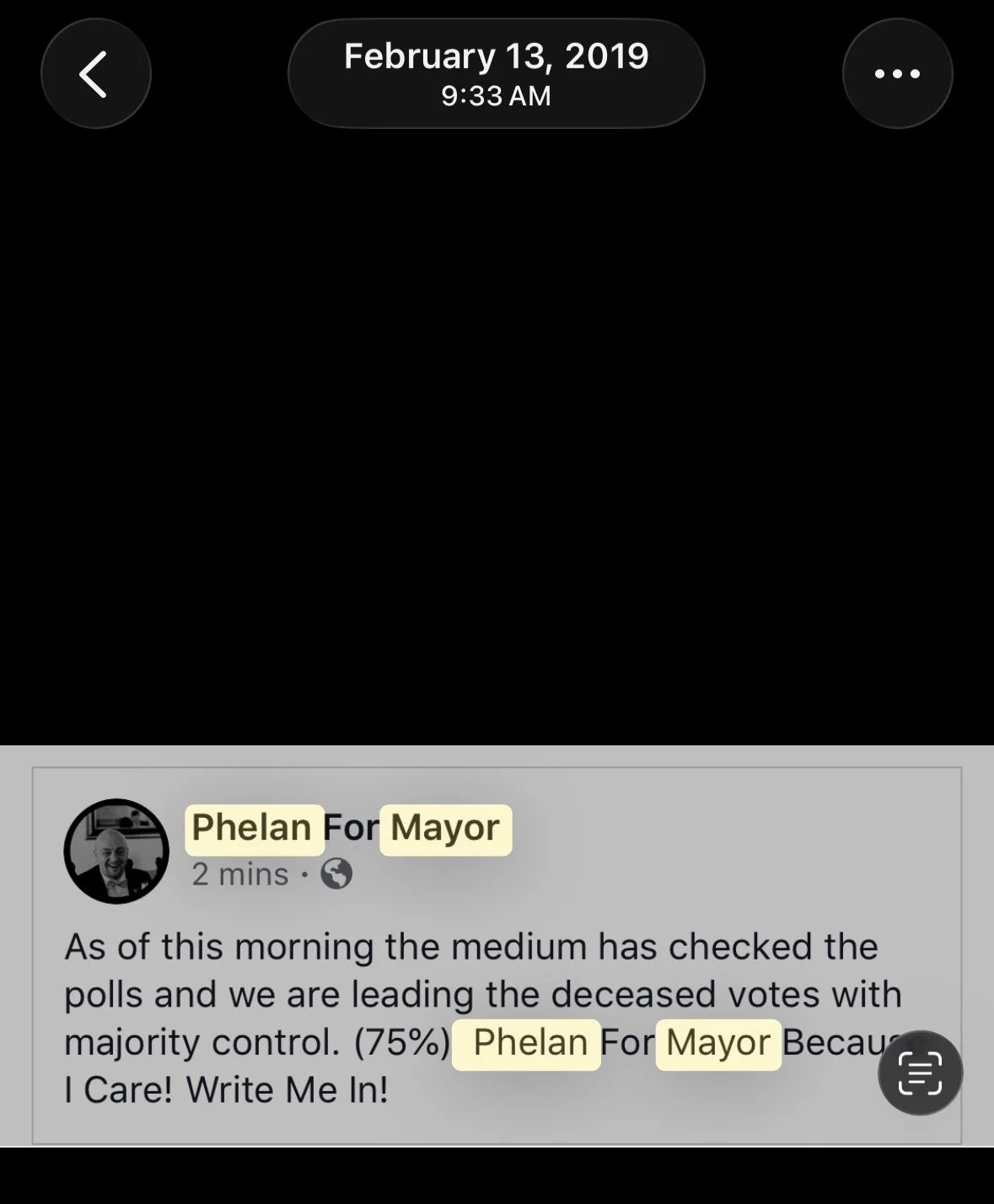
A medium.
That’s right.
Instead of focus groups or voter analytics, we consulted the spirit world.
According to our supernatural polling data, the results were extraordinary.
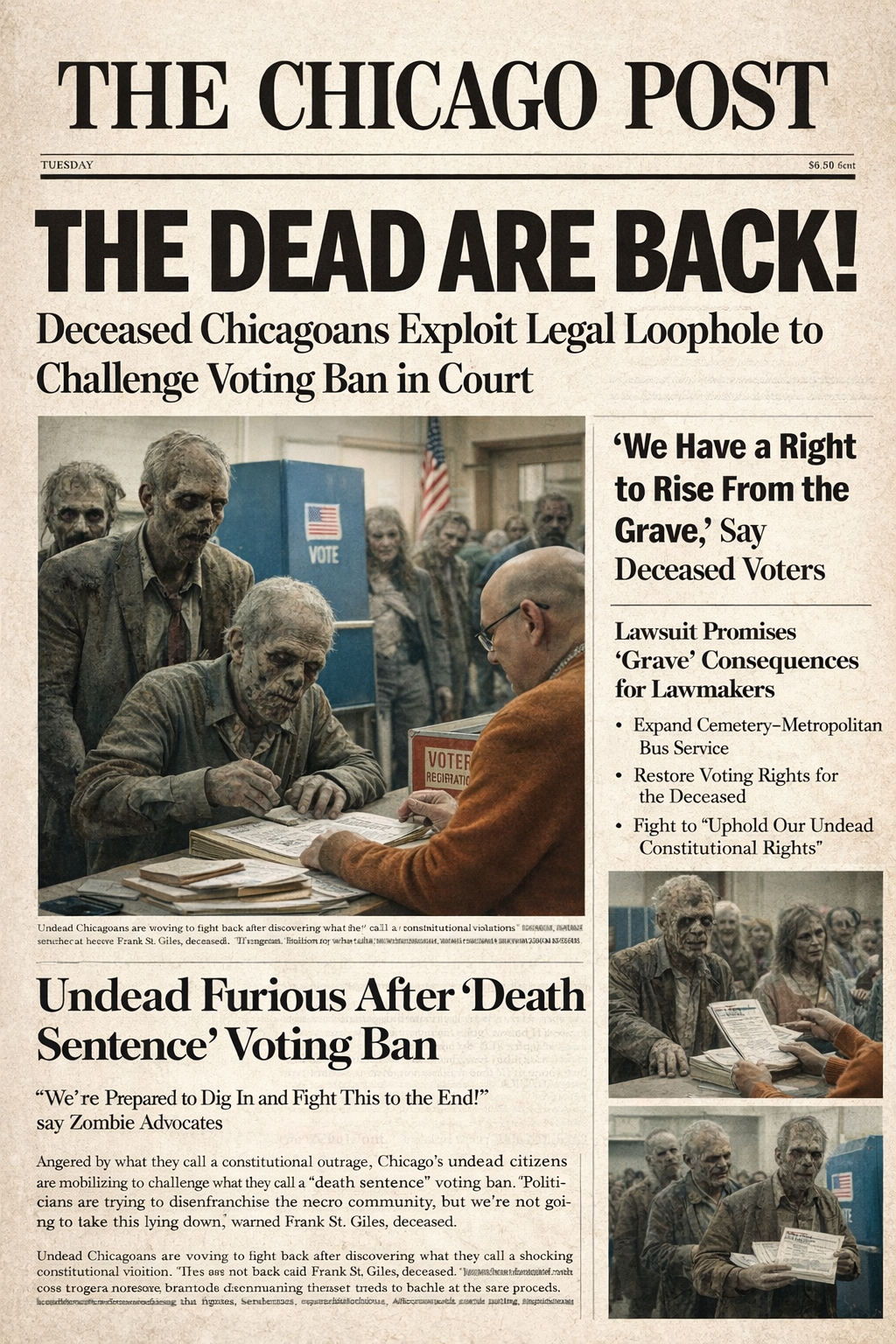
Our campaign had achieved 75% support among deceased Chicago voters.
Naturally, this demographic advantage gave us a commanding lead in what we referred to internally as “the necro-electoral constituency.”
Our campaign announcement at the time read:
“As of this morning the medium has checked the polls and we are leading the deceased votes with majority control (75%).”
Political analysts were divided.
Some praised the methodological creativity.
Others questioned whether voters from the afterlife were legally registered in Cook County.
Still others suggested Chicago politics had already been exploring this demographic for decades.
Which brings us back to today.
Watching serious commentators debate the appearance of a posthumous endorsement reminded me of something I’ve been studying more recently.
Political systems behave a lot like physics.
Mass accumulates.
Structures bend.
Reality warps around power centers.
Astronomers can detect planets not by seeing them directly, but by observing how gravity bends nearby light.
Similarly, political observers can often detect institutional contradictions not by the statements themselves, but by the distortions they create.
And Illinois politics has always produced some fascinating distortions.
For example, consider the 2019 legalization of adult-use cannabis in Illinois.
When the law passed, it was widely promoted as a historic social equity initiative designed to repair harm done to minority communities disproportionately impacted by past drug enforcement.
It was, politically speaking, a very noble narrative.
But narratives sometimes behave differently once they enter the legal system.
In a sworn court filing, the State of Illinois through the office of Kwame Raoul formally denied that certain allegations about the social equity purpose of the law were accurate.
In other words, what had been publicly framed as a justice-oriented reform was later contested in court as not functioning in the way many people believed.
From a purely academic perspective, this creates what we might call a policy superposition.
Publicly, the policy existed in one narrative state.
Legally, it existed in another.
Which is a fascinating phenomenon.
Because once political systems begin operating in multiple narrative states simultaneously, strange things can start to happen.
Endorsements can appear after death.
Policies can both advance equity and deny that purpose under oath.
Campaigns can receive support from voters who are no longer technically among the living.
And satire from 2019 begins to feel less like comedy and more like predictive modeling.
Looking back, my mayoral campaign may have been ahead of its time.
While other candidates focused on conventional constituencies, taxpayers, unions, donors, and voters I had already begun exploring what political scientists might now call “post-life electoral engagement.”
My polling method was simple.
Consult a medium.
Ask the spirits.
Report the results.
Seventy-five percent approval.
Frankly, that kind of margin is almost unheard of in modern politics.
But watching television commentators now carefully debate endorsements that appear after the end of earthly life, I can’t help but feel a small sense of vindication.
Perhaps the necro-electoral demographic is finally receiving the recognition it deserves.
All satire aside, there is one genuinely fascinating layer to this story.
Reverend Jesse Jackson spent his life advocating for civil rights, economic opportunity, and representation for marginalized communities.
His work shaped Chicago politics for generations.
Which makes the modern political landscape even more interesting to observe.
Because the same political era that celebrates the legacy of civil-rights leaders is also navigating complicated debates about policy intent, regulatory outcomes, and who ultimately benefited from major reforms like cannabis legalization.
From a purely academic standpoint, it raises a simple question.
If policies intended to advance social equity later face legal disputes over their actual impact…
and if endorsements can surface after death…
then perhaps Illinois politics has entered a new field of study entirely.
Political science may need to create a new subdiscipline.
Necropolitical Electoral Dynamics.
Topics of study might include: the voting behavior of deceased constituencies, the timing mechanics of posthumous endorsements, the gravitational distortion of policy narratives over time, and the statistical reliability of mediums as polling firms.
As a former “candidate” who once held a commanding 75% lead among Chicago’s deceased voters, I would be happy to contribute to this research.
After all, in Illinois politics, the line between satire and reality has always been remarkably thin.
And sometimes, when you read the news closely enough…
you realize the joke might have been a field study all along.
The study of: Phelan for Mayor. Because I Care. Write Me In.
Chicago’s dead voters have always been early adopters… check your history.