Doctor Who Review: The Show That Thankfully Refuses to Regenerate Away
Doctor Who Review: The Show That Thankfully Refuses to Regenerate Away
Some television shows become popular.
Some become franchises.
And then there is Doctor Who.
A television series so old that it premiered in 1963, survived cancellation, returned from the dead, crossed generations of fans, spawned novels, comics, radio dramas, audio adventures, movies, video games, animated projects, conventions, and enough merchandise to fill a TARDIS.
If you’re a science-fiction fan and you’ve never watched Doctor Who, it can feel intimidating. There are over six decades of stories spread across multiple eras and multiple actors playing the same character.
Yet somehow it all works.
That’s because Doctor Who built one of the smartest concepts in television history:
When the lead actor leaves, the character regenerates into a new face.
Instead of replacing the hero, the show makes the replacement part of the story.
That simple idea allowed Doctor Who to outlive nearly every television franchise ever created.
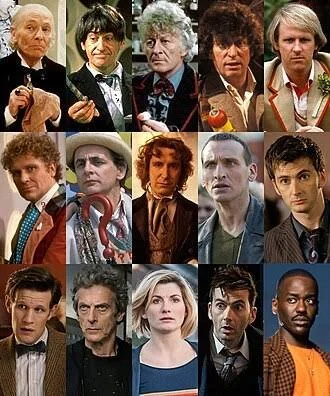
Every Doctor (So Far)
The Classic Era (1963-1989)
William Hartnell (1963–1966)
Patrick Troughton (1966–1969)
Jon Pertwee (1970–1974)
Tom Baker (1974–1981)
Peter Davison (1982–1984)
Colin Baker (1984–1986)
Sylvester McCoy (1987–1989)
The Wilderness Years
Paul McGann (1996 TV Movie)
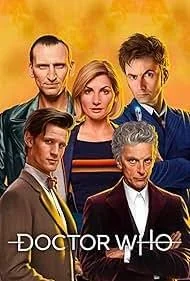
Modern Doctor Who (2005-Present)
Christopher Eccleston (2005)
David Tennant (2005–2010)
Matt Smith (2010–2013)
Peter Capaldi (2013–2017)
Jodie Whittaker (2017–2022)
David Tennant (2023)
Ncuti Gatwa (2023–2026)
Billie Piper ? The Bad Wolf
The character has also featured alternate incarnations including the War Doctor played by John Hurt and Jo Martin as the Fugitive Doctor.
Seasons Breakdown
Classic Series
Seasons 1–26
Aired from 1963–1989
694 episodes
TV Movie
1996
Revival Era
Series 1 (2005)
Series 2 (2006)
Series 3 (2007)
Series 4 (2008)
Specials (2009–2010)
Series 5–13 (2010–2022)
Anniversary Specials (2023)
Disney+/BBC Era (2024–2025)
More than 800 television episodes have been produced across the franchise’s history.
The Cancellation That Wasn’t… And Then Was
Doctor Who originally ran from 1963 until 1989.
The BBC never really intended for the show to become a global franchise. Ratings declined, budgets shrank, and eventually the series disappeared.
For sixteen years.
Then came one of television’s greatest revivals.
In 2005, writer and producer Russell T Davies brought Doctor Who back to life with Christopher Eccleston and later David Tennant.
The revival became a worldwide phenomenon.
Now, in one of the strangest twists in the franchise’s history, the series faces uncertainty again.
The BBC has announced that the planned 2026 Christmas special will no longer move forward, while Russell T Davies and production partner Bad Wolf are departing as the franchise enters a competitive tender process for its future.
For Doctor Who fans, Christmas specials aren’t just episodes.
They’re events.
The Christmas Day episodes became a tradition for nearly two decades.
Seeing one cancelled feels almost unthinkable.
Yet if Doctor Who has taught fans anything, it’s that the show always regenerates.
Even after cancellation.
Even after sixteen years off the air.
Even after losing its lead actor.
The Spin-Off Universe
Doctor Who may have one of the largest spin-off ecosystems in television.
Torchwood
The darker, adult-oriented series starring Captain Jack Harkness. John Barrowman
The Sarah Jane Adventures
A family-friendly show following legendary companion Sarah Jane Smith.
Class
A young-adult series set at Coal Hill Academy.
K-9 and Company
Featuring the Doctor’s robotic dog K-9.
Audio Adventures
Perhaps the most impressive expansion of the franchise.
Companies like Big Finish created hundreds of professionally produced audio dramas featuring classic Doctors, companions, and villains.
Many fans consider some of these stories among the best Doctor Who content ever made.
Famous Guest Stars You Forgot Were in Doctor Who
One of the funniest things about Doctor Who is realizing how many future stars showed up before becoming famous.
Some notable names include:
Andrew Garfield
Carey Mulligan
Simon Pegg
Derek Jacobi
Bill Nighy
James Corden
John Cleese
Kylie Minogue
Felicity Jones
Timothy Dalton
Ian McKellen
The official Doctor Who site has highlighted many of these appearances, including Andrew Garfield, Carey Mulligan, Simon Pegg, Paterson Joseph, Ardal O’Hanlon, and Derek Jacobi.
Why The Fanbase Is Different
Doctor Who fans aren’t just television fans.
They’re historians.
Every era has defenders.
Ask ten fans who the greatest Doctor is and you’ll get ten different answers.
Some swear by Tom Baker.
Others say David Tennant.
Many argue Peter Capaldi delivered the greatest acting performance.
A younger generation grew up with Matt Smith.
Others discovered the series through Ncuti Gatwa.
There are fans who only watch the TV series.
Others consume:
Novels
Comics
Audio dramas
Radio plays
Animated specials
Convention appearances
Video games
Collectibles
Few franchises have a fandom spread across so many formats.
Final Verdict
Doctor Who is not just a television show.
It’s one of the most successful examples of long-form storytelling ever created.
It has survived cancellation, changing audiences, changing technology, changing actors, and changing eras.
Whether you’re watching black-and-white episodes from the 1960s, David Tennant fighting Daleks, Matt Smith battling Weeping Angels, Peter Capaldi delivering epic speeches, or Ncuti Gatwa running through the Disney-era adventures, you’re watching chapters of the same story.
The remarkable thing isn’t that Doctor Who keeps changing.
The remarkable thing is that after more than sixty years, it still finds a way to keep going.
F’nAround Rating: 9.5/10
“Most shows get cancelled. Doctor Who regenerates.”
Doctor Who Is Everywhere: The Pop Culture References You Never Noticed
One of the funniest things about becoming a Doctor Who fan is realizing you’ve probably been watching Doctor Who references your entire life without knowing it.
It’s a little like buying a Jeep and suddenly noticing every Jeep on the road.
Once you know what a Dalek is, you start seeing Daleks everywhere.
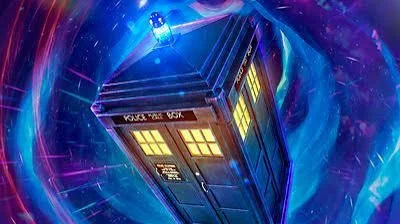
Once you know what a TARDIS is, every blue police box becomes suspicious.
And once you hear the phrase “bigger on the inside,” you’ll realize half of Hollywood has borrowed it at some point.
Doctor Who has been referenced in hundreds of television shows, movies, cartoons, comics, books, video games, and internet memes.
Some of the biggest examples include:
The Simpsons
The Simpsons has referenced Doctor Who multiple times, including versions of the Doctor and TARDIS-inspired jokes.
Family Guy
Peter Griffin and company have made several Doctor Who references, including jokes about regeneration and the TARDIS.
Futurama
A show already filled with time travel couldn’t resist poking fun at the Doctor and his adventures.
South Park
Doctor Who references occasionally appear in background gags and science-fiction jokes.
Community
The show created “Inspector Spacetime,” an obvious parody of Doctor Who complete with fan conventions and obsessive followers.
Rick and Morty
Time travel, alternate dimensions, impossible technology, and a genius wandering the universe? The DNA of Doctor Who is all over Rick and Morty.
The Big Bang Theory
Doctor Who was a regular topic among the characters and helped introduce the franchise to many American viewers.
The IT Crowd
Multiple Doctor Who references appear throughout the series, often aimed directly at British sci-fi fans.
Supernatural
The Winchester brothers encounter references and nods that longtime Doctor Who fans immediately recognize.
Bones
Doctor Who gets name-dropped and discussed by characters throughout the series.
Robot Chicken
Doctor Who parodies have appeared several times, often hilariously inaccurate in the way only Robot Chicken can manage.
Ready Player One
The novel and film contain Doctor Who references among the giant collection of pop culture Easter eggs.
The Lego Universe
Doctor Who eventually became a Lego set, which might be the highest honor any fandom can receive.
Marvel and DC Comics
Both comic giants have slipped Doctor Who references into stories over the years.
The Internet
At this point, the TARDIS may be one of the most recognizable fictional vehicles ever created. Memes, reaction images, GIFs, and jokes referencing Doctor Who have become part of internet culture itself.
The truth is that Doctor Who isn’t just a television show anymore.
It’s a cultural institution.
For more than sixty years, writers, actors, directors, comedians, gamers, and fans have borrowed pieces of the Doctor’s universe and scattered them throughout popular culture.
And somewhere out there, right now, there’s probably a blue police box hidden in the background of a show you’re watching.
The real question is whether you notice it.
Or whether you’re still not looking in the right place.